
When you’re nursing, every pill you take feels like a gamble. You want relief from allergies or a headache, but you’re terrified of harming your baby. The good news? You don’t have to suffer in silence. Many common antihistamines and pain relievers are perfectly safe while breastfeeding-if you pick the right ones.
Not All Antihistamines Are Created Equal
You might think all allergy meds are the same. They’re not. There’s a big difference between the old-school ones that made your grandpa sleepy and the modern ones that let you stay alert. First-generation antihistamines like diphenhydramine (Benadryl), chlorpheniramine, and promethazine cross into breast milk easily. They’re also strong sedatives. That’s a problem. Babies don’t metabolize these drugs the way adults do. A few studies and case reports show that when moms take these daily, babies can become overly sleepy, miss feedings, or even fail to gain weight. One mother in Austin reported her 3-month-old started sleeping through feedings after she started taking Benadryl for seasonal allergies. By the time she switched meds, her baby had lost nearly a pound. Second-generation antihistamines are the safer bet. These include:- Loratadine (Claritin)
- Cetirizine (Zyrtec)
- Fexofenadine (Allegra)
Pain Relievers: The Clear Winners
For headaches, muscle aches, or postpartum pain, you have two rock-solid choices:- Acetaminophen (Tylenol)
- Ibuprofen (Advil, Motrin)
- Naproxen (Aleve): It stays in your system for 12-17 hours and transfers at 7% of your dose. There are documented cases of infants developing anemia, vomiting, or bleeding issues after prolonged exposure.
- Opioids like codeine, oxycodone, hydrocodone, and tramadol: These can cause dangerous breathing problems in babies. Even small amounts can lead to extreme drowsiness or respiratory depression. The FDA has issued black box warnings for codeine and tramadol in nursing mothers.
What About OTC Cold and Allergy Mixes?
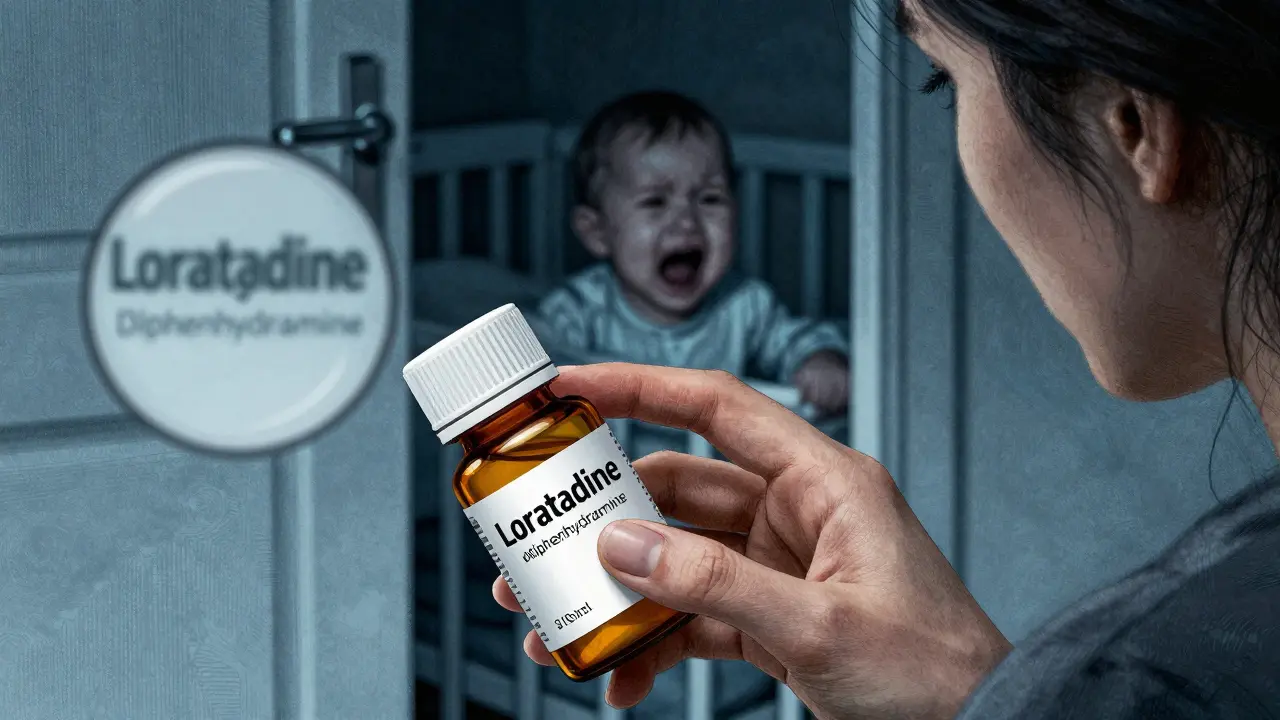
This is where things get tricky. Most cold and allergy pills aren’t just one drug-they’re combinations. A single “allergy + congestion” tablet might contain:- Loratadine (safe)
- Pseudoephedrine (decongestant, can reduce milk supply)
- Dextromethorphan (cough suppressant, generally safe)
- Diphenhydramine (dangerous)
How to Take These Meds Safely
Even safe meds need smart use. Here’s how to minimize any risk:- Take the lowest effective dose. You don’t need to max out the bottle just because it’s OTC.
- Time your doses. Take your medicine right after nursing. That gives your body time to clear it before the next feeding.
- Watch your baby. Look for signs of drowsiness, poor feeding, irritability, or rash. If something feels off, stop the med and call your provider.
- Don’t mix with alcohol or sleep aids. That combo can make sedation worse for your baby.
- Check your supplements. Some herbal sleep aids and cold remedies contain hidden antihistamines or sedatives.
What If You’ve Already Taken Something Unsafe?
If you accidentally took diphenhydramine or naproxen once, don’t panic. A single dose is unlikely to cause harm. But if you’ve been taking it daily for more than a few days, talk to your doctor or a lactation consultant. Monitor your baby closely for the next 24-48 hours. If your baby is unusually sleepy, isn’t feeding well, or seems weak, seek medical advice immediately.What About Topical or Nasal Meds?
Good news: nasal sprays, eye drops, and creams are usually safer than pills. When you apply something to your skin or nose, very little enters your bloodstream-and even less goes into breast milk. Flonase (fluticasone), saline sprays, and hydrocortisone cream are all considered safe. But don’t apply creams directly to your nipples before nursing unless they’re labeled safe for infants. Use a clean cloth to wipe off any residue.
When to Call Your Doctor
You don’t need to call for every little thing, but reach out if:- Your baby sleeps more than 4 hours between feedings and won’t wake up to eat
- Your baby has a rash, vomiting, or unusual crying
- You’re taking more than one OTC medication at a time
- You have liver or kidney problems-your body clears meds slower, so doses need adjusting
Bottom Line
You can take antihistamines and pain relievers while nursing. But not all are equal. Stick to:- Antihistamines: Loratadine, cetirizine, fexofenadine
- Pain relievers: Acetaminophen, ibuprofen
Is Zyrtec safe while breastfeeding?
Yes, cetirizine (Zyrtec) is considered safe while breastfeeding. It transfers into breast milk in very small amounts-less than 0.1% of the maternal dose-and no adverse effects have been reported in nursing infants. It’s one of the top-recommended antihistamines for breastfeeding mothers by the American Academy of Family Physicians and the Mayo Clinic.
Can I take Benadryl while nursing?
Diphenhydramine (Benadryl) is not recommended for regular use while breastfeeding. It can cause drowsiness in both you and your baby, and may reduce milk supply. In rare cases, it’s led to poor feeding and failure to thrive in infants. If you need it for a severe allergic reaction, use it once and avoid repeating it. Switch to loratadine or cetirizine for ongoing allergy relief.
Is Tylenol safe for breastfeeding moms?
Yes, acetaminophen (Tylenol) is one of the safest pain relievers for breastfeeding mothers. It passes into breast milk in very low amounts-about 1-2% of your dose-and has no known negative effects on infants. It’s often the first choice for postpartum pain and headaches.
Can ibuprofen reduce my milk supply?
No, ibuprofen does not reduce milk supply. In fact, it’s one of the few NSAIDs considered safe during breastfeeding because it’s highly protein-bound and breaks down quickly. Unlike pseudoephedrine (a decongestant), ibuprofen has no known effect on lactation. It’s commonly used by nursing moms after delivery without issues.
What if I take a combination cold medicine?
Many cold medicines combine antihistamines, decongestants, and pain relievers. The problem? They often include diphenhydramine or chlorpheniramine-meds that aren’t safe for nursing. Always check the active ingredients. If you see those names, skip it. Choose single-ingredient options instead. For example, take plain ibuprofen for pain and plain loratadine for allergies-separately.
Are nasal sprays safe while breastfeeding?
Yes, most nasal sprays are safe. Fluticasone (Flonase), mometasone (Nasonex), and saline sprays have minimal absorption into the bloodstream, so almost none reaches breast milk. They’re often preferred over oral meds because they target symptoms locally. Just avoid sprays with pseudoephedrine unless absolutely necessary.
Can I take melatonin while breastfeeding?
Melatonin isn’t an antihistamine or pain reliever, but it’s often confused with them. While small doses may be safe, there’s limited research on its effects in nursing babies. It can pass into breast milk and may affect your baby’s sleep-wake cycle. If you need help sleeping, try non-medication methods first-dark room, white noise, consistent bedtime. If you must use melatonin, keep the dose low (1-3 mg) and monitor your baby for unusual sleepiness or irritability.




Celia McTighe
28 December 2025 - 13:42 PM
OMG YES THIS. I was on Zyrtec the whole time I nursed my twins and never had a single issue. My pediatrician even praised me for being so informed. 🙌 So many moms panic over nothing - this post is a lifesaver.
ANA MARIE VALENZUELA
30 December 2025 - 01:46 AM
Let’s be real - if you’re taking anything while nursing and not consulting a lactation specialist, you’re playing Russian roulette with your baby’s brain development. I’ve seen too many cases of infant sedation from ‘harmless’ OTC meds. This list is good, but it’s still not enough. You need a pharmacist review every single time.
James Hilton
31 December 2025 - 06:23 AM
Benadryl? Bro. That’s just grandma’s sleep aid. If you’re using that to chill out while nursing, maybe try meditation instead of medicating your baby into a coma. 😅
Sydney Lee
1 January 2026 - 13:57 PM
It’s astonishing how little regulation exists for OTC medications marketed to nursing mothers. The FDA doesn’t require safety data for these drugs in lactation - yet they’re sold on every corner. This post, while accurate, is still a band-aid on a hemorrhage. We need mandatory labeling: ‘May cause infant sedation’ - not just buried in fine print.
Teresa Marzo Lostalé
2 January 2026 - 10:13 AM
I took ibuprofen for months after my C-section and my daughter is now a thriving 4-year-old who still calls me ‘Supermom’. 🌈 Sometimes the best medicine is trust - in your body, in science, and in your own intuition. You’ve got this.
Samantha Hobbs
3 January 2026 - 05:13 AM
Wait so can I take NyQuil if I just pick out the Tylenol part? Or is that a trap? 😅 I’m so confused by all these combo packs.
Hakim Bachiri
3 January 2026 - 17:13 PM
Listen, I’ve got a Ph.D. in pharmacology, and let me tell you - the LactMed database is underutilized. Most people don’t realize that protein binding > molecular weight when assessing transfer into milk. Loratadine? 99.96% bound. That’s why it’s safe. Diphenhydramine? Only 60%. That’s why it’s dangerous. If you’re not checking LactMed, you’re not doing your due diligence. And yes, I’ve reviewed the data for the FDA.
Ellen-Cathryn Nash
4 January 2026 - 16:58 PM
It’s wild how society tells women to ‘just push through’ the pain - then turns around and shames them for taking Tylenol. Like, we’re supposed to be martyrs? No. We’re supposed to be healthy. And our babies deserve a mama who’s not in agony. Thank you for this. I cried reading it.
Bradly Draper
5 January 2026 - 14:10 PM
I took Zyrtec and ibuprofen when I was nursing. My kid is fine. Just don’t overdo it. And wash your hands after you take it. That’s all.
oluwarotimi w alaka
7 January 2026 - 02:16 AM
They don’t want you to know this… but Big Pharma knows that if you take safe meds, you’ll keep buying more. They profit from fear. Benadryl is safe if you take it once. But they make you think it’s evil so you buy their ‘premium’ antihistamines. Wake up. This is a scam.
Gran Badshah
7 January 2026 - 06:49 AM
Bro in India we just use neem leaves and turmeric milk for everything. Why are you all so scared of natural stuff? Tylenol? Nah. We don’t need that. Our grandmas knew better.
sonam gupta
7 January 2026 - 20:11 PM
Safe? Sure. But what about long term neurodevelopment? No one talks about that. Just saying.
Nicole Beasley
8 January 2026 - 05:20 AM
Wait so if I take one pill after nursing… is it really safe? Like… what if I’m super sensitive? 🤔