Warfarin Cold Medicine Safety Checker
Is This Cold Medicine Safe for You?
This tool checks if common OTC cold ingredients interact with warfarin. Remember: If your INR is outside 2.0-3.0, consult your anticoagulation clinic before taking any medication.
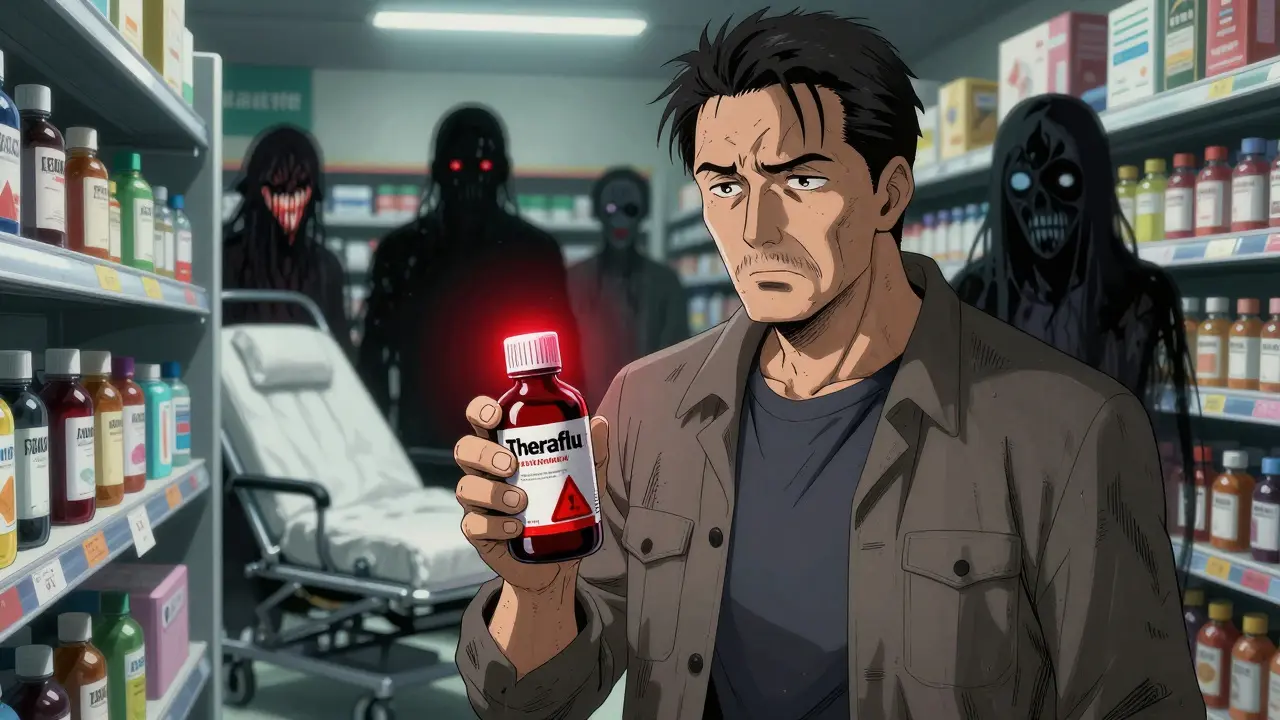
Every year, millions of people on warfarin reach for an OTC cold medicine when they feel a sore throat or stuffy nose. They think it’s harmless - just a little relief. But for those taking warfarin, that simple choice can trigger a life-threatening bleed. Warfarin isn’t like other medications. It has a razor-thin safety margin. Even a small change in how your body processes it - caused by something as common as an OTC cold tablet - can push your INR into dangerous territory. And the consequences? Hospitalization. Emergency transfusions. Even death.
Why Warfarin Is So Sensitive
Warfarin, sold under the brand name Coumadin, has been used for over 70 years to prevent dangerous blood clots in people with atrial fibrillation, deep vein thrombosis, or mechanical heart valves. But its effectiveness depends on keeping your INR - a blood test that measures how long it takes your blood to clot - between 2.0 and 3.0. Go above 3.0? You risk bleeding. Drop below 2.0? You risk clots. And it doesn’t take much to throw this balance off.
Warfarin works by blocking vitamin K, which your body needs to make clotting factors. But your body doesn’t process warfarin the same way everyone else does. It’s broken down by liver enzymes - especially CYP2C9 - and influenced by genetics, diet, and other drugs. That’s why even a single dose of an OTC cold medicine can cause your INR to spike overnight. According to the European Journal of Clinical Pharmacology, warfarin interacts with more than 500 other medications. And OTC cold products are among the most common culprits.
The Top 5 Dangerous OTC Ingredients in Cold Medicine
Not all cold medicines are created equal. Some are safe. Many are deadly. Here are the ingredients you must avoid - and why:
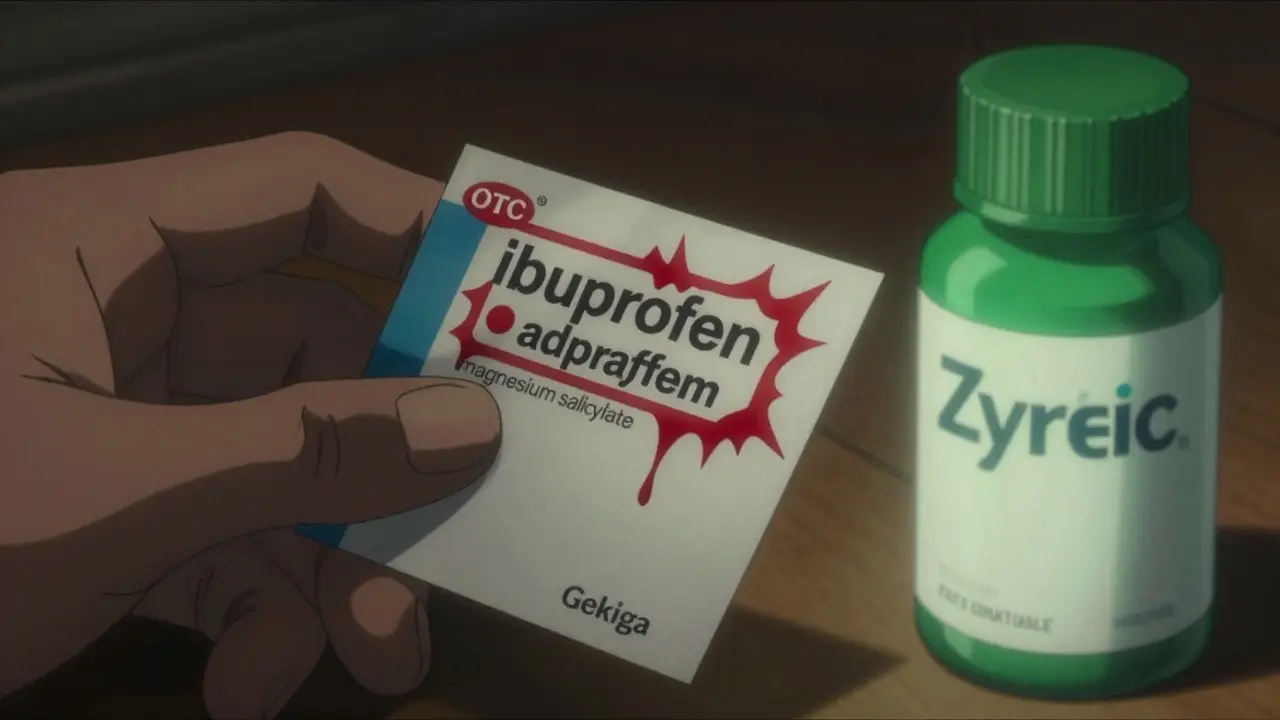
- NSAIDs (Ibuprofen, Naproxen, Aspirin): These are the biggest danger. Ibuprofen (Advil, Motrin) and naproxen (Aleve) both thin the blood on their own and damage the stomach lining. When combined with warfarin, the risk of gastrointestinal bleeding jumps by 4.5 times. Aspirin - even in "low-dose" form - can double bleeding risk. A 2019 JAMA study found that higher doses of aspirin increased bleeding by 3.2-fold. And here’s the trap: many "aspirin-free" cold products still contain magnesium salicylate, which acts just like aspirin. The FDA now requires all OTC NSAIDs to carry a bold warning: "Do not use if taking blood thinners."
- Acetaminophen (Tylenol) over 2,000 mg/day: This is the one exception - but only if you stay under 2,000 mg daily. Taking more than that for more than three days in a row impairs platelet function and can raise your INR. A 2022 study in Clinical Pharmacology & Therapeutics showed that patients who took 3,000 mg daily for five days had INR spikes of 4.5 or higher. Don’t assume "acetaminophen is safe" - the dose matters.
- Dextromethorphan with quinidine: Found in some versions of Robitussin and other cough syrups, quinidine slows down how your body clears warfarin. A 2020 Pharmacotherapy study found it increases warfarin levels by 25%. Always check the full ingredient list. If you see "quinidine," walk away.
- Cimetidine (Tagamet): This older heartburn medicine - still sold OTC - inhibits the liver enzyme that breaks down warfarin. It can raise warfarin levels by 30-50%. If you’re taking it for heartburn, talk to your doctor. There are safer alternatives like famotidine (Pepcid).
- Herbal supplements: St. John’s wort reduces warfarin’s effect by 30-50%, making clots more likely. Ginkgo biloba and fish oil supplements increase bleeding risk by 2.1-fold. Even "natural" doesn’t mean safe.
The Safe OTC Options (And How to Use Them)
Good news: you don’t have to suffer through a cold without relief. Here are the ingredients that are generally safe - if used correctly:
- Pseudoephedrine (Sudafed): This decongestant doesn’t affect warfarin metabolism. It’s safe at standard doses (30-60 mg every 4-6 hours).
- Phenylephrine (Sudafed PE): While less effective than pseudoephedrine, it doesn’t interact with warfarin. It’s a good alternative if pseudoephedrine isn’t available.
- Cetirizine (Zyrtec) or Loratadine (Claritin): These second-generation antihistamines don’t interfere with warfarin. Avoid first-gen options like diphenhydramine (Benadryl) if you’re also taking sedatives - they can increase drowsiness, but they don’t raise bleeding risk.
- Guaifenesin (Robitussin, Mucinex): This expectorant helps loosen mucus. It has no known interaction with warfarin. Just make sure the product doesn’t contain anything else.
- Acetaminophen (Tylenol): Yes - but only up to 2,000 mg per day. That’s four 500 mg tablets. Never exceed this. And never take it for more than three days straight without checking your INR.
What You Must Do - Before You Take Anything
Here’s the hard truth: if you’re on warfarin, you can’t trust the label. You can’t rely on a pharmacist’s quick answer. You can’t assume "it’s just one pill." You need a system.
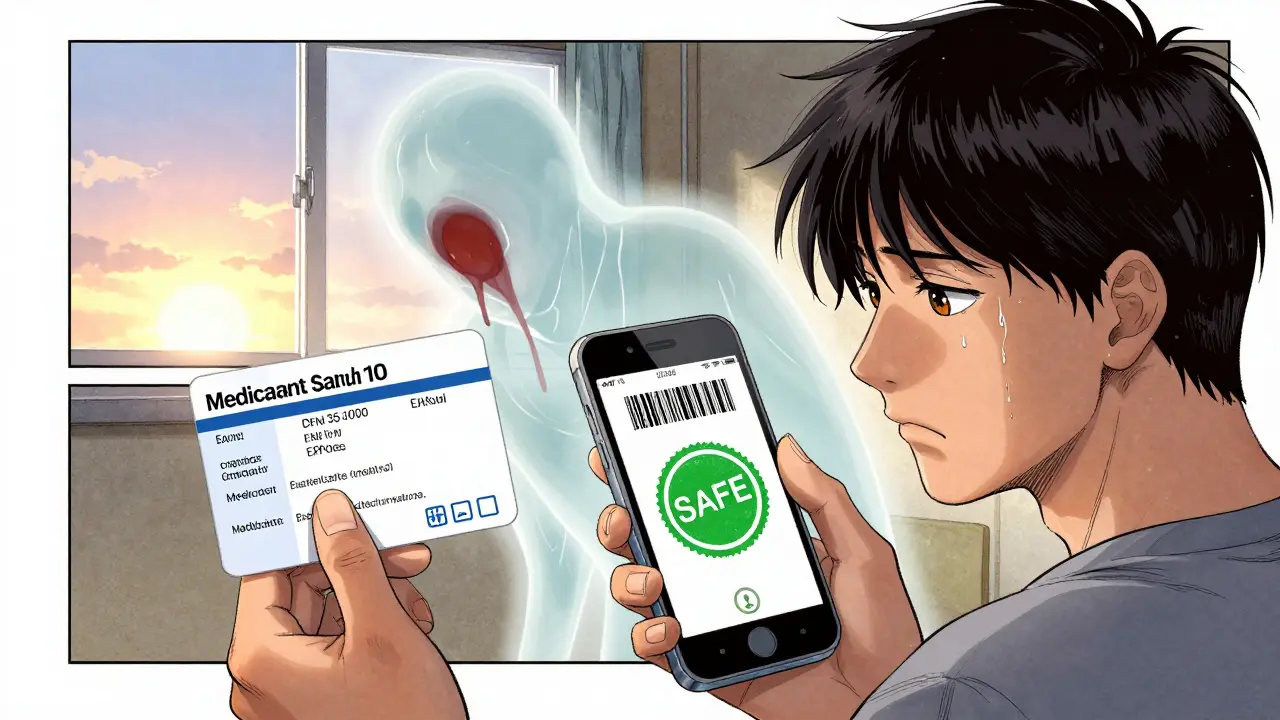
First, always check your medication list against your anticoagulation clinic’s approved OTC list. Many clinics now give patients a personalized "Medication Safety Card" - a small card that lists exactly which OTC products are safe for them. A 2023 University of Michigan study showed that patients who used this card had 63% fewer dangerous interactions.
Second, read every label - twice. Once for the active ingredients. Once for the "Warnings" section. Many multi-symptom cold products hide NSAIDs under "pain reliever" or "fever reducer." If you see "ibuprofen," "naproxen," "aspirin," or "salicylate," put it back. Even if it says "aspirin-free," it might still contain magnesium salicylate - which acts like aspirin.
Third, call your anticoagulation clinic before taking anything new. The Anticoagulation Forum’s 2021 guidelines say this isn’t optional - it’s mandatory. Dr. Gary Raskob’s research found that 28% of warfarin-related hospital admissions were preventable - all from patients who took OTC meds without checking.
Real Stories - What Happens When People Ignore the Warnings
On Reddit’s r/bloodthinners, user u/WarfarinWarrior posted in March 2024: "Took two doses of Theraflu. INR went from 2.4 to 6.1 in 72 hours. Ended up in the ER with bleeding gums and a black eye from a fall. I thought it was just a cold." Another user on the Warfarin Support Facebook group described how they took "Doan’s Pills" for back pain - labeled "aspirin-free" - only to find out it contained magnesium salicylate. They bled internally and needed a transfusion.
But there are success stories too. User u/ClotFreeLife posted in May 2024: "I used Zyrtec, Sudafed, and plain Robitussin. My INR stayed between 2.2 and 2.6. I felt better by day four. I didn’t take a single risky pill." The difference? Knowledge. And a plan.
New Tools That Are Changing the Game
Technology is catching up. CVS Health piloted a digital checker at pharmacy counters in 2023. When a customer with warfarin tried to buy an NSAID, the system flagged it - and 89% of those sales were stopped before checkout. Mayo Clinic’s "Warfarin Watch" app scans the barcode of any OTC product and tells you instantly if it’s safe. It’s 94% accurate.
Even better, genetic testing is becoming more available. Some patients now get tested for CYP2C9 and VKORC1 gene variants - which predict how their body handles warfarin. A 2023 Vanderbilt study found that genetically guided dosing reduced INR swings by 37% during cold season. But only 18% of warfarin patients get this test - mostly because insurance won’t cover it.
Still, the most powerful tool remains education. The Cleveland Clinic’s 90-minute "OTC Medication Safety" workshop cut bad choices by 78%. When patients know what to look for - and when to ask - they stay out of the hospital.
Your Action Plan
Here’s what to do right now:
- Find your latest INR result. If it’s outside 2.0-3.0, don’t take any OTC meds until you talk to your clinic.
- Get your personalized OTC safety list from your anticoagulation provider. If you don’t have one, ask for it.
- Throw out any old cold medicine bottles. You can’t trust what’s inside.
- When you feel sick, go to the pharmacy and say: "I’m on warfarin. What’s safe for a cold?" Don’t be shy. Pharmacists are trained for this.
- Keep a log: write down every OTC medicine you take - even if you think it’s safe - and note your next INR date.
There’s no magic pill. No shortcut. But there is a clear path: know your ingredients, know your limits, and never guess.
Can I take Tylenol while on warfarin?
Yes - but only up to 2,000 mg per day. That’s four 500 mg tablets. Taking more than that for three or more days in a row can increase your bleeding risk by impairing platelet function. Never exceed this limit, and avoid using it for more than three consecutive days without checking your INR.
Is Sudafed safe with warfarin?
Yes, pseudoephedrine (Sudafed) is generally safe at standard doses (30-60 mg every 4-6 hours). Phenylephrine (Sudafed PE) is also safe, though less effective. Avoid products that combine these with NSAIDs or acetaminophen - stick to plain decongestants.
What cold medicines should I avoid completely?
Avoid any product containing ibuprofen, naproxen, aspirin, magnesium salicylate, or dextromethorphan with quinidine. Also avoid herbal supplements like St. John’s wort, ginkgo biloba, and fish oil. Multi-symptom cold remedies almost always contain hidden NSAIDs - even if they say "aspirin-free." Always read the active ingredients.
Why does my INR go up when I get sick?
Illness can change how your liver processes warfarin. Fever, dehydration, or reduced food intake can increase warfarin’s effect. Add an OTC medication on top of that - especially one that affects liver enzymes or platelets - and your INR can spike dangerously. Always check your INR if you’re sick and taking any new meds.
Do I need to stop warfarin before surgery or a dental procedure?
Never stop warfarin on your own. For minor procedures like dental cleanings, you usually don’t need to stop. For surgery, your doctor will decide based on your INR, reason for warfarin, and procedure type. Always consult your anticoagulation clinic - never rely on a dentist or surgeon alone.




Anil bhardwaj
23 February 2026 - 03:51 AM
Been on warfarin for 8 years. Learned the hard way after taking Advil for a headache. Ended up in the ER with a GI bleed. Never again. Always check the label. Always.
lela izzani
24 February 2026 - 16:24 PM
This is one of the most important posts I've read in years. I work as a pharmacist and see this exact scenario every single week. Patients come in thinking "it's just Tylenol" or "I've taken this before" - but they don't realize their INR has changed, or their liver is stressed from a virus. The 2,000 mg daily cap for acetaminophen is critical. I hand out printed lists to every warfarin patient now. It saves lives.
Joanna Reyes
26 February 2026 - 14:21 PM
I’ve been managing my warfarin for over a decade, and honestly, the biggest danger isn’t the medicine - it’s the assumption that "it’s just a cold" and you can wing it. I used to think I knew better than the warnings. Then I had an INR of 7.2 after taking a "safe" cold tablet that had hidden ibuprofen. I spent three days in the hospital. Since then, I’ve printed out the list of safe ingredients and taped it to my fridge. I also screenshot the CVS barcode scanner app and keep it on my home screen. Knowledge isn’t power here - it’s survival. And if you’re not using a medication log? Start tonight. Write down every pill, every drop, every herbal tea. Write it down. Your future self will thank you.
Southern Indiana Paleontology Institute
28 February 2026 - 08:32 AM
Y’all are overreactin. I took a whole bottle of cold meds last winter and my INR was fine. Maybe you just need to toughen up. Warfarin ain’t nothin but a number. My cousin took aspirin for 6 months and still rode his motorcycle. Ain’t nothin wrong with your body if you just stop bein so paranoid.
Nerina Devi
1 March 2026 - 08:39 AM
My mom passed away last year because she took a "natural" herbal cold remedy. It had ginkgo. She didn’t know. The pharmacy didn’t warn her. I’m sharing this because I don’t want another family to lose someone to ignorance. Read labels. Ask. Double-check. And if your doctor doesn’t give you a printed list - demand one. You deserve to live.
Dinesh Dawn
2 March 2026 - 00:57 AM
Just want to say thanks for writing this. I’ve been on warfarin since my valve replacement and honestly, I felt so alone until I found this. The part about the genetic testing? I didn’t even know that was a thing. Going to ask my clinic next week. Also, I started using the Mayo Clinic app - it’s a game changer. Took me 3 seconds to scan a bottle and it said "NO" to the "Multi-Symptom Cold Relief" I was about to buy. Saved me.
Vanessa Drummond
2 March 2026 - 10:11 AM
Wow. So this is why I keep getting nosebleeds? I thought it was dry air. Turns out I’ve been taking DayQuil every time I feel a sniffle. My INR was 5.8 last week. I’m deleting every cold medicine in my cabinet right now. Thanks for the wake-up call. I’m not dying because I was lazy.
Nick Hamby
3 March 2026 - 08:55 AM
The philosophical underpinning of this post is not merely clinical - it is existential. We live in an age of algorithmic convenience, where the human body is reduced to a variable in a pharmacokinetic model. Yet the warfarin patient stands as a testament to the fragility of biological autonomy. To assume safety is to surrender agency. To read a label is to reclaim dignity. To call the clinic is to affirm life. This is not about medication interactions - it is about the moral imperative to know, to question, and to persist in the face of systemic neglect. The body remembers what the mind forgets. Never forget.
kirti juneja
4 March 2026 - 07:51 AM
I’m a nurse in rural India and we don’t have access to apps or barcode scanners. But I teach my patients this: "If the bottle has more than one thing listed under "active ingredients," put it back. If it says "for fever and congestion and pain," it’s dangerous. Stick to plain water, rest, and one thing only - like plain guaifenesin. And if you’re unsure? Walk to the clinic. Walk. Don’t wait. Your life isn’t worth the gamble. I’ve seen too many come in too late. You don’t need a PhD to stay alive. You just need to listen.
Haley Gumm
5 March 2026 - 18:21 PM
Can we talk about how the word "natural" is the most dangerous word in medicine? Like, seriously. St. John’s wort? "Natural." Ginkgo? "Natural." Fish oil? "Natural." And yet, they’re all tiny landmines for warfarin users. The marketing teams are laughing. The FDA is asleep. And we’re the ones bleeding out. It’s not ignorance - it’s exploitation.
Gabrielle Conroy
6 March 2026 - 22:33 PM
THIS. THIS. THIS. I’ve been on warfarin since 2018. I use the app, I keep a logbook, I call my clinic before I even think about opening a bottle. I even have a colored sticky note on my fridge that says "NO NSAIDS. NO HERBS. NO GUESSING." I used to think I was being obsessive. Now I know I’m being smart. My INR has been rock solid for 2 years. It’s not magic - it’s discipline. And if you’re not doing this? You’re playing Russian roulette with your blood. Please. Just. Read. The. Label. 💯
Spenser Bickett
8 March 2026 - 18:43 PM
Wow. So the solution to not dying is… reading? Who would’ve thought. Next up: a 20-page manual on how to not stick your finger in a light socket. I mean, I get it - but is this really a 5,000-word essay? Or just a reminder that people shouldn’t be dumb? I’m just sayin’. Maybe the real problem is letting people buy OTC meds without a prescription. Just a thought.