The Reality of Residual Risk
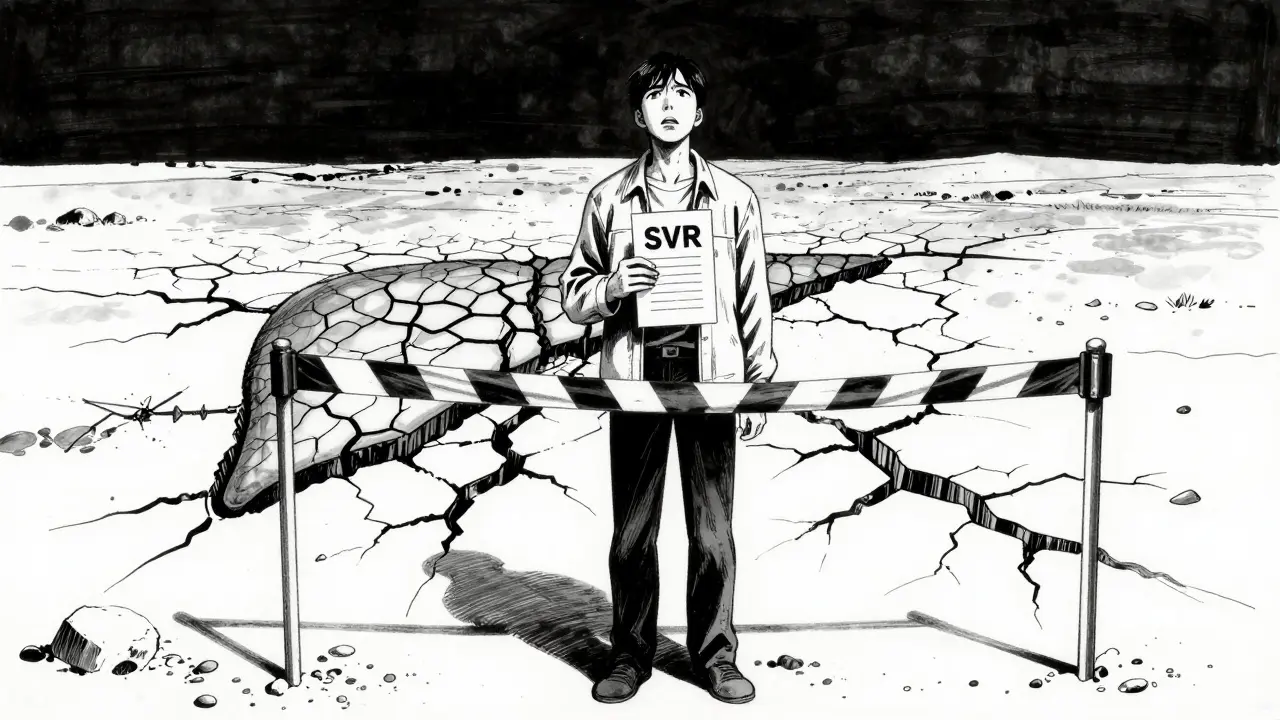
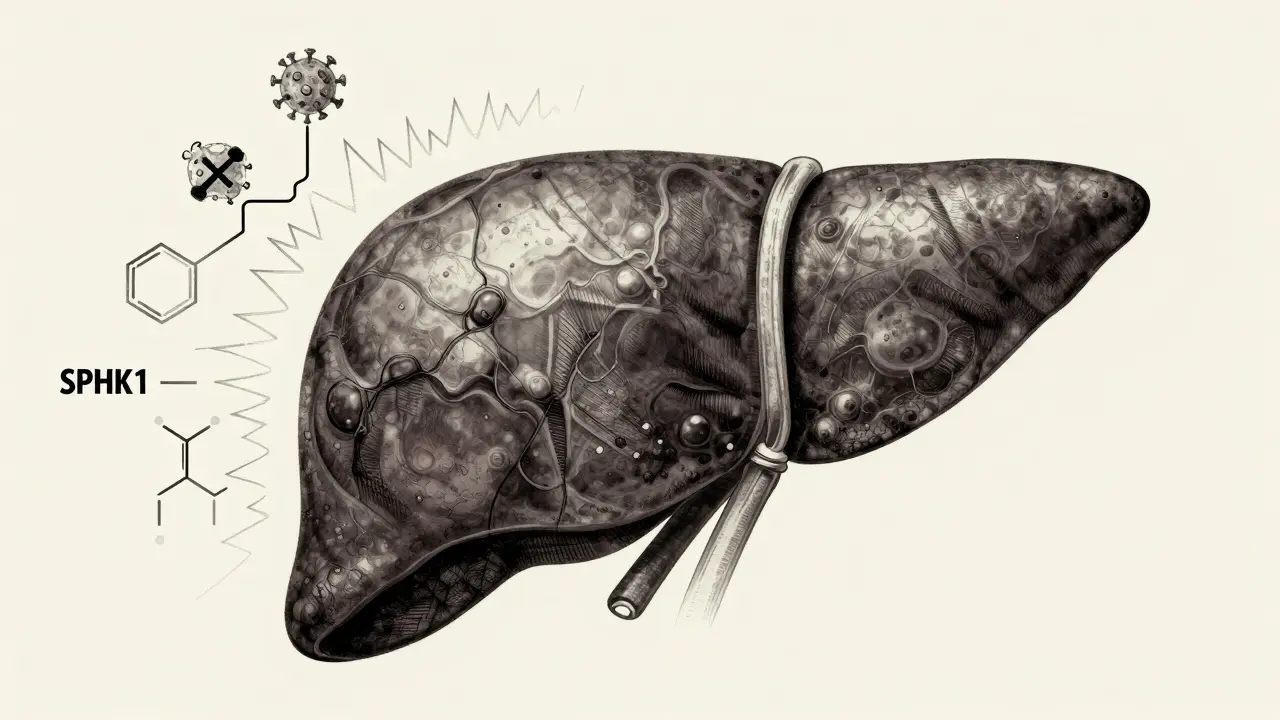
Let's look at the numbers. Research shows that achieving SVR reduces the risk of liver cancer by roughly 71% to 79% compared to people who never get treated. That is a huge drop. However, a study from JAMA Network Open found that for people with Cirrhosis (severe scarring), the cancer incidence rate is about 2.12 per 100 person-years after DAA treatment. Compare that to 4.53 per 100 person-years for untreated patients. While the risk is halved, it is still far higher than someone who never had Hepatitis C. Why does this happen? It isn't just about the virus. Long-term inflammation causes genetic mutations in liver cells. Even after the virus is gone, certain biological pathways-like the upregulation of SPHK1-stay active. Essentially, the liver's "machinery" for cell growth can stay stuck in a pro-cancer mode, continuing to drive tumor growth even without the virus fueling the fire.Who Actually Needs Ongoing Surveillance?
Not everyone who cures Hepatitis C needs to keep coming back for ultrasounds. The deciding factor is almost always the amount of fibrosis (scarring) in the liver. If you had minimal scarring before treatment, your risk is extremely low, and constant screening might be overkill. But if you had advanced fibrosis or cirrhosis, the conversation changes. Doctors use a few key tools to decide if you still need monitoring:- Transient Elastography (TE): Also known as a FibroScan. If your reading is above 11.2 kPa after SVR, you are generally considered at higher risk.
- FIB-4 Index: A calculation based on age, AST, ALT, and platelet counts. A score above 3.25 often signals a need for continued surveillance.
- Clinical History: If you were diagnosed with cirrhosis (F4) before starting your DAAs, you are almost certainly in the "keep screening" group.
| Liver Status Pre-SVR | Residual Cancer Risk | Typical Surveillance Recommendation |
|---|---|---|
| No/Mild Fibrosis (F0-F2) | Very Low | Generally not required |
| Advanced Fibrosis (F3) | Moderate | Debated (EASL says yes, AASLD says no) |
| Cirrhosis (F4) | Significant | Required (typically every 6 months) |
The Great Divide: US vs. Europe
Interestingly, your doctor's advice might depend on which side of the Atlantic they were trained on. There is a notable difference between the two biggest hepatology organizations. In Europe, the European Association for the Study of the Liver (EASL) takes a cautious approach. They recommend semiannual (every 6 months) screening for anyone with F3 fibrosis or higher, even after a cure. Their logic is simple: it's better to over-screen than to miss a tumor, especially since we sometimes misclassify F3 as F4 or vice versa. Across the pond, the American Association for the Study of Liver Diseases (AASLD) is more conservative. They generally don't recommend routine screening for F3 patients who have achieved SVR, focusing their resources primarily on those with full-blown cirrhosis. They argue that the absolute risk for F3 patients is low enough that the benefit of screening doesn't outweigh the hassle for the patient.The Screening Process: What to Expect
If you fall into the high-risk category, surveillance usually involves a combination of imaging and blood work. The goal is to catch a tumor when it is small enough to be treated effectively.- Ultrasound: The gold standard for screening. It's non-invasive and can pick up nodules. Most guidelines suggest this every 6 months.
- Alpha-fetoprotein (AFP) Tests: A blood marker that can rise when liver cancer is present. While not perfect on its own, it adds another layer of security when used with imaging.
- Follow-up Imaging: If an ultrasound finds something suspicious, your doctor will move to a CT scan or an MRI for a more detailed look.
Looking Ahead: Personalized Monitoring
We are moving away from a "one size fits all" approach. The future of surveillance is about precision. Instead of every cirrhotic patient getting an ultrasound every 6 months for the rest of their life, we are seeing the rise of dynamic risk calculators. For instance, some researchers are testing whether patients who show significant fibrosis regression (meaning their liver actually gets healthier/less scarred after the cure) can safely extend their screening intervals to once a year. Others are looking at the GALAD score, a complex blood test that combines age, gender, and specific protein markers to detect cancer with much higher sensitivity than a simple AFP test. There are even cutting-edge transcriptome signatures being developed that can predict risk with 92% accuracy. While these aren't in every clinic yet, they promise a world where your screening schedule is based on your specific molecular profile rather than just a general category.If my Hep C is cured, why can I still get liver cancer?
The virus causes chronic inflammation and scarring (fibrosis) over decades. Even when the virus is gone, the genetic damage and the scarred environment of the liver can still trigger the growth of cancer cells. The virus was the spark, but the resulting scarring is the fuel that remains.
How often should I be screened after SVR?
For those with cirrhosis, the standard recommendation is typically every 6 months. For those with advanced fibrosis (F3), it depends on the guidelines your doctor follows (EASL recommends every 6 months; AASLD generally does not for F3 without cirrhosis). Always follow your specialist's specific plan.
Can my liver scarring go away after treatment?
Yes, many patients experience fibrosis regression after SVR. Some scarring can actually reverse, which may lower your long-term risk and potentially allow for less frequent screening in the future, though this must be confirmed by a doctor using tools like FibroScan.
Is a FibroScan better than a biopsy for monitoring?
A FibroScan (Transient Elastography) is non-invasive and excellent for tracking trends in liver stiffness over time. While a biopsy is the "gold standard" for a single snapshot of liver health, most doctors prefer the FibroScan for ongoing surveillance because it's safer and easier for the patient.
What happens if I miss a few screening appointments?
Missing appointments is common after SVR because patients feel healthy. However, liver cancer often has no symptoms until it's advanced. Missing a few six-month windows could mean a small, treatable tumor grows into something much more difficult to manage. Get back on schedule as soon as possible.
Next Steps for Your Liver Health
If you've achieved SVR, don't just walk away from your hepatologist. Your next steps depend on your starting point:- If you had cirrhosis: Mark your calendar for ultrasounds every 6 months. Set digital reminders, as it's easy to forget when you feel great.
- If you had F3 fibrosis: Have a detailed conversation with your doctor about whether you follow EASL or AASLD guidelines and why.
- For everyone: Keep an eye on other liver stressors. Avoid excessive alcohol and manage weight/diabetes, as these factors can add to the residual risk left by Hepatitis C.