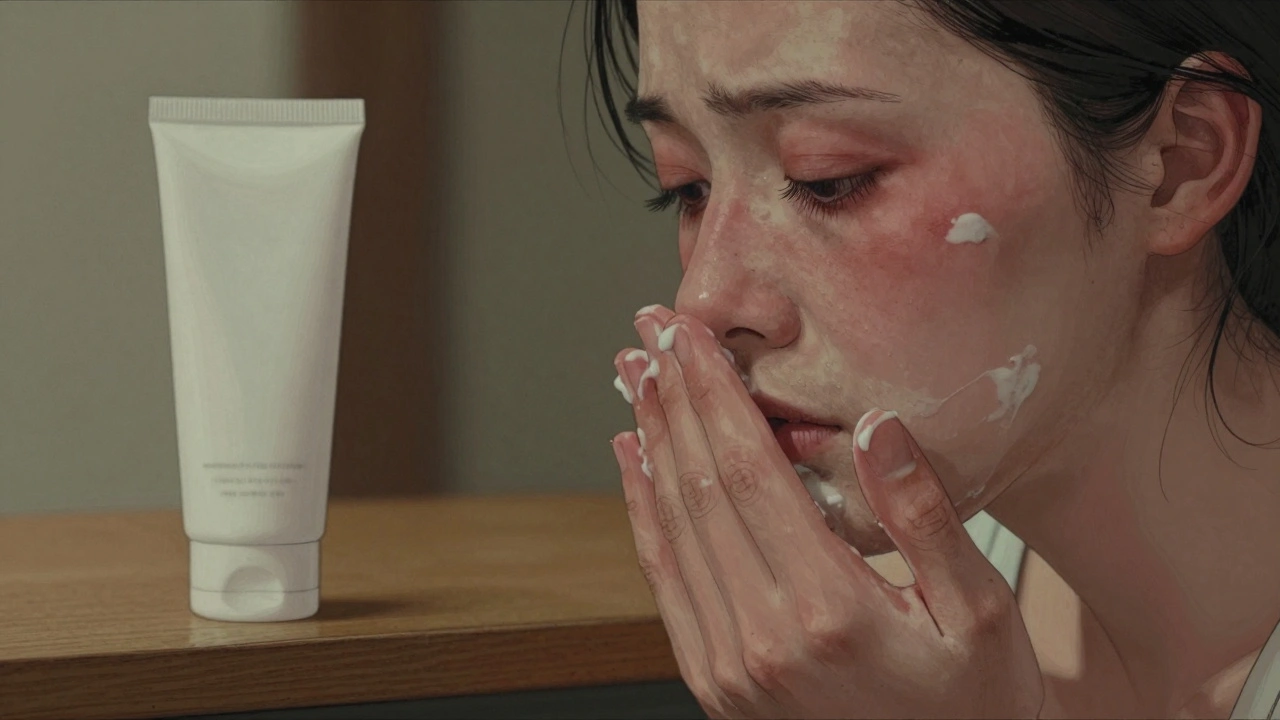
If your skin stings when you apply moisturizer, turns red after using a new cleanser, or flares up after a spa day, you’re not alone. Millions of people deal with sensitive skin every day-and many of them are unknowingly making it worse with products that smell nice but contain hidden irritants. The truth? fragrance-free isn’t just a trend. It’s a medical necessity for anyone whose skin reacts easily. And the best part? You don’t need a 10-step routine to fix it. You just need the right basics-and the know-how to pick them.
Why Fragrance Is the #1 Skin Irritant
Fragrance isn’t just a pleasant scent. On ingredient lists, it’s often labeled as “fragrance” or “parfum”-two words that hide hundreds of chemicals. These aren’t just synthetic smells. Even natural oils like lavender, citrus, or peppermint can trigger reactions. According to the American Contact Dermatitis Society, fragrance compounds cause 30-45% of all cosmetic-related skin allergies. That’s more than preservatives, dyes, or alcohol combined. Dermatologists see it every day. Dr. Whitney Bowe, a board-certified dermatologist, says fragrance is responsible for nearly 38% of allergic contact dermatitis cases in her practice. And it’s not just about itching or redness. Fragrance can break down your skin’s natural barrier-the outer layer that keeps moisture in and irritants out. Once that barrier is damaged, your skin becomes more reactive to everything: wind, pollution, even water. Here’s the kicker: “Unscented” doesn’t mean fragrance-free. Many products use masking fragrances to cover up the smell of other ingredients. So a product labeled “unscented” might still contain chemicals that irritate sensitive skin. Only “fragrance-free” means zero added scent compounds-no exceptions.What Makes a Fragrance-Free Product Actually Work?
Not all fragrance-free products are created equal. Some just remove the scent but keep harsh surfactants, alcohol, or synthetic thickeners. Effective products for sensitive skin have three key traits:- Simple ingredient lists-15 ingredients or fewer. Fewer ingredients = fewer chances for irritation.
- Barrier-repairing ingredients-like ceramides (0.5-3%), hyaluronic acid (0.5-2%), and glycerin (3-10%). These rebuild your skin’s protective layer.
- Correct pH-between 4.5 and 5.5. That’s the natural acidity of healthy skin. Products outside this range strip your skin and make it more vulnerable.
How to Test a New Product Safely
Never apply a new product to your face right away. Even if it’s labeled “hypoallergenic” or “for sensitive skin,” it might still cause a reaction. The gold standard? A 72-hour patch test. Here’s how to do it:- Wash and dry the area behind your ear.
- Apply a pea-sized amount of the product there.
- Don’t wash it off. Let it sit for 72 hours.
- Watch for redness, itching, burning, or flaking.

The Minimal Fragrance-Free Routine That Actually Works
You don’t need serums, toners, essences, or exfoliants. Start with three things:- Fragrance-free cleanser-Use once a day, preferably at night. Over-cleansing dries out your skin. Look for creamy or balm formulas, not foaming ones. SVR’s SENSIFINE Cleansing Balm removes 98.7% of makeup while keeping skin hydrated at 82% after 24 hours. That’s way better than most regular cleansers, which drop hydration to 65-70%.
- Fragrance-free moisturizer-Apply within 30 seconds of cleansing, while your skin is still damp. This locks in moisture. Vanicream Moisturizing Cream increased hydration by 42% over 8 hours compared to scented versions, and caused 78% fewer reactions in sensitive skin users.
- Fragrance-free mineral sunscreen-Use SPF 30 or higher every morning. Zinc oxide is the safest active ingredient for sensitive skin. Avoid chemical sunscreens like oxybenzone-they’re more likely to cause stinging.
What to Avoid (Even If It’s “Natural”)
“Natural” doesn’t mean safe. In fact, 68% of products marketed as “natural” still contain fragrance components, according to Pretty Farm Girl’s 2023 analysis. Essential oils-lavender, tea tree, eucalyptus-are common culprits. Dr. David J. Leffell from Yale found that 22% of sensitive skin patients react to essential oils, even though they’re plant-based. Also avoid:- Alcohol denat. (drying)
- Sodium lauryl sulfate (SLS) (harsh surfactant)
- Artificial dyes (FD&C colors)
- Parabens (preservatives that can irritate some people)
Real Results from Real People
Reddit’s r/SkincareAddiction community has over 1.2 million members. In a 2023 survey, 78% of users with sensitive skin said their skin improved within 4-6 weeks of switching to fragrance-free products. The most common wins? Less redness (83%), less stinging (76%), and fewer flare-ups from weather changes or stress. One reviewer on Skincare.com tracked her skin for 7 days after switching. She saw:- 62% less tightness after washing
- 47% higher hydration levels
- Complete elimination of morning redness

Why Fragrance-Free Is Becoming the New Normal
The market is shifting fast. In 2023, the global fragrance-free skincare industry was worth $3.8 billion-and growing at 17% per year. That’s nearly three times faster than the overall skincare market. Why? Because more people are learning the truth: fragrance isn’t luxury. It’s a risk. Dermstore reports that searches for fragrance-free products jumped 214% between 2019 and 2023. And 68% of customers say they switched because a dermatologist recommended it. In fact, 87% of U.S. dermatologists keep fragrance-free samples on hand for patients. Even regulators are catching up. The EU requires brands to list 26 specific fragrance allergens. In the U.S., the proposed CARES Act would force full fragrance disclosure. California’s Assembly Bill 1234, currently under review, could require brands to list every single ingredient in fragrance-no hiding behind “parfum.”When Fragrance-Free Isn’t Enough
Fragrance-free routines fix the biggest trigger-but they don’t solve everything. If you still have redness, bumps, or flaking after 8 weeks, you might need more. Some people need prescription creams, like topical corticosteroids or calcineurin inhibitors. Others need to test for allergies (patch testing done by a dermatologist). Also, fragrance-free products don’t always deliver actives like retinoids or vitamin C as effectively. Some ingredients need delivery systems that involve fragrance. If you’re trying to treat acne or dark spots, you may need to introduce one active at a time-after your barrier is healed. Start slow. Focus on healing first. Then, if needed, add one new product every 4-6 weeks. Track every change. Keep a journal. What did you use? What did your skin do?Where to Find Trusted Products
Not every brand is honest. Use these resources to find verified products:- National Eczema Association’s Product Certification List-over 1,200 products tested and approved for eczema-prone skin.
- Dermstore’s Fragrance-Free Certification-independent lab testing to confirm zero fragrance.
- Cleure’s Ingredient Verification Program-each batch is tested for fragrance contaminants.
- CeraVe Hydrating Cleanser and Moisturizing Cream
- Vanicream Moisturizing Cream
- SVR SENSIFINE Cleansing Balm
- Cleure Hypoallergenic Line
- Paula’s Choice CALM Line
Is fragrance-free the same as unscented?
No. Unscented means no noticeable smell-but it often contains masking fragrances to cover up other ingredients. Fragrance-free means no added scent compounds at all, even hidden ones. Only fragrance-free is safe for sensitive skin.
Can essential oils irritate sensitive skin?
Yes. Lavender, tea tree, citrus, and other essential oils are common triggers. Studies show 22% of people with sensitive skin react to them-even though they’re natural. Labels like “natural” or “plant-based” don’t mean safe.
How long should I patch test a new product?
72 hours. Many reactions are delayed and won’t show up in 24 hours. Apply the product behind your ear and wait three full days before using it on your face.
Do I need to use all three steps (cleanser, moisturizer, sunscreen)?
Yes-if you want real results. Cleansing removes dirt without stripping. Moisturizing repairs your barrier. Sunscreen prevents UV damage that worsens sensitivity. Skipping any step slows your progress.
Why are fragrance-free products more expensive?
They cost more because they use fewer, higher-quality ingredients, undergo rigorous testing, and avoid cheap additives like synthetic fragrances and dyes. You’re paying for safety, not just skincare.
Can I use fragrance-free products if I don’t have sensitive skin?
Absolutely. Fragrance-free products are gentler, less likely to cause irritation, and better for long-term skin health-even if you don’t have a diagnosis. Many people switch because they want cleaner, simpler routines.


Saurabh Tiwari
3 December 2025 - 08:53 AM
frags are the worst tbh 😅 i used this fancy lavender cream and my face looked like a tomato for a week. switched to cerave and now i can actually go outside without feeling like my skin is screaming. no more stinging, no more redness. life changed.
Saket Modi
3 December 2025 - 20:31 PM
why do people care so much? just use whatever works. i use head & shoulders on my face and i'm fine. stop overthinking skincare.
Chris Wallace
4 December 2025 - 19:33 PM
the part about the 72-hour patch test really hit home. i used to test things on my wrist and think i was being careful, but i didn't realize how many reactions are delayed. i started doing the behind-the-ear test after reading this and finally found a moisturizer that doesn't make me feel like i'm burning alive. it took me years to figure this out. thank you for the clarity.
John Webber
6 December 2025 - 09:55 AM
unscented != fragrance free. i didnt know that. i thought if it didnt smell it was safe. my bad. now im reading labels like a detective. also why is everything so expensive now? 30 bucks for lotion?!
Shubham Pandey
8 December 2025 - 00:57 AM
just use vaseline. works. cheap. no fuss.
Elizabeth Farrell
8 December 2025 - 13:01 PM
thank you for writing this with so much care. i’ve been struggling with sensitive skin for over a decade, and the emotional toll of constantly trying new products, feeling like my skin is betraying me-it’s exhausting. the idea that fragrance-free isn’t a trend but a necessity? That’s the kind of validation people like me need. i’ve started with just the cleanser and moisturizer, and after six weeks, my skin feels calmer than it has in years. you’re right-less is more. and it’s not about luxury, it’s about peace.
alaa ismail
9 December 2025 - 04:12 AM
my mom used to say ‘if it smells nice, it’s good for you.’ boy was she wrong. i tried a ‘natural’ face oil with lavender and ended up in a dermatologist’s office. now i only buy things from cerave or vanicream. no drama. no scent. just calm skin. i wish i’d known this sooner.
Anthony Breakspear
9 December 2025 - 09:24 AM
let’s be real-fragrance is the skincare industry’s way of selling you a fantasy. ‘feel like you’re on a tropical vacation!’ yeah, while your face is on fire. real luxury? waking up without your skin feeling like it’s been sandblasted. real luxury? not having to apologize for red cheeks. i switched to fragrance-free and suddenly i stopped feeling like a broken appliance. this isn’t niche-it’s the future. and honestly? it’s kind of badass to be the person who doesn’t need to smell like a candle to feel good.
Zoe Bray
11 December 2025 - 02:44 AM
the clinical data presented here aligns with the current dermatological consensus regarding cutaneous barrier disruption mediated by volatile organic compounds (VOCs) embedded within fragrance matrices. the 30–45% incidence rate of allergic contact dermatitis attributable to fragrance allergens is corroborated by the European Society of Contact Dermatitis’s 2022 epidemiological review. furthermore, the recommended pH range of 4.5–5.5 is physiologically congruent with the acid mantle of healthy stratum corneum. the emphasis on ceramide repletion and avoidance of sodium lauryl sulfate represents evidence-based best practice.
Kristen Yates
11 December 2025 - 15:02 PM
in my country, people think sensitive skin is just being dramatic. i didn’t tell anyone i switched to fragrance-free because they’d say ‘just toughen up.’ but now i can wear sunscreen without crying. it’s quiet progress. no fanfare. just better skin.
Michael Campbell
13 December 2025 - 13:02 PM
who’s really behind this fragrance-free push? big pharma? the FDA? they want you to buy expensive stuff so you don’t sue them. the real cause of sensitive skin is stress and gluten. i’ve been eating gluten-free and using plain soap for a year. my skin’s fine. this is all marketing.
Victoria Graci
14 December 2025 - 20:53 PM
i used to think skincare was about chasing glow-ups and trends-until my skin started breaking out every time i breathed near a candle. now i see it as a kind of quiet rebellion: choosing calm over chaos, simplicity over spectacle. fragrance isn’t just an ingredient-it’s a promise. a promise that you need something extra to be beautiful. but what if beauty is just skin that doesn’t burn? what if healing is the most radical act? i’m not buying luxury anymore. i’m buying peace.
Girish Padia
16 December 2025 - 08:11 AM
you guys are overcomplicating this. if you can’t handle fragrance, maybe you’re just weak. i’ve used perfume on my face since i was 16 and never had a problem. stop being so delicate.