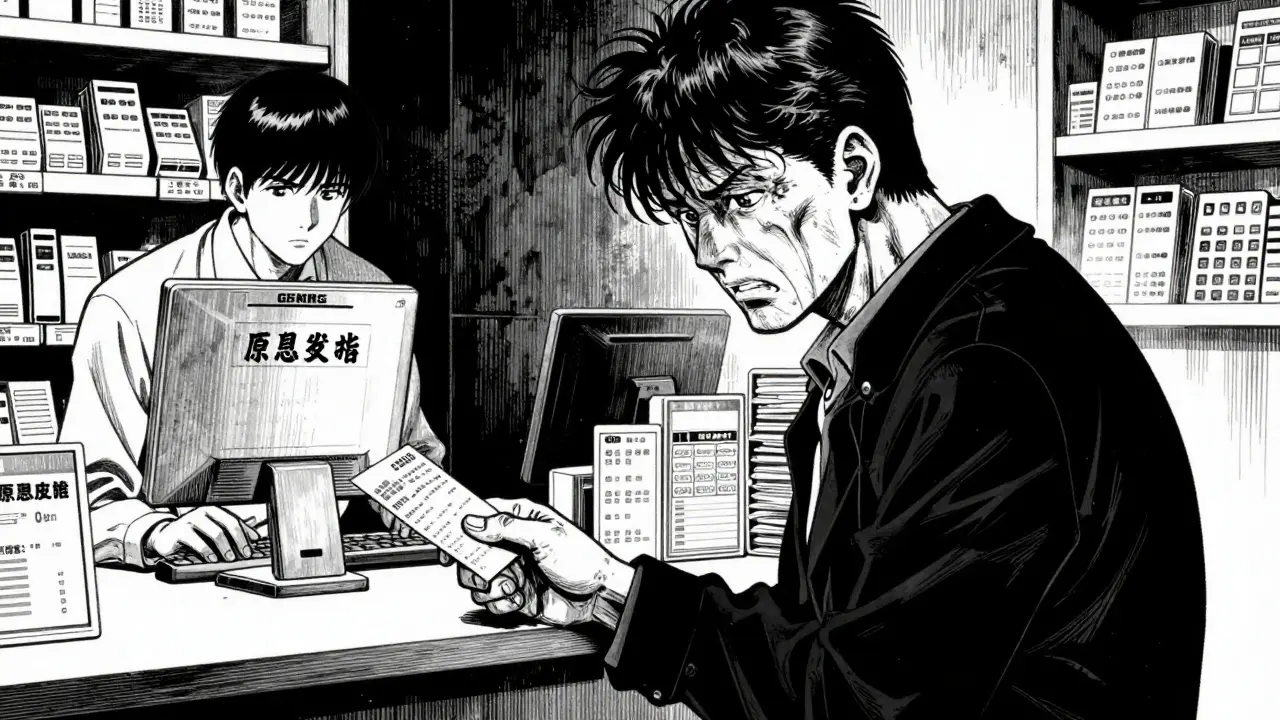
At the heart of this issue is the generic drug prices landscape, which is less of a flat map and more of a jagged mountain range. While generic drugs are designed to be affordable alternatives to brand-name versions, their actual retail price depends on a messy mix of state laws, corporate contracts, and regional competition. For most of us, the pharmacy experience is a "black box"-we hand over our insurance card and pay whatever the computer tells us, regardless of whether that price is fair or inflated.
The Middlemen Controlling the Cost
To understand why your neighbor across a state line pays less, you first have to understand Pharmacy Benefit Managers is a group of third-party administrators that manage prescription drug programs for insurers, employers, and government agencies. Often called PBMs, these entities are the invisible architects of drug pricing. They negotiate rebates with manufacturers and decide which drugs are "preferred" on a formulary.
The problem is that PBM practices are often opaque. Research from the USC Schaeffer Center indicates that consumers frequently overpay for generics by 13% to 20% because PBMs use complex, arcane pricing models to maximize their own profits. Because different PBMs hold different contracts in different states, the "spread"-the difference between what the PBM charges the insurer and what they pay the pharmacy-varies wildly by geography. This means your insurance copay is often a reflection of a corporate contract rather than the actual value of the medicine.
State Laws and the Regulatory Tug-of-War
Since federal action on drug pricing has been slow, individual states have tried to step in. You can see this in the way different states approach transparency. For example, California and Vermont were early adopters of drug transparency laws, requiring manufacturers to justify price hikes. Data suggests that patients in states with these stronger transparency laws often pay 8-12% less for generics than those in states with no such protections.
However, states can't always play the hero. In 2017, Maryland tried to pass a law specifically targeting price-gouging on generic drugs. It seemed like a common-sense move, but a federal appeals court eventually struck it down. The court ruled that the law interfered with interstate commerce, basically telling states that they cannot unilaterally control the price of goods moving across state lines. This creates a ceiling on how much a state government can actually lower your costs through legislation.
| Approach | Example State | Primary Goal | Typical Outcome |
|---|---|---|---|
| Transparency Laws | California / Vermont | Force manufacturers to disclose pricing logic | Slightly lower costs due to public pressure |
| Anti-Gouging Legislation | Maryland (Attempted) | Legally cap price increases on generics | Often blocked by federal courts (Interstate Commerce Clause) |
| Reimbursement Shifts | Various Medicaid States | Use benchmarks like NADAC for payment | Varying pharmacy margins and availability |

The "Cash vs. Insurance" Paradox
One of the most frustrating discoveries for many patients is that their insurance can actually make a drug more expensive. In some markets, paying cash for a generic is significantly cheaper than using a high-deductible insurance plan. This is why services like GoodRx have become so popular. By bypassing the PBM-insurance loop, patients can sometimes find savings of 30-70%.
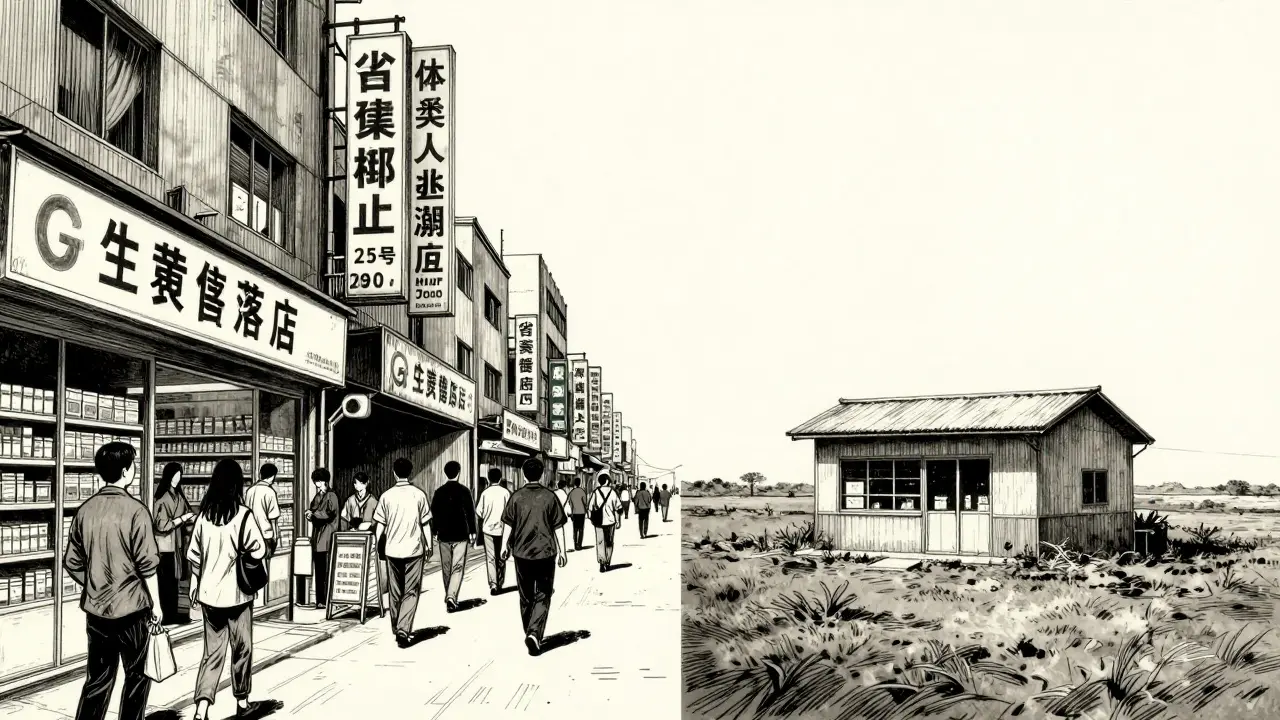
This geographic disparity is even more evident in rural areas. In a big city, you might have five pharmacies within three blocks, forcing them to compete on price. In a rural town, you might have only one pharmacy. With no competition, that pharmacy has little incentive to lower prices or negotiate harder, leading to the 300% price variations sometimes seen between neighboring states or rural-urban divides.
Innovative models are trying to break this cycle. Cost Plus Drug Company, started by Mark Cuban, removes the PBM middleman entirely and sells generics at a fixed percentage markup over the manufacturing cost. This creates a "price floor" that exposes just how inflated traditional retail and insurance-based pricing has become.
The Role of Medicaid and Federal Benchmarks
For a huge portion of the population, the price of a generic is determined by Medicaid. Each state manages its own Medicaid program, and they use different reimbursement formulas. Some states rely on the National Average Drug Acquisition Cost (NADAC), a benchmark that tracks what pharmacies actually pay for drugs. Others use different calculations.
When a state changes its reimbursement formula, it can shift the entire local market. If a state reduces the amount it pays pharmacies for a specific generic, some pharmacies may stop stocking that drug altogether, which reduces local competition and ironically drives prices up for the remaining cash-paying customers.
Looking Ahead: Will the Gaps Close?
There is some hope on the horizon with the Inflation Reduction Act. While much of the focus is on brand-name drugs and Medicare Part D (like the $35 cap on insulin), the ripple effects are felt across the board. By requiring manufacturers to pay rebates if prices rise faster than inflation, the federal government is putting a leash on the aggressive pricing strategies that often bleed into the generic market.
However, the real solution likely lies in targeting the "downstream" middlemen. As experts from the USC Schaeffer Center point out, the waste in the system isn't happening at the lab where the drug is invented, but at the corporate offices of the PBMs. Until there is a standardized, transparent way to handle rebates and pharmacy reimbursements across all 50 states, your zip code will continue to be a primary factor in what you pay for your health.
Why is my generic drug more expensive with insurance than in cash?
This happens because insurance companies use Pharmacy Benefit Managers (PBMs) to set prices. The "contracted rate" between the PBM and the pharmacy may be higher than the cash price offered to the general public through discount coupons or direct-purchase pharmacies. In some cases, the PBM's opaque pricing structure adds a markup that exceeds the value of the insurance coverage itself.
Do all states have the same laws for drug pricing?
No. Some states, like California and Vermont, have passed transparency laws requiring drug makers to justify price increases. Others have tried to implement price-gouging caps, though some of these (like in Maryland) were ruled unconstitutional by federal courts because they interfered with interstate commerce. This creates a patchwork of regulations that leads to different costs across state lines.
Can I get my medication cheaper if I move to a different state?
Potentially, but it depends more on your insurance provider's PBM and the local pharmacy competition than the state itself. However, living in a state with stronger transparency laws or more competitive pharmacy markets (urban vs. rural) generally correlates with lower out-of-pocket costs.
What is NADAC and how does it affect my price?
NADAC stands for National Average Drug Acquisition Cost. It is a benchmark used by many state Medicaid programs to determine how much to reimburse pharmacies for generic drugs. If your state uses NADAC, it creates a more standardized pricing environment, but if the reimbursement is too low, it can lead to some pharmacies refusing to stock certain low-cost generics.
Are generic drugs always cheaper than brand-name drugs?
Usually, yes. On average, wholesale generic prices are about 45% of the brand drug's price one year after entry. However, due to PBM markups and regional disparities, the "retail" price you see at the counter can sometimes be higher than expected, though it remains significantly lower than the original brand-name version.
Next Steps for Saving on Medication
If you feel you are paying too much based on your location, try these practical steps:
- Check Cash Prices: Use a tool like GoodRx or check the price at a cost-plus pharmacy to see if the cash price is lower than your insurance copay.
- Compare Local Pharmacies: If you live in a rural area, call a pharmacy in a larger nearby city to see if their pricing is more competitive.
- Ask for the NADAC Price: While not every pharmacy will disclose this, knowing the National Average Drug Acquisition Cost can give you a baseline for what the drug should actually cost.
- Review Your Formulary: Contact your insurance provider to see if there is a "preferred generic" that has a lower copay in your specific state.


Mary Johnson
11 April 2026 - 13:59 PM
It is all a giant scam designed to keep us sick and broke while these PBM ghouls laugh in our faces
They probably coordinate the prices between states just to see who's desperate enough to pay the premium and it's all tied back to the same globalists controlling the supply chain