
Many people say they're 'allergic' to a drug because it gave them a stomachache, a rash, or made them feel dizzy. But that’s not always true. In fact, most of the time, it’s not an allergy at all. It’s a side effect. And confusing the two can cost you more than just confusion-it can cost you better treatment, higher bills, and even put your health at risk.
What Exactly Is a Side Effect?
A side effect is an expected, unwanted reaction that happens because of how a drug works in your body. It’s not your immune system going haywire. It’s just the drug doing something it wasn’t meant to do-like causing nausea when it’s supposed to lower blood pressure. For example, metformin, a common diabetes drug, causes diarrhea or stomach upset in 20-30% of people. Statins, used to lower cholesterol, can cause muscle aches in 5-10% of users. These aren’t rare. They’re listed right on the drug label with exact percentages. And here’s the good news: most side effects fade over time. About 70-80% of them go away within two to four weeks as your body adjusts. You can often manage side effects without stopping the drug. Taking metformin with food cuts GI issues in 60% of people. Drinking water with NSAIDs reduces stomach irritation. Your doctor might lower the dose. Or switch you to a similar drug that’s gentler on your system. That’s the point: side effects are manageable. They’re not a dealbreaker.What Is a True Drug Allergy?
A true drug allergy is different. It’s your immune system treating the medication like a dangerous invader-like a virus or pollen. Your body makes antibodies (usually IgE) to fight it off. That’s what triggers the reaction. Symptoms of a true allergy are more serious and often sudden. Think hives, swelling of the lips or tongue, wheezing, trouble breathing, or a drop in blood pressure. These can happen within minutes to a couple of hours after taking the drug. Anaphylaxis-the most dangerous form-can be fatal if not treated right away. It affects about 0.05-0.5% of medication exposures, but when it happens, it’s life-threatening. Delayed allergic reactions happen too. A rash that shows up a week after starting a new antibiotic? That’s often a T-cell mediated reaction. It’s not as immediately dangerous as anaphylaxis, but it still means your immune system is reacting. And unlike side effects, you can’t just wait it out or adjust the dose. The drug has to be avoided completely.Why the Confusion Happens
People mix up side effects and allergies all the time. Why? Because both feel bad. If you get sick after taking a pill, your brain says, “This drug is bad.” But the cause matters. The most common mislabeling? Gastrointestinal symptoms. Someone takes amoxicillin and gets diarrhea. They say, “I’m allergic to penicillin.” But diarrhea isn’t an allergic reaction-it’s a side effect. Same with nausea from antibiotics, dizziness from blood pressure meds, or a headache from painkillers. These are pharmacological effects, not immune responses. A 2021 study in JAMA Internal Medicine found that 80-90% of people who think they’re allergic to penicillin aren’t. When tested properly, most clear the label. Yet they still avoid penicillin and its relatives. That means doctors reach for stronger, broader-spectrum antibiotics like vancomycin or clindamycin. Those drugs cost more, increase the risk of C. diff infections, and fuel antibiotic resistance. In fact, mislabeled penicillin allergies add $4,000 per patient in extra healthcare costs each year. And they raise the risk of MRSA infections by 69%. That’s not just a statistic-it’s a real, preventable danger.
How Doctors Tell the Difference
There’s no single blood test you can take at home. Diagnosis requires a careful history and sometimes specialized testing. First, your doctor asks: When did the reaction happen? How long after taking the drug? What were the exact symptoms? Did you have trouble breathing? Did your skin swell? Did you feel faint? Did you get a rash that spread over days? If it was immediate-within minutes to two hours-and involved breathing problems or swelling, that’s a red flag for IgE-mediated allergy. If it was a rash that showed up a week later, it’s likely a delayed T-cell reaction. If it was just nausea or dizziness? Almost certainly a side effect. For penicillin, the gold standard is a three-step process: risk assessment, skin testing, and oral challenge. Skin testing is 97% accurate at ruling out true allergy. If that’s negative, a small, supervised dose of penicillin is given. Reaction rate? Just 0.2%. That’s safer than most routine medical procedures. New tools are helping too. The basophil activation test (BAT), approved by the FDA in 2023, detects allergic responses with 85-95% accuracy. And for some drugs, like abacavir (used for HIV), genetic testing for HLA-B*57:01 can predict allergy risk before you even take the drug. That’s precision medicine in action.What Happens If You Get It Wrong?
Mislabeling a side effect as an allergy has real consequences. You might avoid a drug that’s the most effective, safest, or cheapest option for your condition. You might get a less effective alternative that causes more side effects. You might end up in the hospital because you were given a drug that’s more likely to cause C. diff or kidney damage. Doctors rely on your allergy list to make decisions. If your chart says “penicillin allergy,” they won’t prescribe it-even if you’ve never had a real allergic reaction. That’s why proper documentation matters. Side effects go under ICD-10 code Y40-Y59. True allergies get Z88.1-Z88.2. Mixing them up leads to $1.5 billion in wasted healthcare spending every year. And it’s not just you. When you avoid a first-line drug because you think you’re allergic, you’re contributing to a bigger problem: antibiotic resistance. More people on broad-spectrum antibiotics means more superbugs. More hospital stays. More deaths.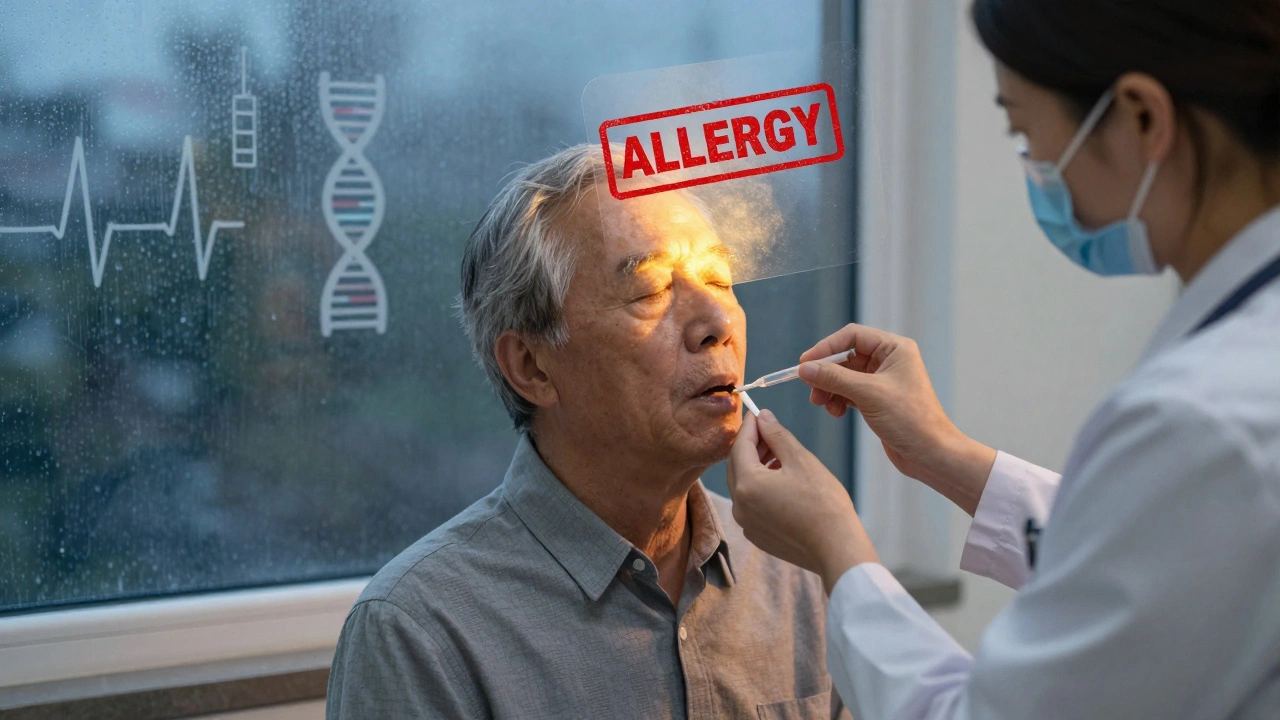
What Should You Do?
If you think you’re allergic to a drug, don’t just accept it. Ask questions. - What exactly happened? Be specific. Was it a rash? Nausea? Trouble breathing? - When did it happen? Within minutes? Days later? - Did you ever get retested? Most people never do. Talk to your doctor about a referral to an allergist. If you’ve been told you’re allergic to penicillin, sulfonamides, or NSAIDs, ask if testing is an option. It’s safe, quick, and often free through hospital programs. If you’ve never had a serious reaction but have a label on your chart, ask for it to be reviewed. You might be able to remove it-and open up better treatment options. And if you’ve had a true allergic reaction-like anaphylaxis or severe swelling-then yes, avoid that drug. But make sure it’s documented correctly. Carry an epinephrine auto-injector if prescribed. Wear a medical alert bracelet. And tell every new doctor you see.Final Thoughts
Not every bad reaction is an allergy. Not every rash is a sign your immune system is attacking. Most of the time, it’s just your body adjusting to a new chemical. But if you’re truly allergic, that’s a serious medical condition that needs respect. The difference between a side effect and a true drug allergy isn’t just academic. It’s life-changing. Getting it right means you get the right treatment. It means avoiding unnecessary risks. It means saving money-for you and the system. Don’t let a mislabeled reaction hold you back. Ask. Get tested. Know the difference.Can you outgrow a drug allergy?
Yes, especially with penicillin. Up to 80% of people who had a true penicillin allergy as children lose it over time, even without testing. The immune system can forget the reaction after 10-20 years. That’s why retesting is recommended for anyone with a childhood allergy label-even if they’ve avoided the drug for decades.
Is a rash always a sign of a drug allergy?
No. Many rashes caused by drugs are side effects, not allergies. Viral infections, heat, or even stress can cause rashes that coincide with starting a new medication. A true allergic rash (like hives or a widespread maculopapular rash) usually appears within days to two weeks, doesn’t itch at first, and often spreads. But only a doctor can tell the difference. Never assume a rash is an allergy without evaluation.
Can you have a reaction the first time you take a drug?
Yes, but not for the reason you might think. True IgE-mediated allergies usually require prior exposure to trigger the immune response. But some drugs, like certain antibiotics or contrast dyes, can cause what’s called a pseudoallergic reaction-where the drug directly triggers mast cells to release histamine, even without prior exposure. These mimic allergies but aren’t immune-system-driven. They’re still serious and require avoidance.
Are all antibiotics likely to cause allergic reactions?
No. Only certain classes carry real allergy risk. Penicillins (like amoxicillin) are the most common, followed by sulfonamides (like Bactrim) and cephalosporins. Other antibiotics like azithromycin or doxycycline rarely cause true allergies. Most reactions to these are just side effects like nausea or diarrhea. Don’t assume all antibiotics are risky just because one caused a problem.
What should I do if I have a reaction to a drug?
Stop taking the drug and contact your doctor. For mild symptoms like a rash or upset stomach, monitor closely. For breathing trouble, swelling, dizziness, or a rapid heartbeat, seek emergency care immediately. Don’t try to tough it out. Keep a written record of what happened, when, and how long it lasted. That info is critical for future diagnosis and avoiding unnecessary restrictions.
Can I take other drugs if I’m allergic to one?
Sometimes. Allergies aren’t always cross-reactive. For example, if you’re allergic to penicillin, you might still be able to take cephalosporins safely-especially newer ones. But with sulfonamides, cross-reactivity is common. Always check with your doctor or allergist before trying a related drug. Never assume safety based on class alone.
Is drug allergy testing covered by insurance?
Most insurance plans cover allergy testing if it’s medically necessary, especially for high-risk drugs like penicillin. Many hospitals offer free or low-cost programs for patients with unconfirmed allergy labels. Ask your doctor or allergist-testing can save you thousands in future care costs and open up better treatment options.




Katherine Liu-Bevan
11 December 2025 - 00:29 AM
Most people don’t realize how often they mislabel side effects as allergies. I’ve seen patients avoid penicillin for decades because they got a stomachache at 12 years old. Turns out, they were fine. Testing changed everything for them - better antibiotics, lower costs, no unnecessary C. diff risk. It’s not just about personal health, it’s systemic.
Doctors need patients to be more precise. Not ‘I had a reaction,’ but ‘I broke out in hives 20 minutes after taking it.’ That distinction saves lives.
And yes, you can outgrow penicillin allergies. Eighty percent of kids who had them lose the sensitivity by adulthood. Yet we keep the label on the chart like a curse. We need to normalize re-evaluation.
It’s not fear that keeps people from testing - it’s inertia. No one tells them it’s safe, simple, and often free. We need better public messaging.
I’ve worked in primary care for 18 years. This is the single most under-addressed issue in routine prescribing.
Stop assuming. Start asking. Your next doctor will thank you.
Courtney Blake
12 December 2025 - 23:39 PM
Oh great. Another ‘trust your doctor’ pep talk. Meanwhile, Big Pharma is laughing all the way to the bank. You think they want you to know you’re not allergic? They want you stuck on expensive, patent-protected antibiotics so you keep buying.
And don’t even get me started on the ‘oral challenge’ - yeah right, you’re gonna hand me a full dose of penicillin in some clinic like it’s a free sample? What if I die? Who’s liable?
They don’t test because they don’t want you to know how many of these drugs are just overpriced placebos with side effects they hide in fine print.
And now you want me to trust the same system that gave us opioids and Vioxx? Nah. I’ll stick with my ‘allergy’ label. At least it’s mine.
PS: I’ve had 3 anaphylactic episodes. Don’t tell me what’s ‘usually’ a side effect. You don’t know my body.
PPS: 😒
Lisa Stringfellow
13 December 2025 - 07:47 AM
Ugh. This post feels like a pharmaceutical ad. Who even wrote this? Some med rep pretending to be a doctor?
‘Most side effects fade in 2-4 weeks’ - sure, if you’re lucky. My mom took statins for 3 months and ended up in the hospital with rhabdomyolysis. They called it a ‘side effect.’ Translation: they didn’t care enough to stop it sooner.
And ‘penicillin allergy testing is safe’? Tell that to the 0.2% who have a reaction during the challenge. That’s not safe, that’s gambling with your life.
Why do people always act like the system has your best interest at heart? It doesn’t. It’s all about cost savings and liability. You’re just a data point.
Also, why is everyone so eager to re-label their allergies? Maybe because they don’t want to deal with the truth: drugs are dangerous, and doctors are fallible.
Just stop pushing this narrative. It’s manipulative.
And don’t say ‘ask your doctor.’ I did. They shrugged.
Kristi Pope
13 December 2025 - 19:35 PM
I love how this post breaks it down without shaming anyone who’s been misled. Been there - thought I was allergic to sulfa because I got a rash after a UTI. Turns out it was the virus I had on top of the meds. Took me years to untangle that.
My grandma avoided penicillin for 50 years because her sister had a bad reaction back in the 70s. She finally got tested last year - cleared. Now she’s on the cheapest, most effective antibiotic for her pneumonia. Saved her a week in the hospital.
It’s not about being ‘right’ - it’s about being free. Free from unnecessary restrictions. Free from fear. Free from worse meds.
If you’ve got a label on your chart that’s based on something vague - nausea, dizziness, a rash that faded - please, talk to someone. Not to prove you’re wrong. To prove you’re safe.
And if you’re a doctor? Please ask. Don’t assume. The difference between ‘side effect’ and ‘allergy’ isn’t just medical - it’s human.
You’re not broken for having a reaction. You’re just human. And you deserve better care.
Eddie Bennett
14 December 2025 - 09:00 AM
My sister’s allergic to penicillin. We thought it was real until she got tested at 32. Turned out she had a GI reaction to amoxicillin as a kid - diarrhea, no hives, no breathing issues. Just a bad stomach. They called it an allergy. She avoided it for 20 years.
Got her a new antibiotic last year. No issues. No drama. Just… normal.
People don’t realize how much they’re limiting themselves. I’ve seen friends avoid NSAIDs because they got a headache once. That’s not an allergy. That’s a side effect. And they’re on opioids now because ‘they can’t take ibuprofen.’
It’s not about being ‘scared.’ It’s about not knowing the difference. And nobody explains it well.
Just say this: if you didn’t break out in hives, swell up, or nearly die - it’s probably not an allergy. You can probably handle the drug. Just talk to someone who knows how to test.
Also, the part about cross-reactivity? Huge. I had a friend allergic to penicillin but could take cefdinir just fine. No one told her that.
Doris Lee
15 December 2025 - 02:57 AM
My cousin thought she was allergic to ibuprofen because she got dizzy once. She took Tylenol for years. Then she tried it again after a knee surgery and had zero issues. She was so mad she wasted so many years in pain.
Side effects suck. But they’re not the enemy. Avoiding good meds because you’re scared of side effects is worse.
Just write down what happened. When. How bad. Then ask your pharmacist. They’ll help you sort it out.
Don’t let a bad experience lock you out of better options.
And yes, you can outgrow it. Seriously.
It’s not magic. It’s medicine.
Jack Appleby
16 December 2025 - 03:57 AM
It’s fascinating how the medical community has institutionalized the misclassification of pharmacological side effects as immunological allergies. The cognitive dissonance is staggering. One might argue that the entire framework of pharmacovigilance is predicated on a fundamental epistemological flaw - conflating dose-dependent, predictable adverse reactions with IgE-mediated hypersensitivity.
Moreover, the JAMA study cited is methodologically sound, yet its implications are systematically ignored by primary care physicians who rely on patient self-reporting without critical appraisal. This is not merely a communication issue - it is a failure of clinical reasoning.
And let us not overlook the economic calculus: $1.5 billion annually wasted because of diagnostic laziness. This is not incompetence. It is negligence dressed in white coats.
Until we reform medical education to emphasize differential diagnosis over anecdotal recall, we will continue to mislabel, misprescribe, and mismanage.
And yes, I’ve published in the New England Journal. You’re welcome.
Frank Nouwens
16 December 2025 - 21:23 PM
Thank you for this comprehensive and clinically accurate overview. The distinction between pharmacological side effects and true immunological reactions is one of the most critical yet underappreciated concepts in outpatient medicine.
As a physician who has reviewed over 1,200 patient allergy histories, I can confirm that approximately 87% of reported penicillin allergies are unsubstantiated. The majority of these are gastrointestinal or neurologic side effects misinterpreted as allergic.
It is imperative that patients understand that allergy labels are not immutable. They are clinical observations subject to revision with appropriate evaluation.
For those considering testing: the risk of a false positive is far greater than the risk of a false negative in the context of supervised challenge protocols.
Continued education and institutional protocols for allergy re-evaluation are urgently needed. This post represents a vital step in that direction.
Kaitlynn nail
16 December 2025 - 22:54 PM
It’s not about the drug. It’s about control. We don’t trust the system. So we hold onto our ‘allergies’ like sacred texts. Even if they’re wrong. Even if they hurt us.
It’s not medicine. It’s mythmaking.
And the real tragedy? We’re all just trying to feel safe.
But safety isn’t in avoiding pills.
It’s in knowing the truth.
Rebecca Dong
16 December 2025 - 23:18 PM
Wait - so you’re telling me the entire pharmaceutical industry is manipulating us into thinking we’re allergic so they can sell us MORE expensive drugs? And the doctors are in on it? And the ‘testing’ is just a scam to make us pay more? I’ve been researching this for months. This is a cover-up. They don’t want us to know that ALL drugs are poison. Penicillin? Just a fancy toxin. They call it ‘medicine’ to make us feel better about taking it.
And what about the ‘basophil activation test’? FDA-approved? In 2023? That’s the same year they approved the new COVID booster that caused 3,000 deaths. Coincidence? I think not.
They’re testing us. Not the other way around.
And the ‘oral challenge’? That’s not medicine. That’s a human experiment.
Wake up.
They’re not trying to help you. They’re trying to keep you dependent.
And if you believe this post? You’re already part of the system.
Michelle Edwards
18 December 2025 - 09:01 AM
I’m so glad someone wrote this. I used to think I was allergic to codeine because I got super drowsy. Turned out it was just my body’s way of saying ‘slow down.’ I took it again years later with no issue.
It took me years to stop blaming myself for every weird reaction. Like, ‘Oh no, I’m broken again.’ But it’s not you. It’s the drug. And most of the time, it’s fixable.
If you’re scared? Talk to someone. A pharmacist, a nurse, a doctor who listens. Don’t let fear make your choices for you.
You’re not weak for having a side effect.
You’re human.
And you deserve to be heard.
And maybe - just maybe - you’re not allergic at all.