Generic drugs save patients and the healthcare system billions each year. In the U.S., 90.7% of all prescriptions are filled with generics - but not all generics are created equal. While the FDA requires them to match brand-name drugs in active ingredients, strength, and dosage, there are real, documented cases where patients experience unexpected side effects, therapeutic failure, or even harm after switching to a different generic manufacturer. Pharmacists are on the front lines of this issue. They’re the ones who see the patient who says, "This new pill doesn’t work like the last one," or whose lab results suddenly go off track. Knowing when to flag these problems isn’t optional - it’s part of the job.
Why Some Generics Just Don’t Work the Same
The FDA’s approval process for generics hinges on bioequivalence: the generic must deliver the same amount of active ingredient into the bloodstream as the brand, within a range of 80% to 125%. That sounds precise, but a 20% variation on either side means two different generics of the same drug could deliver significantly different doses. For most medications, that’s fine. For others, it’s dangerous. Take levothyroxine, used to treat hypothyroidism. A 2021 study in the Journal of the American Pharmacists Association found that switching between generic manufacturers led to therapeutic failure in over twice as many patients compared to staying on one version. One patient’s TSH level jumped from 2.1 to 8.7 after a switch - a clear sign their thyroid wasn’t getting enough hormone. That’s not a fluke. The FDA has flagged 18 drugs as having a narrow therapeutic index (NTI), meaning even small changes in blood levels can cause toxicity or treatment failure. Others include warfarin, phenytoin, lithium, and digoxin. For these, a 10% difference in absorption can mean the difference between a seizure and stability. Extended-release formulations are another weak spot. A 2020 FDA analysis found that 7.2% of generic extended-release opioids failed dissolution testing - meaning the drug didn’t release properly over time. Patients got a spike of medication all at once, then nothing. That’s not just ineffective - it’s risky. The FDA issued a warning in 2023 about certain generic versions of diltiazem CD after 47 cases of therapeutic failure were reported. These aren’t rare anomalies. They’re patterns.The Look-Alike, Sound-Alike Trap
Another silent killer in pharmacy is confusion between similarly named drugs. The Institute for Safe Medication Practices reports that 14.3% of all generic medication errors come from look-alike or sound-alike names. Consider these pairs:- Oxycodone/acetaminophen vs. hydrocodone/acetaminophen
- Clonazepam vs. clonidine
- Epinephrine vs. ephedrine
When to Flag a Problem - The Pharmacist’s Checklist
Not every patient complaint means a bad generic. But there are clear red flags. Here’s what pharmacists should watch for:- Therapeutic failure within 2-4 weeks after switching to a new generic - especially with NTI drugs. If a diabetic’s HbA1c climbs or a seizure patient starts having breakthrough episodes, don’t assume non-adherence. Check the manufacturer.
- Unexplained side effects that weren’t present before the switch. New dizziness, nausea, or fatigue could signal a different inactive ingredient or inconsistent release profile.
- Lab value shifts. For drugs like warfarin, lithium, or tacrolimus, a change in blood level of more than 15-20% after a generic switch is a red flag. Therapeutic drug monitoring exists for a reason.
- Patient reports of different pill appearance. If a patient says, "This one is smaller, paler, or has a different imprint," it’s worth verifying the manufacturer. Sometimes, a change in pill shape or color leads to patient confusion or non-adherence.
- Multiple switches. Patients who’ve been switched back and forth between generics - especially for NTI drugs - are at higher risk. Document every manufacturer change.
What Happens When Pharmacists Speak Up
When a pharmacist flags an issue, it triggers a chain reaction. They can:- Switch the patient back to the original generic or brand
- Report the issue to the FDA’s MedWatch system - average submission time is under 5 minutes
- Notify the prescriber with lab data and manufacturer details
- Document the manufacturer name on the prescription label for future reference
The Bigger Picture: Why This Matters
Generics make healthcare affordable. But affordability shouldn’t mean compromising safety. The FDA inspected over 2,100 manufacturing facilities in 2022 and found 187 data integrity issues and 243 quality control failures. Most of these were at overseas plants - in India and China, where 88% of U.S. generic ingredients come from. The FDA is now ramping up inspections and testing, with plans to increase sampling of generics by 40% over the next three years. Meanwhile, states are starting to act. Four states - Massachusetts, New York, Texas, and Virginia - require pharmacists to get explicit consent before substituting NTI generics. Other states are considering similar rules. Pharmacists who understand the science behind these issues aren’t just following protocols - they’re preventing harm.
What Patients Don’t Tell You
A 2023 Consumer Reports survey found that while 78% of patients were happy with generics because of cost, 22% reported different side effects after switching manufacturers. Most never told their pharmacist. They just stopped taking the pills. Or they assumed it was "all in their head." That’s why pharmacists need to proactively ask: "Has anything changed since your last refill?" Even small changes matter.What You Can Do Today
If you’re a pharmacist:- Check the FDA’s Orange Book before dispensing NTI drugs
- Record the manufacturer name on every generic prescription
- Use the FDA’s MedWatcher app to report suspected problematic generics
- Educate technicians on look-alike/sound-alike risks
- Ask patients: "Do you feel any different since your last refill?"
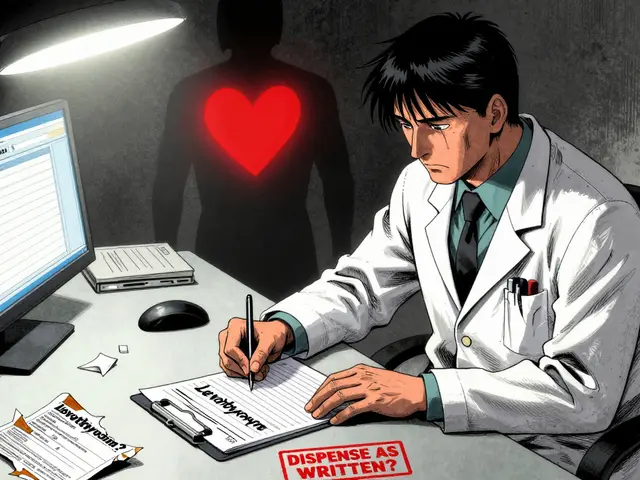
- Write "Dispense as Written" or "Do Not Substitute" on prescriptions for NTI drugs
- Ask your pharmacist if they’ve seen any issues with the generic you’re prescribing
Are all generic drugs safe?
Most are - over 90% of generics work just as well as brand-name drugs. But safety isn’t guaranteed for every manufacturer or every drug. Certain types - like narrow therapeutic index drugs (e.g., levothyroxine, warfarin) and extended-release formulations - have higher rates of issues. The FDA approves generics based on bioequivalence, but that allows for up to 20% variation in how the drug is absorbed. For some patients, that’s enough to cause problems.
What is a narrow therapeutic index (NTI) drug?
An NTI drug has a very small range between an effective dose and a toxic dose. Even small changes in blood levels can lead to treatment failure or serious side effects. Examples include levothyroxine, warfarin, phenytoin, lithium, digoxin, and tacrolimus. For these drugs, switching between generic manufacturers can be risky. Pharmacists should avoid unnecessary switches and monitor patients closely if a switch occurs.
How can I tell if a generic drug is problematic?
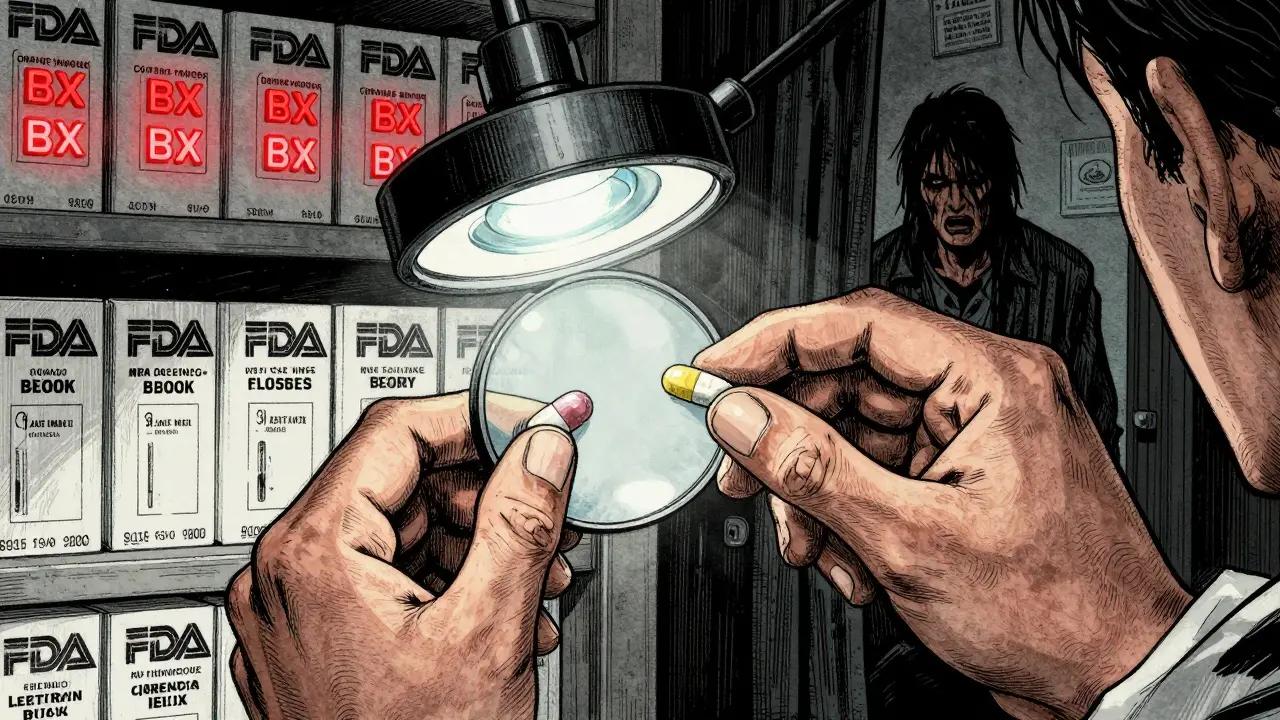
Watch for three signs: 1) The patient reports a change in how the drug works or new side effects after switching manufacturers; 2) Lab results show a significant shift (e.g., TSH, INR, or drug levels outside the therapeutic range); 3) The generic has an "BX" rating in the FDA’s Orange Book, meaning it’s not considered therapeutically equivalent. Document the manufacturer, check the pill’s appearance, and talk to the patient.
Can pharmacists refuse to substitute a generic?
Yes - in many cases. Federal law allows pharmacists to substitute generics unless the prescriber writes "Dispense as Written" or "Do Not Substitute." But even when substitution is allowed, pharmacists have a professional obligation to refuse if they believe the switch could harm the patient. For NTI drugs, many states now require patient consent before substitution. Pharmacists who flag unsafe generics are acting within their scope of practice - and often preventing harm.
Why do some generics have different effects if they have the same active ingredient?
The active ingredient is the same, but the inactive ingredients - like fillers, binders, and coatings - can differ. These affect how quickly the drug dissolves and is absorbed. For extended-release pills, a different coating might cause the drug to release too fast or too slow. A 2020 FDA study found 7.2% of generic extended-release opioids failed dissolution testing. Also, manufacturing quality varies. Some plants have data integrity or quality control issues, which the FDA has documented in over 400 facilities since 2020.




Chris Beeley
19 February 2026 - 09:59 AM
Let me tell you something that no one else in this thread has the intellectual courage to say: the FDA’s entire generic drug approval framework is a charade built on statistical sleight-of-hand. That 80%-125% bioequivalence window? It’s not a standard-it’s a loophole. Imagine if your insulin dose could vary by 20% and you were told, ‘It’s still the same drug.’ That’s not medicine-that’s Russian roulette with a prescription pad. And don’t get me started on the manufacturing facilities in India and China. I’ve seen the reports. One plant in Hyderabad had 14 separate FDA warning letters between 2019 and 2022. Four of those were for falsifying dissolution data. Four. And yet, those pills still end up in your grandmother’s medicine cabinet because the system prioritizes cost over competence. We’re not talking about a few bad apples. We’re talking about an entire orchard rotting from the inside. The FDA doesn’t inspect 2,100 facilities annually-they inspect the paperwork. And the pharmacists? They’re expected to be detectives without a badge, a budget, or even the legal right to refuse a substitution in most states. This isn’t healthcare. It’s a Ponzi scheme disguised as affordability.
Courtney Hain
20 February 2026 - 20:00 PM
Okay, but have you heard about the 2021 CDC whistleblower report that was buried? The one that said the FDA knowingly approved 117 generics with inactive ingredients linked to autoimmune flares? I’m not joking. They knew. They had the data. But they didn’t act because the pharmaceutical conglomerates were funding their budget. I’m talking about binders made with talc, fillers with gluten derivatives, and coatings laced with phthalates-all approved because they’re ‘chemically inert.’ But inert doesn’t mean harmless. I have a friend with lupus who went into full-blown renal failure after switching to a generic prednisone. Her doctors blamed her diet. Her pharmacist? They said, ‘It’s the same drug.’ The same drug? The same active ingredient, sure. But the delivery system? Totally different. And the FDA? They’re still approving these. Why? Because Big Pharma owns the regulators. It’s not conspiracy theory-it’s documented. Look up the revolving door between FDA officials and Pfizer’s board. It’s not a coincidence. It’s a system.
Michaela Jorstad
22 February 2026 - 12:08 PM
Thank you for writing this. As a pharmacist for 18 years, I’ve seen this firsthand. I’ve had patients cry because they couldn’t afford their brand, then switch to a generic-and then lose their job because they couldn’t focus. I’ve had diabetic patients whose A1c jumped from 6.8 to 9.2 after a manufacturer change. I’ve called doctors, filed MedWatch reports, and even called patients at home to ask if they felt different. It’s exhausting. But I do it. Because someone has to. I keep a binder in my drawer with every problematic manufacturer’s name, pill color, and batch number. I write it on the label. I explain it to patients. And yes-I’ve refused substitutions. I’ve been reprimanded. I’ve been told I’m ‘making work for myself.’ But I’d rather lose my job than lose a patient. If you’re a pharmacist reading this: you’re not alone. If you’re a patient: ask your pharmacist. Ask them about the manufacturer. Ask them if they’ve seen issues. And if they hesitate? That’s your sign to dig deeper. You deserve better.
Arshdeep Singh
24 February 2026 - 04:06 AM
Bro, you’re overthinking this. Everyone’s just mad because they don’t want to pay $400 for a pill. The body adapts. It’s not magic. You think your thyroid is a Ferrari? Nah. It’s a Honda Civic. It’ll run on 87 octane. And if you’re having side effects? Maybe you’re just anxious. Or maybe your body’s detoxing from years of brand-name placebo. I’ve seen people switch from one generic to another and swear the new one ‘feels different.’ But when I check their labs? Everything’s normal. You know what’s really dangerous? People thinking they know more than science. The FDA doesn’t approve junk. If it’s on the shelf, it’s safe. Period. Stop making drama out of a system that’s saving millions. You want perfect? Pay for the brand. But don’t blame the system for your unwillingness to accept reality.
Danielle Gerrish
26 February 2026 - 01:49 AM
OMG I just had the most intense realization-this whole thing is a metaphor for life, right? Like, we’re all just generics trying to survive in a brand-name world. I mean, think about it: we’re conditioned to believe ‘equivalent’ means ‘the same,’ but emotionally? No. Two people can take the same pill, have the same diagnosis, and one is thriving, the other is falling apart. Why? Because the ‘inactive ingredients’ in our lives-the trauma, the sleep, the loneliness, the stress-they’re the real culprits. I used to be on levothyroxine. I switched generics. My TSH went nuts. My therapist said it was ‘psychosomatic.’ But I knew. I knew it wasn’t in my head. It was in the coating. In the filler. In the factory that didn’t care. And now? I don’t take anything unless I know the manufacturer. I Google the batch. I call the pharmacy. I ask for the pill’s imprint. I’m not paranoid. I’m PREPARED. And if you’re not doing this? You’re just waiting for your body to betray you. I’m not mad. I’m just… awake.
Liam Crean
27 February 2026 - 07:11 AM
I appreciate the depth of this post. I work in a rural clinic where patients often can’t afford brand drugs, and I’ve seen the quiet suffering that follows a generic switch. I don’t have dramatic stories-no strokes, no seizures-but I’ve seen the slow decline: the elderly woman who stopped eating because she felt nauseous every day after a pill change, the teen with epilepsy who started missing school. We don’t always have lab access. We don’t always have time. But we do have observation. I’ve started asking: ‘What’s different since your last refill?’ Not ‘Are you having side effects?’-too vague. ‘What’s different?’ opens the door. And if they pause? I listen. No rush. No judgment. Just space. It’s not glamorous. But it’s real. And maybe that’s the point: safety isn’t always in the data. Sometimes it’s in the silence between the words.
madison winter
28 February 2026 - 17:24 PM
Yeah, but how many people actually die from this? Like, statistically? I mean, I get that it’s concerning, but isn’t this just another ‘pharma bad’ narrative? We’ve had generics for decades. Billions of doses. And yet, the death rate from medication errors is still dominated by prescribing mistakes, not manufacturing. I’m not saying it’s not a problem-I’m saying it’s not the apocalypse. We’re over-medicalizing normal variation. Also, why is everyone so obsessed with the FDA? They’re not perfect, but they’re not evil. And if you hate generics so much, why not just prescribe the brand? Oh right-because it costs $300. So… maybe the real issue is the healthcare system, not the pill?
Robert Shiu
1 March 2026 - 16:56 PM
Thank you for this. Seriously. I’ve been a pharmacist for 12 years, and I’ve been screaming into the void about this since 2018. I’ve had patients come in with their pill bottles and say, ‘This one’s lighter.’ ‘This one’s paler.’ ‘This one tastes weird.’ And I’ve watched them stop taking their meds because they didn’t trust it. I’ve called manufacturers. I’ve sent letters to reps. I’ve filed reports. I’ve switched patients back. And you know what? I’ve never once regretted it. Not once. I don’t care if it takes an extra 10 minutes. If someone’s TSH jumped from 3.1 to 10.8? That’s not ‘non-compliance.’ That’s a warning bell. And if we don’t ring it? Who will? I’m not a hero. I’m just someone who shows up. And if you’re reading this and you’re a pharmacist? Keep showing up. You’re doing more than you know.
Oana Iordachescu
1 March 2026 - 17:00 PM
While the article presents a compelling case, it is imperative to acknowledge the systemic limitations of pharmacovigilance in a market-driven healthcare ecosystem. The FDA's reliance on post-market surveillance, rather than preemptive, granular bioequivalence testing, is not merely a regulatory oversight-it is a structural failure. The 20% bioequivalence window, while statistically permissible, is clinically indefensible for NTI drugs. Furthermore, the absence of mandatory batch-specific labeling in the U.S. (unlike the EU's requirement for traceable batch numbers) enables obfuscation. The 7.2% failure rate in extended-release opioids is not an anomaly; it is an indictment. We must demand: (1) mandatory manufacturer disclosure on all prescription labels; (2) real-time pharmacovigilance dashboards accessible to prescribers and patients; and (3) independent third-party testing of generics, funded not by industry, but by public health allocations. Until then, we are not healing-we are gambling.
Davis teo
2 March 2026 - 15:12 PM
Bro, I just had to comment. This whole thing? It’s wild. I was on generic warfarin last year. Switched manufacturers. My INR went from 2.5 to 5.7. I almost bled out. I went to the ER. The doc said, ‘Weird.’ The pharmacist said, ‘It’s the same drug.’ SAME DRUG? I had a clotting disorder. I almost died because a pill looked different. Now? I only take the brand. I pay $180 a month. I don’t care. I’m alive. And if you’re a pharmacist? Don’t just check the Orange Book. Look at the pill. Touch it. Smell it. Ask the patient. And if they say, ‘It’s different’? BELIEVE THEM. I’m not a conspiracy guy. But I am a survivor. And I’ll never trust a generic again.