Licorice Root Glycyrrhizin Calculator
Check Your Glycyrrhizin Intake
This calculator helps you understand how much glycyrrhizin you're consuming from licorice products and if it's safe while taking blood pressure medication.
It’s not just sugar. If you’re taking blood pressure medication and you’ve been snacking on black licorice, sipping licorice tea, or popping herbal supplements labeled "licorice root," you might be quietly sabotaging your treatment. This isn’t a myth. It’s not a warning you can ignore. Licorice root doesn’t just slightly reduce your meds’ effectiveness-it can make them nearly useless, pushing your blood pressure into dangerous territory within days.
What’s Really in Licorice Root?
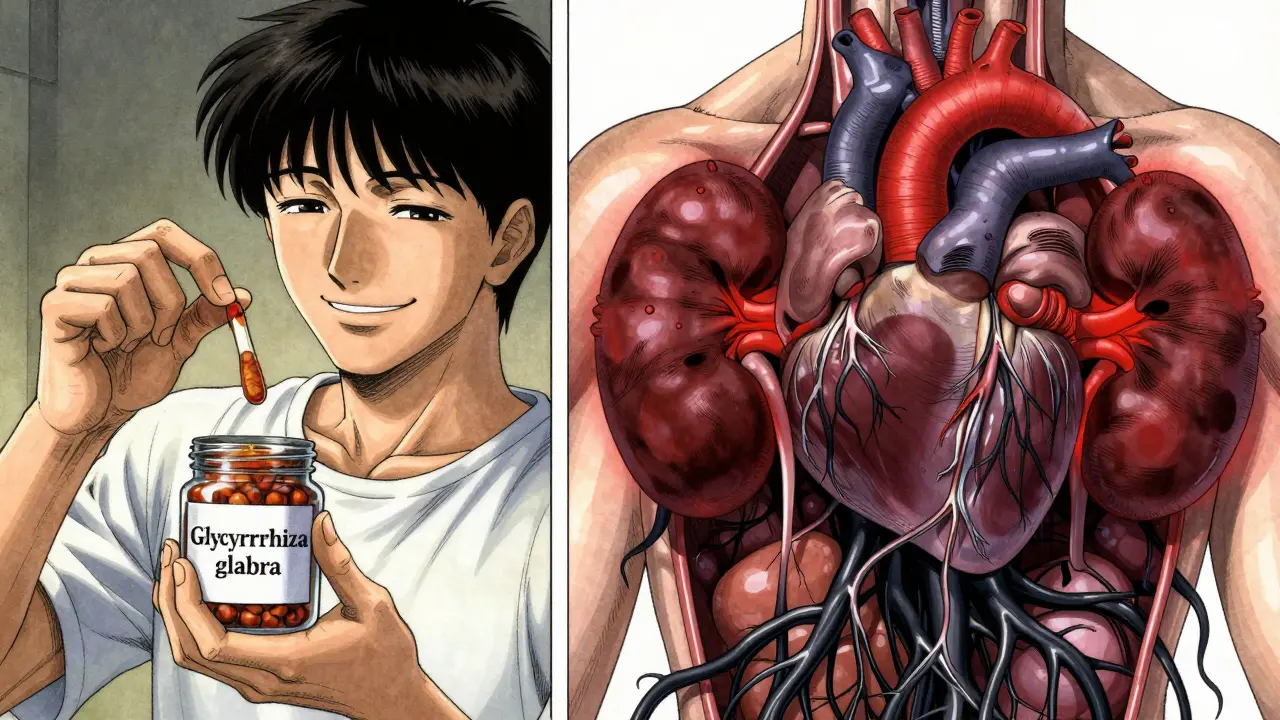
Licorice root comes from the plant Glycyrrhiza glabra. It’s been used for thousands of years-for coughs, stomach issues, even as a sweetener. But the sweetness? That’s not natural sugar. It’s glycyrrhizin, a compound about 50 times sweeter than table sugar. And while it tastes good, it acts like a hormone in your body that mimics aldosterone, the same hormone your kidneys use to hold onto salt and water. That’s the problem.When you consume licorice root regularly, glycyrrhizin gets broken down into glycyrrhetic acid. This acid blocks an enzyme called 11β-hydroxysteroid dehydrogenase type 2. That enzyme normally keeps cortisol (a stress hormone) from binding to your mineralocorticoid receptors. When it’s blocked, cortisol acts like aldosterone. Result? Your body holds onto more sodium, loses potassium, and retains extra fluid. All of that = higher blood pressure.
It doesn’t take much. Studies show that consuming more than 100 mg of glycyrrhizin per day for two weeks can trigger these effects. That’s roughly 50 grams of real licorice candy-or a daily cup of licorice tea made from the root. Some supplements contain even higher concentrations. And the damage doesn’t vanish the moment you stop. Because glycyrrhizin sticks around, its effects can last up to two weeks after you quit.
How It Kills Blood Pressure Meds
If you’re on medication to lower your blood pressure, licorice root doesn’t just add stress to your system-it actively fights your drugs. Here’s how it messes with the most common classes:- ACE inhibitors (like lisinopril): These drugs work by relaxing blood vessels and reducing fluid volume. Licorice does the opposite-it increases fluid volume. Studies show this combination can reduce the drug’s effectiveness by 30-50%.
- ARBs (like losartan): These block the hormone that narrows blood vessels. Licorice bypasses this by creating its own sodium-retaining effect. Research shows a 25% drop in effectiveness.
- Calcium channel blockers (like amlodipine): These relax artery walls. Licorice increases blood volume and stiffens vessels. One study found blood pressure control worsened by 15-20% in patients taking both.
- Potassium-sparing diuretics (like spironolactone): This is the worst combo. These drugs keep potassium in your body. Licorice drains potassium. One case report showed complete loss of therapeutic effect within 7-10 days. Patients ended up in the ER with dangerously low potassium and sky-high blood pressure.
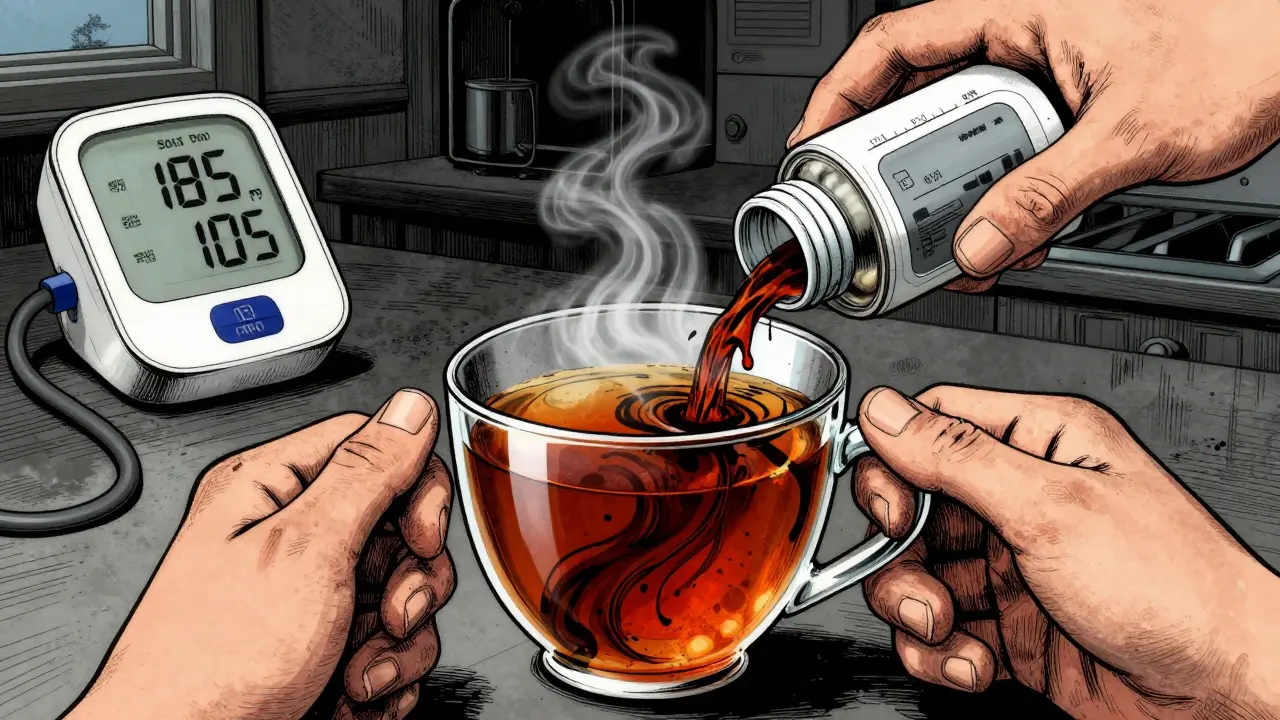
The numbers don’t lie. In hypertensive patients, licorice can raise systolic blood pressure by 10-30 mmHg. That’s the difference between controlled and crisis levels. One man on lisinopril saw his BP jump from 130/80 to 185/105 in just 10 days after starting licorice tea. Another, on amlodipine, saw a 22-point systolic spike over two weeks. These aren’t rare cases-they’re documented in medical journals and patient forums.
It’s Not Just Candy
Most people think they’re safe if they avoid black licorice candy. But here’s the trap: 95% of licorice-flavored candies in the U.S. don’t contain real licorice root. They use anise oil, which tastes similar but has zero glycyrrhizin. So if you’re avoiding candy, you might think you’re safe.But real licorice root hides in plain sight:
- Herbal teas labeled "licorice root" or "Glycyrrhiza glabra"
- Dietary supplements for digestion, immunity, or stress
- Traditional Chinese medicine formulas (25% contain licorice root)
- Some cough syrups and throat lozenges
- Even certain herbal laxatives (30% contain it)
Check the ingredient list. If it says "licorice root," "Glycyrrhiza glabra," or "licorice extract," you’re getting glycyrrhizin. If it says "anise oil," "fennel," or "natural flavor," you’re likely safe. But don’t assume. Labels aren’t always clear. A 2021 study found only 37% of licorice supplements warn about blood pressure risks.
Who’s at Risk?
Anyone on blood pressure medication is at risk. But some people are more vulnerable:- Those on potassium-sparing diuretics (spironolactone, eplerenone)
- People with kidney disease or heart failure
- Older adults, whose bodies clear glycyrrhizin slower
- Those already struggling to control their BP
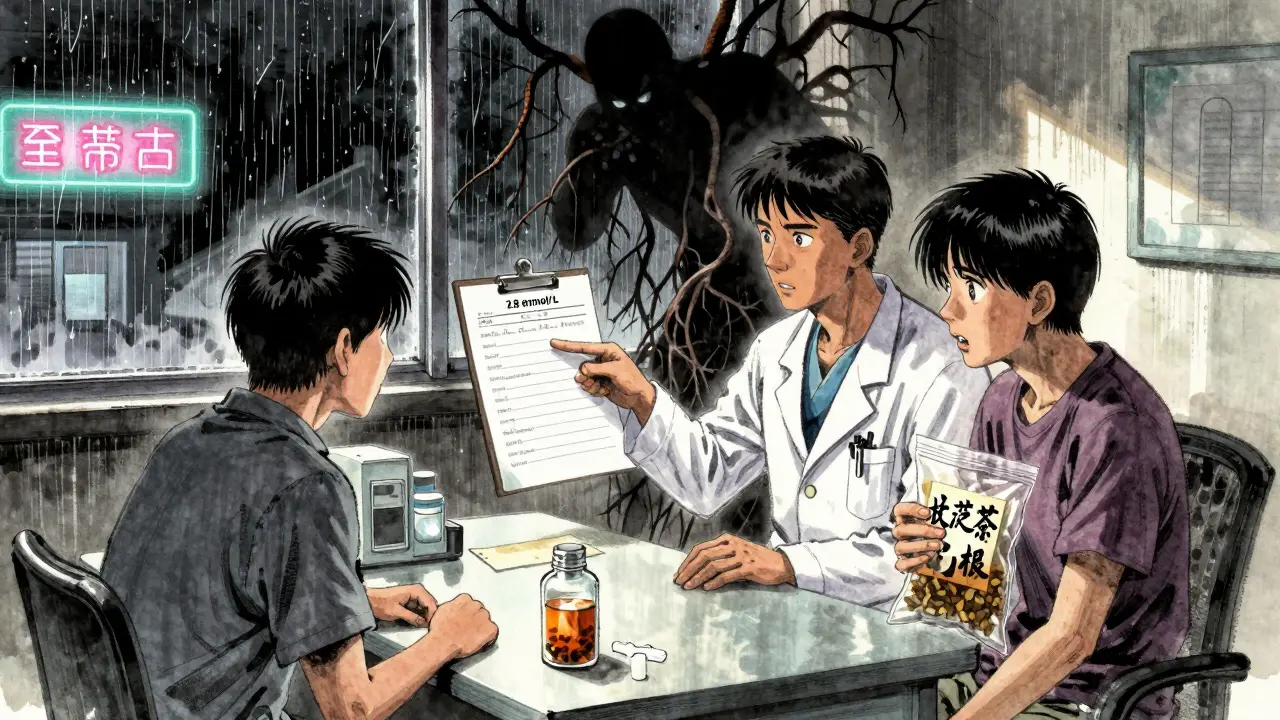
Low potassium is a silent red flag. Normal levels are 3.5-5.0 mmol/L. Licorice can drop them below 3.0 mmol/L in under 10 days. Symptoms? Muscle cramps, weakness, irregular heartbeat, fatigue. These are often mistaken for aging or stress. But they’re warning signs your meds are failing.
What Should You Do?
If you’re on blood pressure medication:- Stop all licorice root products. That includes tea, candy, supplements, and herbal remedies. Even small daily amounts add up.
- Check every label. Look for "Glycyrrhiza glabra" or "licorice root." Avoid anything with it.
- Ask your pharmacist. They can scan your supplements and OTC products for hidden licorice. Many don’t even know it’s in them.
- Get your potassium checked. If you’ve been consuming licorice, ask for a blood test. Levels below 3.5 mmol/L need immediate attention.
- Switch to DGL if you need digestive support. Deglycyrrhizinated licorice (DGL) has over 99% of the glycyrrhizin removed. It’s safe for your BP meds and still helps with heartburn or ulcers.
The American Heart Association says people on antihypertensives should avoid licorice root entirely. The European Food Safety Authority sets a "safe" limit of 100 mg glycyrrhizin per day-but that’s for healthy people. If you’re on meds, there’s no safe dose.
What About the Future?
Right now, the FDA doesn’t require supplement makers to list glycyrrhizin amounts. That’s changing. The proposed Dietary Supplement Listing Act of 2023 would force manufacturers to disclose active ingredients. That’s good news. But until then, you’re on your own.Some companies are catching on. More DGL products are appearing on shelves. But if you’re buying licorice root for "natural healing," you’re risking your health. The data is clear: the benefits don’t outweigh the dangers when you’re on blood pressure meds.
There’s no magic workaround. No "just a little" rule. No exception for "organic" or "wildcrafted." Glycyrrhizin is glycyrrhizin. And it doesn’t care how pure your intentions are.
If you’ve been using licorice root and your blood pressure has been stubborn, it’s not your fault. It’s not your meds failing. It’s likely something you thought was harmless.
Stop it. Check your labels. Talk to your doctor. Your blood pressure-and your heart-will thank you.
Can I still eat black licorice candy if I’m on blood pressure meds?
Only if it doesn’t contain real licorice root. Most U.S. black licorice candy uses anise oil, not Glycyrrhiza glabra. Check the ingredient list: if it says "licorice root," "Glycyrrhiza glabra," or "licorice extract," avoid it. If it says "anise oil" or "natural flavor," you’re likely safe. But don’t guess-always check.
How long does it take for licorice to affect blood pressure meds?
Effects can show up in as little as 3-5 days, especially if you’re consuming more than 50 mg of glycyrrhizin daily. Blood pressure spikes and potassium drops are often noticeable within 7-10 days. In one documented case, a patient’s systolic pressure jumped 55 points in under two weeks. The longer you use it, the worse it gets.
Is deglycyrrhizinated licorice (DGL) safe with blood pressure meds?
Yes. DGL has had over 99% of the glycyrrhizin removed, so it doesn’t interfere with blood pressure meds or cause potassium loss. It’s commonly used for stomach ulcers and heartburn. If you need licorice for digestive support, DGL is the only safe option. Just make sure the label says "deglycyrrhizinated" and lists less than 1% glycyrrhizin.
What symptoms should I watch for if I’ve been using licorice?
Watch for rising blood pressure readings, muscle cramps, weakness, fatigue, irregular heartbeat, or swelling in your legs. Low potassium can also cause constipation or numbness. These aren’t normal side effects of aging-they’re signs your meds are being blocked. If you notice these and have been using licorice, stop immediately and get your potassium and BP checked.
Can I ever use licorice root again if I stop my blood pressure meds?
Even if you stop your meds, the risks remain. Licorice root can still cause high blood pressure, low potassium, fluid retention, and heart rhythm problems-even in healthy people. It’s not a harmless herb. If you have a history of hypertension or heart issues, it’s best to avoid it permanently. There are safer herbs for every use case.
What to Do Next
If you’re on blood pressure medication:- Review every supplement, tea, and OTC product in your cabinet.
- Call your pharmacist and ask them to scan your bottles for licorice root.
- Get a simple blood test for potassium-this takes five minutes and could save your life.
- If you’ve been using licorice, don’t just quit-tell your doctor. They may need to adjust your meds or monitor you more closely.
There’s no shortcut. No "natural" workaround that’s safer. Licorice root isn’t evil-it’s powerful. And when you’re on medication, power without control is dangerous. Protect your health. Skip the root. Your heart will thank you.




Harry Henderson
27 January 2026 - 11:58 AM
This is BS. I’ve been eating black licorice every day for years and my BP is lower than my doctor’s. You’re scaremongering to sell more pills. I’ll believe my body over some FDA-approved panic article any day.
suhail ahmed
29 January 2026 - 02:35 AM
Bro, this is the kind of post that saves lives. I’m from India, we use licorice root in chai and Ayurveda like it’s candy. But now I’m checking every damn bottle in my cupboard. Thanks for the wake-up call - you just prevented someone’s ER trip.
Candice Hartley
30 January 2026 - 08:49 AM
OMG I just checked my tea bag - it says 'licorice root' 😱 I’ve been drinking this daily for months. I’m calling my doctor tomorrow. Thank you for this. 🙏
Andrew Clausen
31 January 2026 - 20:12 PM
The article is factually accurate, but the tone is alarmist. Glycyrrhizin’s half-life is 12-18 hours. The claim that effects last 'up to two weeks' is misleading without specifying individual metabolic variation. Also, the 50g candy equivalent is based on European licorice, not U.S. anise-flavored candy. Precision matters.
Anjula Jyala
1 February 2026 - 17:48 PM
DGL is the only acceptable form but even then its flavonoid content can modulate CYP3A4 and alter pharmacokinetics of ARBs. You’re not safe just because glycyrrhizin is removed. The root is still a phytochemical minefield. Stop self-diagnosing with herbs
April Williams
3 February 2026 - 07:30 AM
I KNEW it. I told my husband last year when he started that 'licorice tea for stress' - he ignored me. Now his BP is 190/110. I’m not a doctor but I read the internet. He’s in the hospital right now. This isn’t a warning - it’s a funeral notice waiting to happen.
astrid cook
4 February 2026 - 09:42 AM
I’m just so sad. I used to give my grandma licorice root tea for her stomach. She passed last year from heart failure. Was it this? Did I kill her? I can’t stop crying.
Kirstin Santiago
5 February 2026 - 00:26 AM
Good post. I’m a nurse and I’ve seen this exact scenario 3 times in the last year. Patients come in with severe hypokalemia and say 'I just had a cup of tea every day.' Always the tea. Always the supplement. Always the 'natural remedy' label. The worst part? They’re always shocked. No one ever reads the tiny print. Please, everyone - check your labels. Even if you think you’re safe.
Desaundrea Morton-Pusey
5 February 2026 - 20:24 PM
Why is the FDA letting this happen? Big Pharma doesn’t want you to know you can fix your BP with herbs. Licorice root is ancient wisdom. They’re banning it because they can’t patent it. Wake up, sheeple.
Kegan Powell
7 February 2026 - 08:28 AM
Man I’m so glad I found this before I ruined my kidneys. I’ve been taking that DGL for my acid reflux for years - didn’t even know the difference between regular and deglycyrrhizinated. Thanks for the clarity. I’m gonna buy a magnifying glass and check every bottle in my house now. We’re all just trying to feel better, you know? This helps.
Kathy McDaniel
8 February 2026 - 07:33 AM
i just checked my cough syrup and it has licorice root 😭 i feel so dumb but im so glad i saw this now. thanks for sharing!!
Paul Taylor
9 February 2026 - 20:00 PM
Let me break this down for you people who are panicking. Glycyrrhizin’s effect on 11β-HSD2 is dose-dependent and reversible. The real issue isn’t licorice root - it’s the fact that most people on BP meds are also overweight, sedentary, and eating processed food. You think cutting out one herb is the solution? That’s like quitting smoking but still drinking soda. The systemic problems are ignored while we scapegoat a plant. Yes, avoid licorice if you’re on spironolactone. But don’t pretend this is the main villain. Your lifestyle is. The real danger is believing quick fixes exist.
Murphy Game
10 February 2026 - 06:55 AM
Did you know the FDA knew about this in 1998? They buried it. The same people who pushed aspartame as safe are the ones who allow licorice root in supplements. They want you dependent. They want you on meds. They want you scared of your own kitchen. This isn’t about health - it’s about control. Check the patent filings. Look at the corporate ties. The truth is buried. But now you know.