Drug-Induced Hemolytic Anemia Risk Checker
Check Your Medication Risk
Risk Assessment
Recommendations
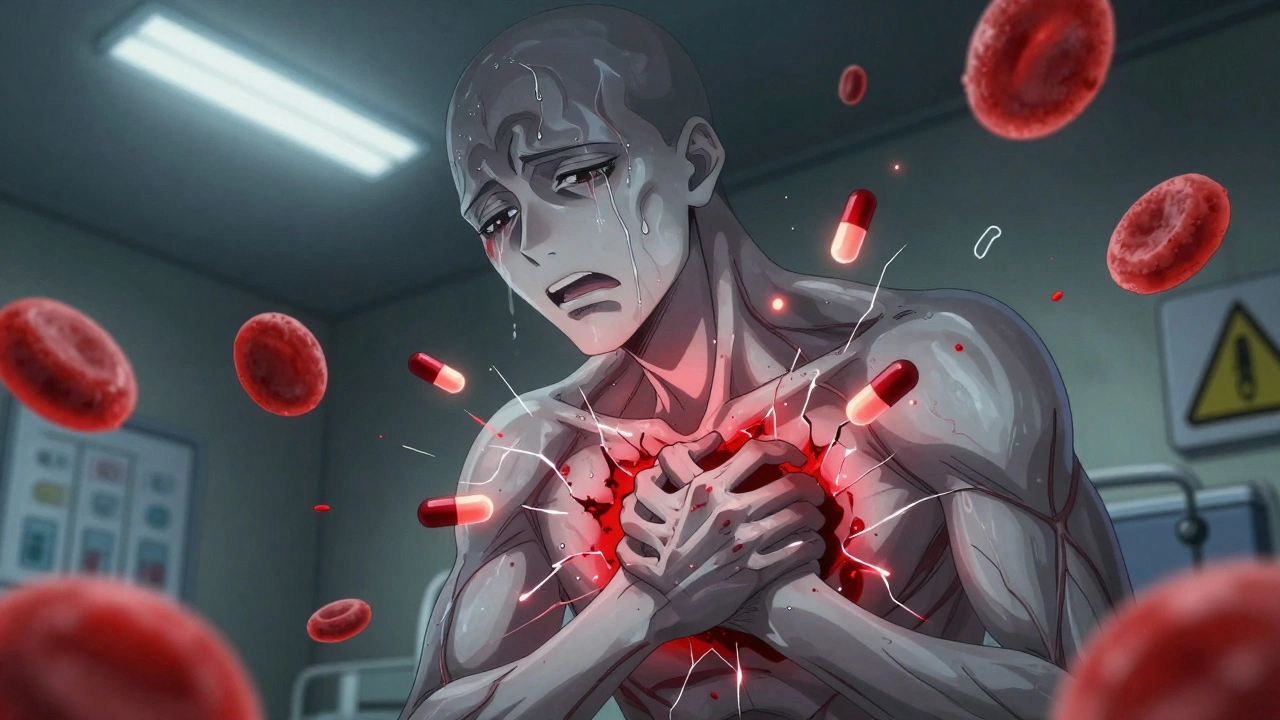
When a medication turns your own body against you, it’s not just a side effect-it’s a medical emergency. Hemolytic anemia caused by drugs happens when your immune system or certain chemicals in the medicine start tearing apart your red blood cells. These cells, which normally live for about 120 days, get destroyed days or even hours after you take the drug. The result? Your body can’t keep up. Fatigue sets in. Your skin turns pale or yellow. Your heart races just to pump what’s left. And if you don’t catch it fast, you could end up in the hospital with heart failure or a blood clot.
How Medications Kill Red Blood Cells
There are two main ways drugs cause red blood cell destruction. One is through the immune system. The other is through direct chemical damage. They look similar on the surface-both cause anemia-but the causes and treatments are very different.
In immune-mediated cases, the drug sticks to the surface of your red blood cells like a tag. Your body sees this tag as foreign and sends antibodies to attack. It’s like your immune system mistakes your own cells for invaders. This is called drug-induced immune hemolytic anemia, or DIIHA. The most common culprits? Antibiotics, especially cephalosporins like cefotetan, ceftriaxone, and piperacillin. Together, these three drugs account for more than half of all immune-mediated cases. Cephalosporins as a class make up about 70% of DIIHA cases reported today.
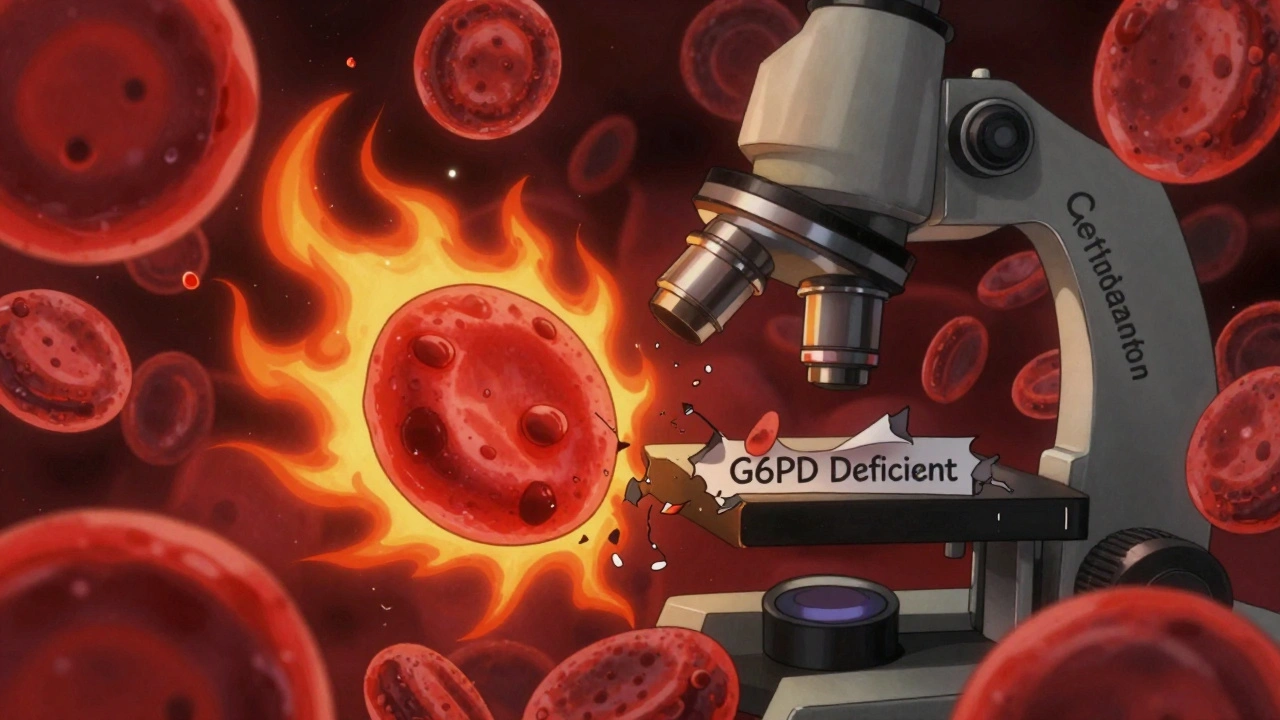
The second mechanism is oxidative damage. Some drugs create free radicals that overload your red blood cells’ defenses. This causes hemoglobin to break down into clumps called Heinz bodies, which make the cells fragile and prone to bursting. This doesn’t need an immune response-it’s pure chemistry. People with G6PD deficiency are especially vulnerable. This genetic condition, common in about 10-14% of African American men and 4-15% of people of Mediterranean descent, means their red blood cells lack the enzyme needed to fight off these oxidants. Even normal doses of drugs like dapsone, phenazopyridine, or nitrofurantoin can trigger severe hemolysis in these patients.
Which Drugs Are Most Likely to Cause This?
It’s not just antibiotics. Over 100 medications have been linked to red blood cell destruction. Here’s what you need to watch for:
- Antibiotics: Cefotetan, ceftriaxone, piperacillin, penicillin, ampicillin
- Anti-inflammatory drugs: Ibuprofen, naproxen, and other NSAIDs
- Antimalarials: Primaquine, chloroquine
- Diabetes drugs: Levodopa
- Antibiotics for UTIs: Nitrofurantoin, sulfonamides
- Other: Methyldopa (less common now), dapsone, phenazopyridine (Pyridium), ribavirin, benzocaine (in sprays and gels), amyl nitrate
Methyldopa was once a major cause, but doctors use it much less today because the risk is well known. Still, if you’re on any of these drugs and suddenly feel worse, don’t assume it’s just a flu. It could be your red blood cells being destroyed.
What Does It Feel Like?
The symptoms are not subtle. They don’t sneak up slowly-they hit hard. In studies, 92% of patients report extreme fatigue. Eighty-seven percent feel weak. Nearly 80% struggle to catch their breath. Your heart beats faster because your body is trying to deliver oxygen with fewer red blood cells. You might notice your skin turning pale or yellow (jaundice), or your eyes looking slightly yellow too. Dark urine is another red flag-it means your body is dumping broken-down hemoglobin.
But here’s the problem: many doctors miss it. A 2024 study found that 43% of DIIHA cases were misdiagnosed at first. People get told they have the flu, or an infection, or even depression. That’s because the early signs look like lots of other things. The key is knowing when to suspect it.
If you’ve started a new medication in the last week to two weeks and now feel terrible, especially if you have a history of G6PD deficiency or have taken one of the high-risk drugs listed above, get tested. Don’t wait.
How Doctors Diagnose It
There’s no single test that says, “Yes, this drug caused your anemia.” But there’s a clear pattern doctors look for.
First, they check your blood. If your hemoglobin drops suddenly-say, from 12 g/dL to 8 g/dL in 48 hours-that’s a warning sign. Then they run a few key tests:
- Indirect bilirubin: Above 3 mg/dL? That means your liver is overwhelmed with broken-down hemoglobin.
- LDH: Above 250 U/L? That’s a sign your red blood cells are breaking open.
- Haptoglobin: Below 25 mg/dL? Your body has used up all its haptoglobin trying to clean up the free hemoglobin.
Next, they look at your blood under a microscope. Spherocytes (small, round red blood cells) point to immune destruction. Heinz bodies (clumps inside red cells) point to oxidative damage.
The most important test is the direct antiglobulin test (DAT). It checks if antibodies are stuck to your red blood cells. In immune-mediated DIIHA, it’s positive in 95% of cases. But here’s the catch: it can be negative early on, or if the drug is only weakly attached. So a negative DAT doesn’t rule it out.
If G6PD deficiency is suspected, testing should wait until 2-3 months after the episode. Why? During active hemolysis, your body is making new red blood cells with normal enzyme levels. The old, damaged ones are the ones that are low in G6PD-and those are the ones being destroyed. Testing too soon gives you a false negative.
What Happens If You Don’t Stop the Drug?
Nothing good. The destruction keeps going. Hemoglobin can crash below 6 g/dL in just a few days. At that level, your heart is working overtime. About 22% of patients develop irregular heart rhythms. 15% show signs of heart muscle damage. 8% go into heart failure.
And here’s something many don’t know: even though you’re losing blood cells, your body goes into a hypercoagulable state. Your blood thickens. A 2023 study found that 34% of severe DIIHA cases developed dangerous blood clots-deep vein thrombosis or pulmonary embolism. So treatment isn’t just about stopping the drug. It’s about preventing clots too.
How It’s Treated
Step one: Stop the drug. Immediately. No exceptions. That’s it. That’s the most effective treatment. In 95% of cases, hemoglobin starts to rise within 7 to 10 days after stopping the medication. Full recovery usually takes 4 to 6 weeks.
Step two: Support your body. If your hemoglobin is below 7-8 g/dL or you’re having trouble breathing or your heart is racing, you’ll need a blood transfusion. Don’t wait. Transfusions save lives here.
Step three: Treat complications. If you have severe methemoglobinemia (methemoglobin levels above 30%), you’ll get methylene blue. But if you have G6PD deficiency, methylene blue is deadly-it can trigger more hemolysis. So doctors test for it first.
Step four: If it doesn’t get better. In rare cases, the immune system keeps attacking even after the drug is gone. This is called drug-independent autoantibody hemolysis. For these patients, doctors turn to immunosuppressants. Corticosteroids like prednisone are often tried first, but their benefit is unclear because many people recover on their own. For true refractory cases, IV immunoglobulin (1 g/kg/day for two days) or rituximab (375 mg/m² weekly for four weeks) are used. About 78% of these patients respond within 3 to 6 weeks.
New treatments are coming. Two 2024 clinical trials are showing promise. One, using efgartigimod (NCT05678901), helped 67% of patients recover in just four weeks. Another is testing complement inhibitors to block the immune attack at its source.
What You Can Do
If you’re on any of the drugs listed above, know the signs. If you start feeling unusually tired, short of breath, or notice your skin or eyes turning yellow, call your doctor. Don’t wait. Don’t assume it’s something else.
Keep a list of all your medications-including over-the-counter drugs, supplements, and topical treatments like benzocaine spray. If you have G6PD deficiency, make sure every doctor and pharmacist knows. Many of these drugs are in cough syrups, mouthwashes, and even numbing creams.
Hospitals are starting to use electronic alerts to warn doctors when a high-risk drug is prescribed to someone with a history of hemolysis or G6PD deficiency. One study showed a 32% drop in severe cases after these systems were added. You can ask your doctor if your pharmacy or hospital has these alerts.
Most importantly: if you’ve had drug-induced hemolytic anemia once, you’re at risk for it again. Never take the same drug-or anything similar-again. Even a tiny dose can trigger a full-blown crisis.
Why This Matters
Hemolytic anemia from drugs isn’t common. But it’s deadly if missed. It doesn’t care if you’re young or old. It doesn’t care if you’re healthy. If you’re on the wrong drug, your body can turn on itself in days. The good news? It’s almost always reversible-if you catch it early.
Doctors are getting better at spotting it. But the real power is in your hands. Know your meds. Know your body. Speak up if something feels wrong. Your red blood cells can’t tell you they’re being destroyed. You have to be their voice.
Can over-the-counter drugs cause hemolytic anemia?
Yes. Even common OTC drugs like NSAIDs (ibuprofen, naproxen) and topical benzocaine (in teething gels or sore throat sprays) have been linked to red blood cell destruction. Benzocaine, in particular, can cause methemoglobinemia and oxidative hemolysis, especially in people with G6PD deficiency. Always check labels and talk to your pharmacist if you have a history of hemolytic anemia.
Is hemolytic anemia from drugs more dangerous for children?
It’s rare in children, but when it does happen, it’s often more severe. A 2023 pediatric study found children with drug-induced hemolytic anemia had average hemoglobin levels of 5.2 g/dL-much lower than the adult average of 6.8 g/dL. Their bodies have less reserve, and symptoms progress faster. Any child on antibiotics or new medications who suddenly becomes pale, tired, or jaundiced needs immediate evaluation.
Can I get tested for G6PD deficiency before taking a risky drug?
Yes, and you should if you’re of African, Mediterranean, or Southeast Asian descent, or if you’ve had unexplained anemia in the past. The test is simple-a blood draw. But don’t test during an active hemolytic episode. Wait 2-3 months after recovery, because new red blood cells can mask the deficiency. If you’re found to be deficient, avoid all oxidative drugs and carry a medical alert card.
How long does it take to recover from drug-induced hemolytic anemia?
Most people start improving within 7 to 10 days after stopping the drug. Hemoglobin levels usually return to normal in 4 to 6 weeks. Recovery is faster if you didn’t need a transfusion and had no complications. But if you developed a blood clot or heart issue, recovery may take longer and require ongoing monitoring.
Will I always be at risk for this if I’ve had it once?
Yes. Once your immune system has made antibodies against a drug, it remembers. Even a tiny amount of the same drug-or a very similar one-can trigger another episode. You must avoid that drug for life. Inform every healthcare provider, pharmacist, and emergency room about your history. Keep a written list of all drugs you can’t take.
Are there any new treatments on the horizon?
Yes. Two promising therapies are in clinical trials. Efgartigimod, which removes harmful antibodies from the blood, showed a 67% response rate in a 2024 trial. Complement inhibitors, which block part of the immune attack, are also being tested. These could help patients who don’t respond to steroids or rituximab. While not yet standard, they represent the next wave of targeted treatment for drug-induced hemolytic anemia.



Michael Robinson
9 December 2025 - 08:22 AM
It’s wild how something so simple-like taking a pill-can turn your body into a war zone. We think medicine fixes things, but sometimes it’s just another enemy in disguise.
Andrea Petrov
10 December 2025 - 07:19 AM
They’re hiding this on purpose. Big Pharma knows how many people get wrecked by these drugs, but they’d rather sell you another pill than admit they poisoned you. Look at the stats-they’re not accidents, they’re cover-ups.
Suzanne Johnston
11 December 2025 - 03:20 AM
This is why we need systemic change. Not just awareness, but mandatory genetic screening before prescribing high-risk meds. We’re treating symptoms, not root causes. And until we stop seeing patients as disposable data points, people will keep dying quietly.
Graham Abbas
12 December 2025 - 21:14 PM
I’ve seen this up close. My cousin took ceftriaxone for a sinus infection and woke up three days later with jaundice and a heart rate over 130. No one connected it until her hemoglobin dropped to 5.9. They thought it was hepatitis. It wasn’t. It was a drug she’d taken once before-without issue. Turns out, her immune system had been waiting. That’s the scariest part: it doesn’t need to be the first time. It just needs to be the right time.
Haley P Law
13 December 2025 - 03:48 AM
OMG I just realized I used benzocaine spray last week for my sore throat… 😳 I’m so scared right now. Should I go to the ER???
Katie Harrison
13 December 2025 - 22:52 PM
As someone with G6PD deficiency, I’ve had to learn this the hard way. I once took a generic ibuprofen because it was on sale-and ended up in the ER with dark urine and a pulse that wouldn’t slow down. No one asked about my meds. No one checked my history. I had to scream, ‘I’m G6PD deficient!’ before they listened. Now I carry a card. I tell every pharmacist. I read every label. And I still feel guilty when I forget. Don’t wait until you’re barely breathing to speak up. Your body won’t remind you twice.
Mona Schmidt
14 December 2025 - 18:59 PM
It’s important to clarify that while NSAIDs are listed as potential triggers, the risk is significantly lower than with antibiotics or antimalarials. Most cases involving ibuprofen or naproxen occur in individuals with pre-existing conditions such as G6PD deficiency, and even then, the incidence remains rare. The key is not fear, but informed caution. Always disclose your full medical history-including genetic predispositions-to your prescriber. A simple blood test can prevent a life-threatening reaction. Knowledge is power, but only if it’s applied.
Guylaine Lapointe
16 December 2025 - 01:58 AM
Why are we still letting people die from something this preventable? It’s 2024. We have electronic records, AI alerts, and pharmacogenomics. Yet, someone still gets prescribed dapsone without knowing they’re G6PD deficient? That’s not negligence-it’s institutional laziness. Doctors don’t read the damn footnotes, pharmacies don’t cross-check, and patients don’t know to ask. We need mandatory alerts. We need national databases. We need consequences. Not just ‘awareness.’ Real change. Or more people will keep dying because no one cared enough to fix it.
Andrea DeWinter
17 December 2025 - 01:11 AM
My mom had DIIHA from penicillin back in the 90s. She never got a proper diagnosis until she collapsed. Now she won’t take anything without checking with me first. I keep a spreadsheet of every drug she’s ever reacted to. I’ve saved her life twice just by saying no. If you’ve had this once, never take the drug again-not even a little. And if you’re on any of these meds and feel off? Stop. Call your doctor. Don’t wait for a fever. Don’t wait for yellow skin. Your fatigue? It’s not stress. It’s your blood dying. Listen to it.