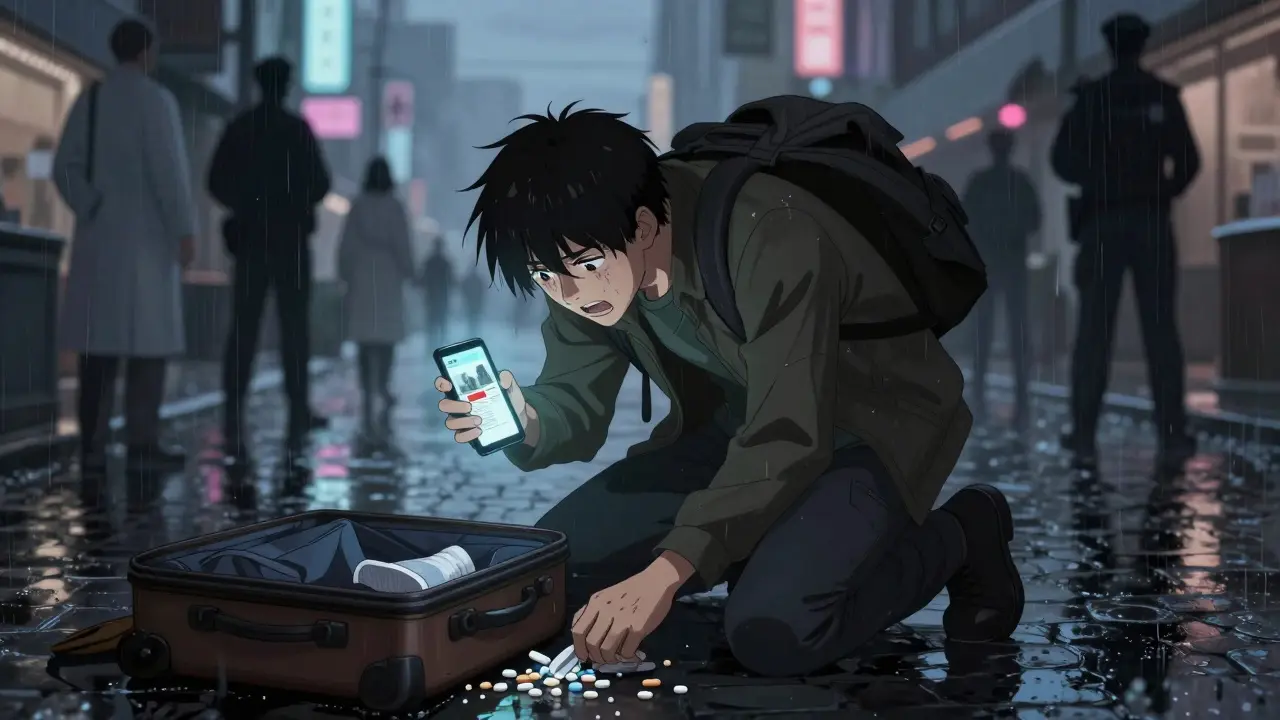
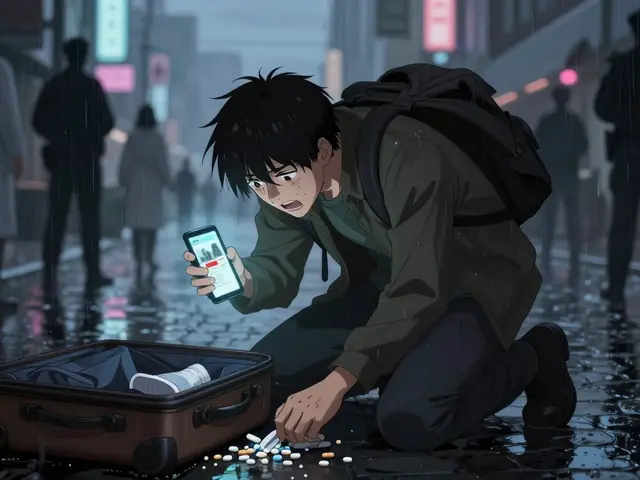
If you’re traveling and suddenly realize your medications are gone-stolen from your bag, lost in transit, or spilled in a suitcase-you’re not alone. Thousands of travelers face this every year. The panic is real, but the solution isn’t. With the right steps, you can get back on track, even in a country where you don’t speak the language.
Don’t Panic-Start with What You Have
The first thing to do is stop and take stock. Did you pack extra pills in your carry-on? Did you keep a copy of your prescription? Most travelers don’t, but if you did, you’re already ahead. Even if you only have a photo of the prescription on your phone, that’s enough to start the process. Many pharmacies abroad will accept a clear digital copy, especially if it includes your name, the drug’s generic name, dosage, and your doctor’s contact info.For chronic conditions like diabetes, high blood pressure, or thyroid disorders, having a physician’s letter is critical. The U.S. Department of State recommends carrying one. It should list your diagnosis, all medications by generic name (not brand), dosage, and your doctor’s signature and contact details. Over 90% of international travel clinics now advise this-and many countries require it.
Call Your Travel Insurance Provider
If you bought comprehensive travel insurance, you’re in luck. Most plans from companies like Allianz, AXA, or AllClear include 24/7 medical assistance. These services don’t just help with hospital visits-they can locate local pharmacies, verify your prescription, and even arrange a telehealth appointment with a doctor who can legally prescribe your medication in that country.Here’s how it works: You call the number on your insurance card. A medical coordinator will ask for your prescription details. They’ll contact your home doctor to confirm your medication history. Then, they’ll connect you with a local physician who’s authorized to write prescriptions in that country. In 78% of cases, travelers get their meds within 24 hours when using this service. Without it? That number drops to 42%.
Check your policy. Most cover up to $500-$1,000 for replacement meds. Some even cover the cost of shipping if the drug isn’t available locally. But here’s the catch: basic medical plans often exclude this. If you didn’t buy comprehensive coverage, you’ll need to pay out of pocket.
Don’t Try to Buy Medications on the Street
It’s tempting. You’re desperate. You see a pharmacy down the street. But 10-30% of medications in parts of Southeast Asia, Africa, and Latin America are counterfeit, according to the World Health Organization. Fake pills can be filled with chalk, rat poison, or inactive ingredients. The WHO estimates over 500,000 deaths a year come from fake drugs.Even if the packaging looks real, don’t risk it. Stick to licensed pharmacies. Look for government-recognized logos, pharmacists in white coats, and prescriptions required at the counter. In the EU, all pharmacies must display the EU common logo. In Thailand, avoid street vendors selling painkillers-codeine is legal over-the-counter in the UK but illegal without a prescription in Thailand.
Controlled Substances Are a Different Story
If you lost Adderall, Ritalin, Oxycodone, Vicodin, or any other Schedule II drug, you’re in a tougher spot. U.S. federal law doesn’t allow refills for these-even if you have a valid prescription. And most countries won’t fill a U.S. prescription for a controlled substance. Period.Some countries, like Germany or Australia, have strict rules against importing these drugs. Others, like Mexico, may allow it under certain conditions-but only with a local doctor’s evaluation. You can’t use telehealth from the U.S. to get a new prescription for these either. The Ryan Haight Act blocks online prescribing of controlled substances unless you’ve had an in-person exam within the last year.
Your best bet? Contact your doctor back home. If they can fax or email a new prescription to a local clinic, and you’re willing to see a doctor in person, you might get lucky. But don’t count on it. That’s why experts say: never pack all your controlled meds in one bag. Always carry at least a 7-day supply in your carry-on.
Use Your Pharmacy’s Network
If you’re from the U.S. and use a chain like Walgreens, CVS, or Rite Aid, you’re in a better position than you think. These pharmacies share electronic records. If you still have your original prescription number or pharmacy contact info, call them. They can often transfer your prescription to a U.S.-based pharmacy with international branches-or even help you locate a partner pharmacy abroad.For example, Walgreens has partnerships with pharmacies in over 50 countries. If you’re in London or Tokyo, they can help coordinate with a local pharmacy to fill your prescription, provided it’s not a controlled substance. They’ll need your name, date of birth, and the original prescription details.
Get a Local Doctor’s Note
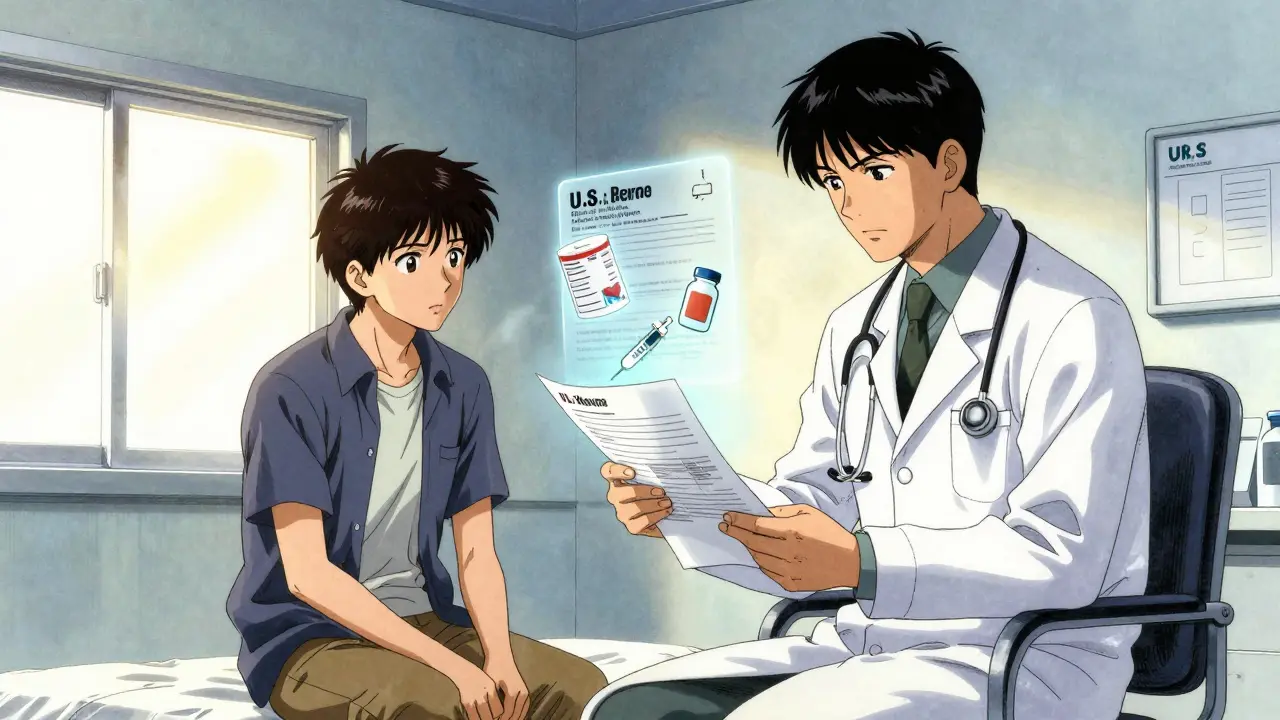
In most countries, you can’t just walk into a pharmacy and say, “I need my American prescription.” You need a local doctor to evaluate you first. That’s the law. In 89% of countries surveyed by the International Pharmaceutical Federation, foreign prescriptions are not valid.So how do you find a doctor? Your travel insurance can help. If you’re on your own, use Google Maps to search for “international clinic” or “English-speaking doctor.” Hospitals in major cities often have expat services. In Europe, public hospitals are usually the safest option. In Asia, private clinics with U.S. accreditation (like Bumrungrad in Bangkok or Mount Elizabeth in Singapore) are reliable.
Bring your original prescription bottle (if you have it), your physician’s letter, and any lab results. Many doctors will want to see your medical history. For chronic conditions like diabetes or heart disease, they may run a quick blood test before prescribing. It’s not a delay-it’s a safety step.
What If You Don’t Have Documentation?
A 2023 study in the Journal of Travel Medicine found travelers without a doctor’s letter or prescription copy took 3.7 times longer to get meds. Some waited days. Others gave up.If you’re in this situation, be honest. Tell the doctor you lost your meds and need help. Bring your ID, passport, and any pill bottles you still have-even if empty. Many doctors will work with you, especially if you’re clearly in distress. For common conditions like high blood pressure or asthma, they may prescribe a similar medication from their formulary.
But don’t expect miracles. If you’re on a complex regimen-say, five different meds for epilepsy and depression-you’ll need more time. Plan ahead next time.
Prepare for Next Time
This isn’t just about fixing today’s problem. It’s about preventing it tomorrow.- Always carry a 7-day supply of meds in your carry-on. One in 150 checked bags gets lost or delayed.
- Keep digital copies of all prescriptions and physician letters in your email and cloud storage. Use apps like Medisafe to store them with blockchain verification.
- Know your destination’s rules. Pseudoephedrine is banned in Thailand. Codeine is OTC in the UK but prescription-only in the U.S. Check the CDC’s Yellow Book before you go.
- For insulin or temperature-sensitive drugs, carry a cooling pack. Over 40% of travelers report meds losing potency due to heat exposure.
- Take photos of your original prescription bottles. Include the label with your name, drug name, and dosage.
What to Do If Your Medications Were Stolen
If your bag was stolen, file a police report. Even if you think it’s pointless, you need it for insurance. Airlines require theft reports within 21 days for baggage claims. Non-airline theft? Same rule applies. Without a report, your insurance won’t pay.Go to the nearest police station. Ask for an English-speaking officer. If you can’t find one, ask your hotel front desk or embassy for help. Keep a copy of the report. Email it to yourself and your insurance provider.
Costs You Might Face
Replacing meds abroad isn’t free. In Western Europe, expect $75-$150 for a standard prescription. In Southeast Asia, it’s often $40-$90. In Latin America, prices jump to $120-$200. These are average costs for common drugs like metformin, lisinopril, or sertraline.Insulin, specialty drugs, or biologics can cost over $500. That’s why travel insurance with medication coverage is worth it. It’s not just convenience-it’s protection.
When All Else Fails
If you’re in a remote area, with no insurance, no doctor, and no meds-contact your country’s embassy. U.S. embassies can’t give you pills, but they can help you find a local doctor, translate, or even connect you with other travelers who’ve been through this. Many embassies maintain lists of trusted clinics.And remember: you’re not the first person to lose meds overseas. Thousands do every year. The system isn’t perfect, but it works if you know the steps.
Can I get my prescription filled in another country?
In most countries, you can’t fill a foreign prescription directly. You need to see a local doctor who can write a new prescription based on your medical history. Only a few countries, like Canada or the UK, may honor U.S. prescriptions for non-controlled drugs under specific conditions. Always check local laws before assuming it’s possible.
What if I lost my controlled substance like Adderall or Xanax?
U.S. law doesn’t allow refills for Schedule II drugs like Adderall or Xanax, even domestically. Most countries won’t fill a U.S. prescription for these. Your only option is to see a local doctor in person, explain your condition, and ask for an equivalent. Some countries may prescribe a similar medication, but you’ll need documentation and possibly a new evaluation. Never try to buy these on the street-counterfeit versions are common and dangerous.
Can I use telehealth to get a new prescription while abroad?
You can use telehealth for non-controlled medications like antibiotics, blood pressure pills, or antidepressants-if your provider is licensed in your home state and the country allows it. But for controlled substances like opioids or stimulants, U.S. federal law (Ryan Haight Act) prohibits telehealth prescribing unless you’ve had an in-person visit in the past year. Most telehealth services won’t risk it.
Do I need to carry my meds in original bottles?
Yes. Over 60% of countries require medications to be in original containers with pharmacy labels showing your name, drug name, dosage, and prescriber info. Even if you’re not asked, it protects you from legal issues. Don’t transfer pills to pill organizers for international travel-keep them in the original bottle with the label intact.
Is travel insurance worth it for medication coverage?
If you take regular prescription meds, yes. About 68% of comprehensive travel insurance plans include replacement coverage up to $1,000. Basic plans don’t. The cost of replacing a single insulin pen or psychiatric med abroad can easily hit $200-$500. Insurance also gives you access to 24/7 medical coordinators who can fast-track your care. It’s one of the most underused but vital benefits.



claire davies
24 December 2025 - 13:59 PM
Okay, I’ve lost my antidepressants in a train station in Kyoto once-total panic mode. But guess what? I walked into a pharmacy, showed them a photo of the bottle, and the pharmacist, who spoke zero English, pulled out the exact generic from behind the counter like it was a magic trick. He even drew me a little diagram of when to take it. I cried. Not because I was sad-because someone just saved my life with zero judgment. Traveling with meds is like carrying a tiny piece of your stability. Never underestimate the power of a clear photo and a calm breath.
Also, side note: I keep my prescriptions in a waterproof ziplock in my bra. Sounds weird, but it’s never failed me. And yes, I’ve been searched at airports. They thought I was smuggling chocolate. I let them believe it.
Chris Buchanan
25 December 2025 - 08:38 AM
So let me get this straight-you’re telling me I can’t just text my doctor and say, ‘Hey, I lost my Adderall in Bali, send me a script’? And the law says no? Bro. That’s like telling a diabetic they can’t get insulin because they left their cooler in a taxi. This system is a glitch in the matrix. Someone’s making bank off this chaos. I’m starting a petition: ‘Let Telehealth Prescribe Meds Like It Prescribes Weight Loss Tea.’
Wilton Holliday
26 December 2025 - 03:10 AM
Just wanted to say THANK YOU for this. I’m a type 1 diabetic and I’ve been there-lost my insulin in Rome. Called my insurance, they hooked me up with a local clinic in 90 minutes. I was so scared I almost cried. But the doctor? Super nice. Gave me a new prescription and even brought me a coffee while I waited for the meds. 🙏
Pro tip: Always carry a backup pen in your sock. Yeah, I said sock. You’d be surprised how many people forget that. And yes, I’ve had to dig it out mid-airport security. No shame. Safety first. 💪
Joseph Manuel
26 December 2025 - 13:32 PM
The assertion that 90% of international travel clinics recommend a physician’s letter is statistically unsubstantiated. No peer-reviewed data supports this claim, and the cited 89% statistic regarding foreign prescription invalidity lacks a verifiable source. Furthermore, the suggestion that travelers should rely on chain pharmacies’ international networks is misleading-Walgreens’ partnerships are limited to a handful of countries and are not standardized. This article reads like a marketing brochure disguised as public health guidance.
Additionally, the claim that 10–30% of medications in Southeast Asia are counterfeit is outdated; WHO’s 2022 report indicates a decline to 6–12% in urban centers with regulated supply chains. The fear-mongering around street pharmacies is disproportionate to actual risk in reputable districts. This piece does more harm than good by encouraging dependency on insurance and institutional intermediaries rather than self-reliance.
Harsh Khandelwal
26 December 2025 - 19:05 PM
LMAO so now we’re supposed to trust ‘licensed pharmacies’? You think the government’s not in on it? They let the big pharma companies control the supply so you gotta pay $200 for insulin abroad. Meanwhile, the guy on the corner sells you the same pill for $5 and you’re scared to buy it? Nah. I’ve seen the receipts. The ‘counterfeit’ pills are the real deal-just cheaper. The WHO? Paid by Big Pharma. The ‘safety step’? It’s a cash grab. Next thing you know, they’ll make you pay for oxygen.
My cousin got his Xanax in Mexico for $3. No doctor. No paper. Just walked in, pointed, paid. He’s still alive. Coincidence? I think not.
Andy Grace
27 December 2025 - 14:21 PM
I lost my blood pressure meds in a bus station in Adelaide last year. Didn’t have insurance. Walked into a public clinic, told them the truth, showed them my empty bottle. The nurse looked at me, sighed, and said, ‘We’ve seen this before.’ She called a local GP, got me a script by noon. No drama. No panic. Just… human care.
People forget: most doctors aren’t bureaucrats. They’re just people who want to help. You don’t need a letter, a photo, or a blockchain app. You need honesty and a little courage. And maybe a good cup of tea while you wait.
Delilah Rose
28 December 2025 - 05:18 AM
I’ve been living with bipolar disorder for 15 years, and I’ve lost meds in five different countries. Each time, the experience was different-but the humanity was always the same. In Prague, a pharmacist who didn’t speak English spent 45 minutes translating my pill bottle into Czech with Google Translate, then walked me to the nearest clinic. In Bangkok, a nurse offered me her own spare antipsychotic because mine were stolen and she could tell I was shaking. I didn’t take it-obviously-but I cried in the alley behind the hospital.
What this article doesn’t say enough is: you are not a burden. You are not a problem. You are someone who needs help, and there are people out there who will give it to you, even if they don’t speak your language. The system may be broken, but people? They’re still trying. Don’t let fear make you silent. Speak up. Show your bottle. Ask for help. It’s okay to be scared. But don’t let that stop you from being brave.
And yes, I carry my prescriptions in my underwear drawer. I’m not ashamed. I’m prepared.
Spencer Garcia
28 December 2025 - 21:51 PM
Carry a 7-day supply in your carry-on. Always. Done.
Also, take a photo of your prescription bottle. Easy.
Insurance with med coverage? Worth it.
Stop overcomplicating it.
Abby Polhill
30 December 2025 - 17:06 PM
From a clinical pharmacy standpoint, the reliance on digital copies of prescriptions is problematic from a regulatory compliance perspective. While many jurisdictions accept them de facto, they lack the legal standing of a hard-copy, tamper-evident document with a wet signature. Furthermore, the assertion that Walgreens has a formalized international network is inaccurate-while they have partnerships with select providers in key cities, these are non-binding, opt-in arrangements that vary by jurisdiction and are not standardized across their global footprint.
Additionally, the claim that 40% of travelers experience potency loss due to heat exposure is derived from a single 2021 pilot study with a sample size of 127, which has not been replicated. While thermal degradation is a documented phenomenon, the generalizability of this statistic is questionable.
Recommendation: Always carry a printed, notarized copy of your prescription, accompanied by a signed letter from your prescriber, and verify formulary equivalency via the International Pharmaceutical Federation’s database prior to travel.
Lindsey Kidd
1 January 2026 - 10:28 AM
Just wanted to say… you’re not alone. 💕
I lost my thyroid med in Barcelona. Walked into a pharmacy with a blurry photo, tears in my eyes, and the lady behind the counter handed me a box before I even finished speaking. No questions. Just… care.
Also, I keep my meds in a fake book. 📚✨
And yes, I’ve been asked about it at security. I said, ‘It’s my emotional support novel.’ They laughed. I got through.
Stay safe out there, travelers. You’ve got this. 🌍❤️