When it comes to protecting your heart, what you eat matters more than you think. It’s not about cutting out entire food groups or chasing the latest fad. The science is clear: three eating patterns-Mediterranean, DASH, and plant-forward-are backed by decades of research to lower blood pressure, reduce bad cholesterol, and cut your risk of heart attacks and strokes. You don’t need to be perfect. You just need to shift your plate in the right direction.
What Makes a Diet Truly Heart-Healthy?
A heart-healthy diet isn’t defined by calories or weight loss. It’s about the quality of your food and how it affects your body’s internal systems. These diets work because they target three key problems: high blood pressure, high LDL (bad) cholesterol, and chronic inflammation. The American Heart Association calls these approaches Tier 1-meaning they’re the most proven. You won’t find miracle pills or detox teas here. Just real food, eaten the right way.
The Mediterranean Diet: Fat, Fiber, and Flavor
The Mediterranean diet gets its name from the traditional eating habits of people in Greece, Italy, and southern Spain. In the 1950s, researcher Ancel Keys noticed these populations had far fewer heart attacks than Americans-even though they ate more fat. The secret? The fat wasn’t butter or lard. It was olive oil. And the diet was packed with vegetables, beans, whole grains, nuts, and fish.
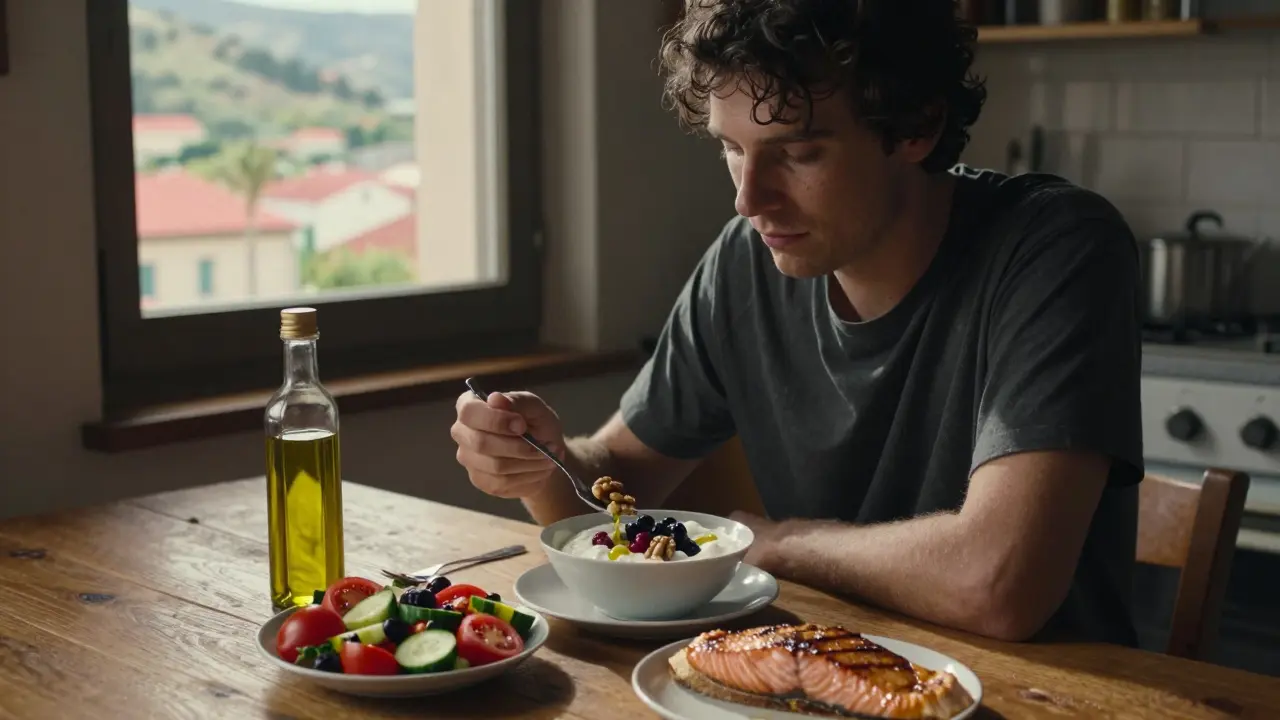
Here’s what a typical day looks like: breakfast might be Greek yogurt with walnuts and berries. Lunch is a big salad with chickpeas, tomatoes, cucumbers, and a drizzle of extra-virgin olive oil. Dinner is grilled salmon with roasted vegetables and a slice of whole-grain bread. Red meat? Maybe once a month. Wine? A glass with dinner, if you choose to drink.
Studies show this diet doesn’t just lower cholesterol. It cuts overall heart disease deaths by up to 30%. Why? Because it’s rich in monounsaturated fats (from olive oil and nuts), fiber (from beans and whole grains), and antioxidants (from colorful veggies and fruits). A 2023 study tracking over 2,000 people for 10 years found those who stuck closest to this pattern had the lowest rates of fatal and non-fatal heart events.
But here’s the catch: not all olive oil is equal. Look for extra-virgin, cold-pressed, and stored in dark bottles. And don’t skip the fish. Aim for two servings of fatty fish like salmon, mackerel, or sardines each week. That’s where the omega-3s come in-nature’s anti-inflammatory powerhouses.
The DASH Diet: Science-Backed Blood Pressure Control
If you have high blood pressure, the DASH diet was built for you. Developed by the National Institutes of Health in the 1990s, it’s not a trend. It’s a clinical intervention. The original DASH trial, published in the New England Journal of Medicine, showed people could drop systolic blood pressure by 11 points in just eight weeks-without medication.
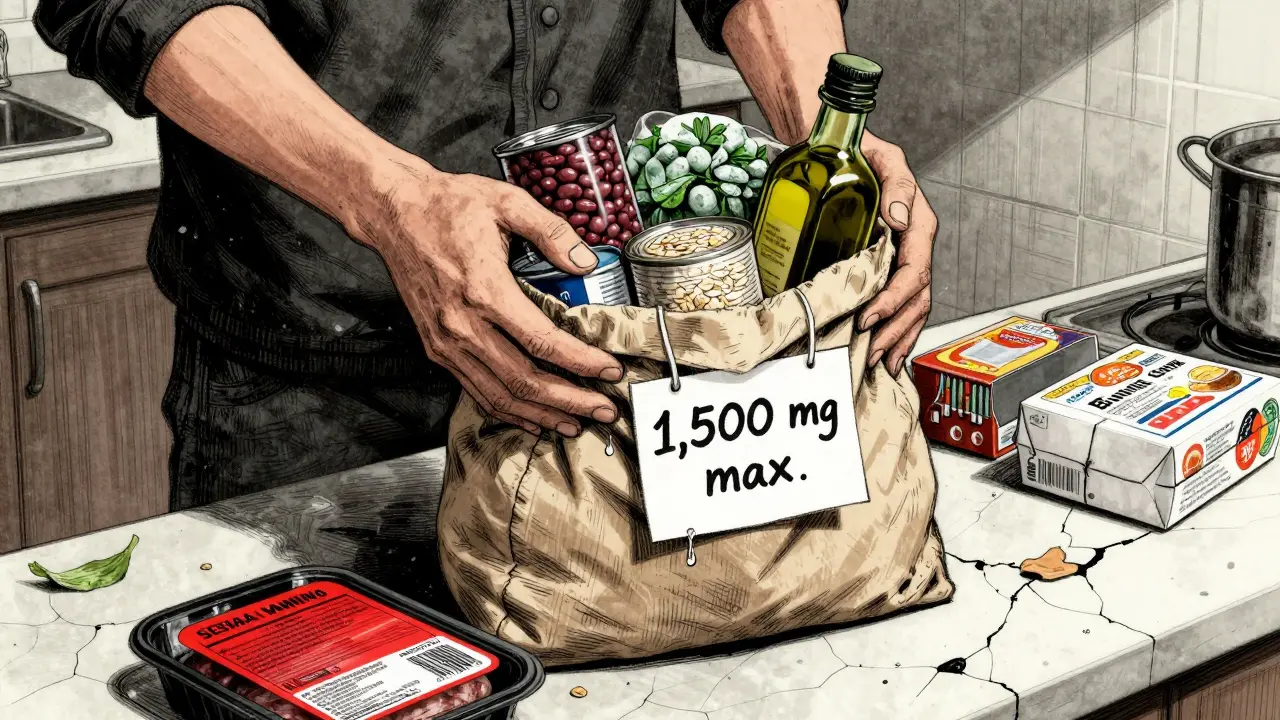
The numbers are specific: 2,000 calories a day, with clear serving targets. You eat 6-8 servings of grains (mostly whole), 4-5 servings of vegetables, 4-5 servings of fruit, 2-3 servings of low-fat dairy, and just 6 or fewer servings of lean meat or fish per week. Nuts, seeds, and legumes? Five servings a week. Sodium? No more than 2,300 mg-ideally 1,500 mg.
That last part is hard. The average American eats over 3,400 mg of sodium daily. Processed foods, canned soups, deli meats, and restaurant meals are the biggest culprits. DASH forces you to cook more, read labels, and ditch the salt shaker. But the payoff is real. In one 2022 study, nearly 30% of hypertensive patients on DASH were able to reduce their blood pressure meds within six months.
There’s also a smarter version called OmniHeart. Instead of replacing carbs with more carbs, you swap them for either protein or healthy fats. The fat version-more olive oil, avocado, nuts-was the most sustainable and lowered blood pressure even more. It’s proof that not all carbs are equal. Focus on quality, not just quantity.
Plant-Forward Eating: Flexibility as a Strategy
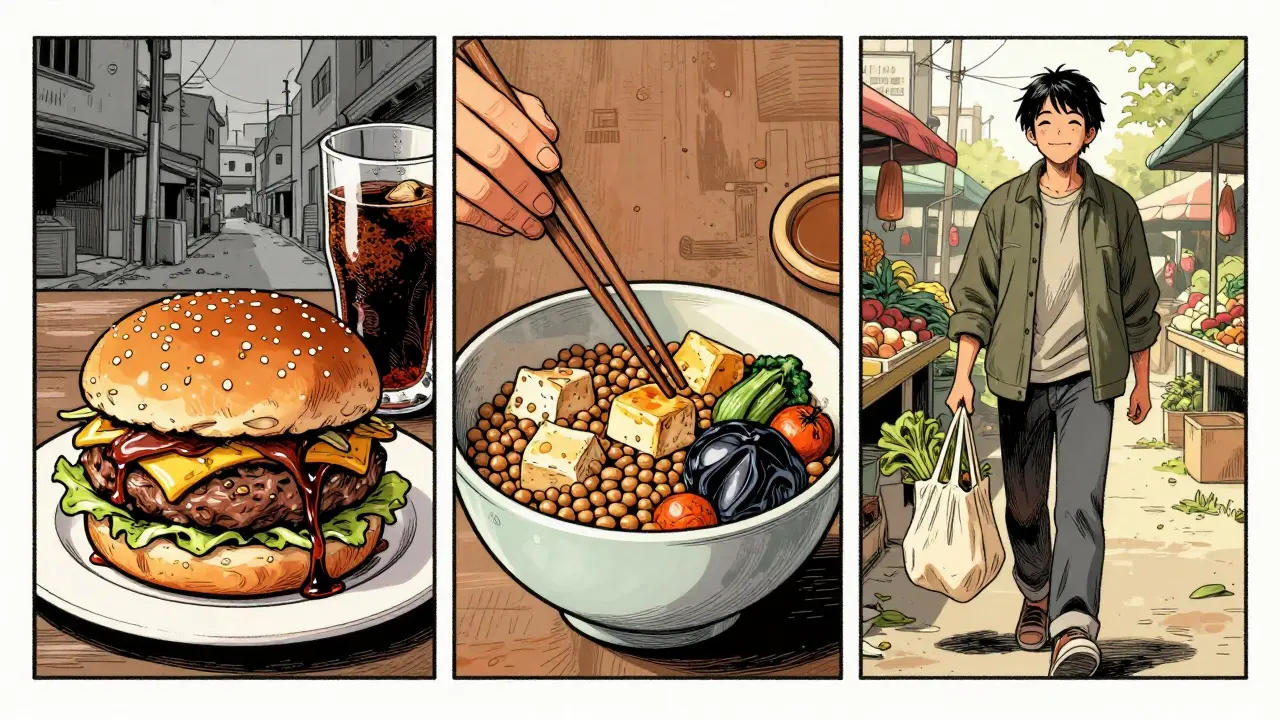
Plant-forward doesn’t mean vegan. It means plants lead. Meat, dairy, and eggs still show up-but they’re sides, not the main event. This approach is rooted in global traditions: lentils in India, beans in Mexico, tofu in Japan, greens in the American South. Modern science confirms it: even small shifts toward plant foods reduce heart disease risk.
A 2024 study found people who ate plant-based meals at least three days a week cut their heart disease risk by 14%. The key isn’t perfection. It’s consistency. Swap out one meat-based meal a day for beans, lentils, or tofu. Choose oatmeal over bacon. Add spinach to your eggs. Snack on almonds instead of chips.
Why does this work? Plants are packed with fiber, potassium, magnesium, and phytonutrients-all of which help lower blood pressure and clean out arteries. They’re also low in saturated fat. A 2023 analysis from the American Heart Association found that diets high in plant protein were linked to 23% lower cardiovascular death rates. That’s not a small number. It’s life-changing.
People who try this often say the hardest part isn’t food. It’s social settings. Family dinners, work lunches, holidays. But 67% of those who tried Veganuary in 2024 stuck with at least some changes six months later. They learned to bring their own dish, ask for modifications, and focus on what’s on the plate-not what’s missing.
How Do They Compare?
Let’s cut through the noise. Which one’s best? The answer depends on your goals.
| Feature | Mediterranean | DASH | Plant-Forward |
|---|---|---|---|
| Primary Goal | Reduce overall heart disease risk | Lower blood pressure | Improve cholesterol and reduce inflammation |
| Sodium Limit | Not strictly limited | 1,500-2,300 mg/day | Variable, usually lower than average |
| Fat Source | Olive oil, nuts, fish | Low-fat dairy, lean proteins | Plant oils, nuts, seeds |
| Animal Products | Moderate fish, poultry, dairy | Lean meat, poultry, low-fat dairy | Minimal or optional |
| Best For | Sustainability, taste, long-term adherence | Fast blood pressure drop | Flexibility, affordability, accessibility |
| Adherence Rate (6+ months) | 72% | 58% | 67% |
The Mediterranean diet wins for long-term sticking power. People say it tastes good and feels like a lifestyle. DASH wins for speed. If your blood pressure is high, it can drop fast. Plant-forward wins for flexibility. You don’t have to go all-in to get results.
And here’s a new twist: combining them works even better. Researchers at the American Heart Association recently tested a hybrid called “Medi-DASH.” It took the olive oil, fish, and veggies from the Mediterranean diet and added DASH’s strict sodium control and dairy focus. In 12 weeks, participants dropped blood pressure by 12.4 points systolic and cut LDL cholesterol by nearly 19 mg/dL. That’s better than either diet alone.
Real People, Real Results
Reddit threads are full of stories. One user, u/HealthyEater2023, said after 18 months on the Mediterranean diet, “I don’t feel like I’m dieting. I just eat better.” Another, u/HypertensionWarrior, said DASH dropped their blood pressure from 150/95 to 130/85 in six weeks-but admitted, “The sodium limit is brutal.”
And it’s not just anecdotal. A Cleveland Clinic survey found 68% of people who followed any of these diets reported more energy. Nearly a third of hypertensive patients cut back on meds. That’s not magic. That’s nutrition doing its job.
How to Start Today
You don’t need to overhaul your kitchen. Start small.
- Swap one processed snack for a piece of fruit or a handful of unsalted almonds.
- Use olive oil instead of butter for cooking. Look for extra-virgin.
- Choose whole grains: brown rice, quinoa, oats, whole-wheat bread.
- Make vegetables half your plate at dinner.
- Try one meatless dinner a week-beans, lentils, tofu, or eggs.
- Read labels. Avoid anything with more than 200 mg of sodium per serving.
- Drink water instead of sugary drinks. Even one less soda a day helps.
These changes don’t require special ingredients or expensive groceries. You’re not buying supplements. You’re not fasting. You’re just eating more of what your heart needs and less of what it doesn’t.
What’s Holding You Back?
Cost is a real concern. A 2024 USDA analysis found full adherence to these diets costs about $1.50 more per day than the average American diet. But that’s not the full picture. Processed foods may seem cheaper, but they drive up medical bills down the road. Heart disease costs the U.S. over $230 billion annually. Preventing it saves far more than it costs.
Accessibility matters too. Not everyone lives near a farmers market or can afford organic produce. But canned beans, frozen vegetables, whole grains, and eggs are affordable, shelf-stable, and packed with heart-healthy nutrients. You don’t need fancy ingredients. You need consistency.
And if you’re not sure where to start, the American Heart Association’s “No-Fad Diet” toolkit is free and offers personalized plans for all three approaches. Over 80% of users found it helpful in their first month.
Final Thought: It’s Not About Perfection
You don’t have to eat like a Mediterranean villager or follow DASH to the letter. You don’t have to go vegan. You just have to move in the right direction. Eat more plants. Cook more at home. Cut back on salt and processed junk. Choose olive oil over butter. Eat fish twice a week. Drink water.
These diets aren’t about restriction. They’re about abundance-more color, more flavor, more life. And they work. Not because they’re trendy. But because they’re grounded in real science, real food, and real results.
Can I still eat meat on a heart-healthy diet?
Yes-but in smaller amounts and less often. The Mediterranean and DASH diets allow lean poultry and fish. Red meat should be limited to once a month or less. Plant-forward eating means meat is a side, not the center. Focus on portion size: 3-4 ounces per meal, about the size of a deck of cards.
Is the DASH diet too strict for everyday life?
It can feel that way at first, especially with sodium limits. But you don’t need to hit 1,500 mg right away. Start by cutting out processed snacks, canned soups, and deli meats. Cook more at home. Read labels. Even reducing sodium from 3,400 mg to 2,300 mg can lower blood pressure. Many people find the 2,300 mg target manageable and still effective.
Do I need to buy expensive superfoods like chia seeds or acai?
No. Heart-healthy eating is based on simple, common foods: beans, oats, spinach, tomatoes, nuts, olive oil, fish, whole grains. These are affordable and widely available. Superfoods are nice but not necessary. Focus on variety and consistency, not novelty.
Can I drink alcohol on these diets?
The Mediterranean diet includes moderate red wine (1 glass/day for women, 1-2 for men). But if you don’t drink, don’t start. The benefits of alcohol for heart health are small and outweighed by risks for some people. The DASH and plant-forward diets don’t require alcohol. Water, tea, and sparkling water are better choices.
How long until I see results?
Blood pressure can drop in as little as two weeks on DASH. Cholesterol changes take longer-usually 3-6 months. But you’ll likely feel better sooner: more energy, less bloating, better sleep. The real win? Lower long-term risk. You’re not just treating symptoms-you’re building a healthier future.






jared baker
20 March 2026 - 08:58 AM
Just started the Mediterranean diet last month and I can already feel the difference. No more afternoon crashes, my skin cleared up, and I actually look forward to cooking. Olive oil on everything now - even my toast. No regrets.
Michelle Jackson
21 March 2026 - 19:10 PM
Let’s be real - if you’re not tracking macros or reading every label, you’re just fooling yourself. This post sounds like a feel-good ad for Whole Foods. Where’s the data on long-term adherence? Most people quit within 3 months. Don’t sell this like it’s magic.
Suchi G.
23 March 2026 - 17:51 PM
I grew up in Kerala, where our meals were always plant-forward - rice, lentils, coconut, greens, spices. We didn’t need a study to tell us this was good. My grandmother cooked with turmeric, not supplements. And yes, we ate meat sometimes - but never as the main event. It’s not a diet. It’s just how we ate. I wish more people in the West would stop overcomplicating food and just go back to basics.
becca roberts
24 March 2026 - 16:38 PM
Oh wow, so now we’re supposed to believe that eating like a Greek villager is the answer? Meanwhile, my cousin in Ohio is eating canned beans, frozen spinach, and eggs because that’s all she can afford. She doesn’t need olive oil imported from Italy - she needs food that doesn’t cost $12 a pound. This whole ‘heart-healthy’ thing feels like a luxury brand. Real talk: food justice matters more than flavor profiles.
Andrew Muchmore
26 March 2026 - 08:11 AM
DASH works. Cut salt. Cook at home. Eat veggies. Done. No need for a PhD in nutrition.
Paul Ratliff
26 March 2026 - 20:36 PM
I tried the med diet for a week. Ate fish, drank wine, felt like I was on vacation. Then I went back to my usual junk because honestly who has time to prep meals? But I did swap butter for olive oil. Small win.
SNEHA GUPTA
27 March 2026 - 05:44 AM
There’s a deeper truth here that’s rarely discussed: our modern diets aren’t just unhealthy - they’re alienating. We’ve replaced communal meals with processed convenience. We eat alone, in front of screens, while scrolling through ads for more food. The Mediterranean, DASH, plant-forward - they’re not just about nutrients. They’re about relearning how to sit, how to savor, how to connect. Maybe that’s the real cure.
Gaurav Kumar
28 March 2026 - 03:34 AM
You Americans think you invented health food. In India, we’ve been eating dal, roti, and seasonal veggies for thousands of years. You call it 'plant-forward' - we call it tradition. Stop acting like you discovered nutrition. We didn’t need NIH to tell us what works.
David Robinson
29 March 2026 - 16:51 PM
Okay but let’s not pretend everyone can afford wild-caught salmon or organic spinach. My mom works two jobs. She buys frozen veggies, canned beans, and chicken thighs on sale. She cooks everything from scratch. She’s healthier than 90% of people who buy $20 superfood bowls. This post ignores class. Real heart health isn’t about what’s trendy - it’s about what’s possible.
Laura Gabel
30 March 2026 - 18:19 PM
I did the DASH diet for 3 weeks. Lost 8 lbs. BP dropped 15 points. Then I ate a whole pizza. And I didn’t feel guilty. Why? Because life isn’t a spreadsheet. You can’t live on rules. You gotta enjoy food too. I’m not perfect. I’m just trying.
jerome Reverdy
31 March 2026 - 12:13 PM
Here’s the thing nobody says: these aren’t diets. They’re frameworks. You don’t need to follow them rigidly. Think of them as a compass - not a GPS. If you’re eating mostly whole foods, minimizing processed junk, and prioritizing plants? You’re winning. You don’t need to hit 2,300mg sodium or eat fish twice a week like clockwork. Progress > perfection. Also - yes, you can still have pizza. Just make it with whole wheat, veggies, and less cheese. Boom. Heart-healthy flex.
Andrew Mamone
1 April 2026 - 11:09 AM
Combining Med + DASH = game changer. I’ve been doing it for 4 months. Blood pressure down. Cholesterol down. Energy up. And I still eat chocolate. 🥳
MALYN RICABLANCA
2 April 2026 - 07:24 AM
OMG I just read this and I’m crying. I had a heart scare last year. My doctor said if I didn’t change, I’d be on meds for life. I started with ONE change - swapping soda for sparkling water. Then I added a veggie to dinner. Then I cooked at home twice a week. Now I’m off all meds. I didn’t do it because of a blog post. I did it because I was scared. And now? I’m alive. And I’m grateful. And yes - I still eat bread. But now I make it with whole wheat and flax. It’s not about being perfect. It’s about being present. And yes - I’m still a mess. But I’m a healthier mess.
gemeika hernandez
4 April 2026 - 04:48 AM
I tried all three. Mediterranean was tasty but expensive. DASH was too strict. Plant-forward? Best. I eat beans, rice, eggs, and veggies. I don’t care what you call it. I just care that I feel good. And I don’t need a 10-page article to tell me that.