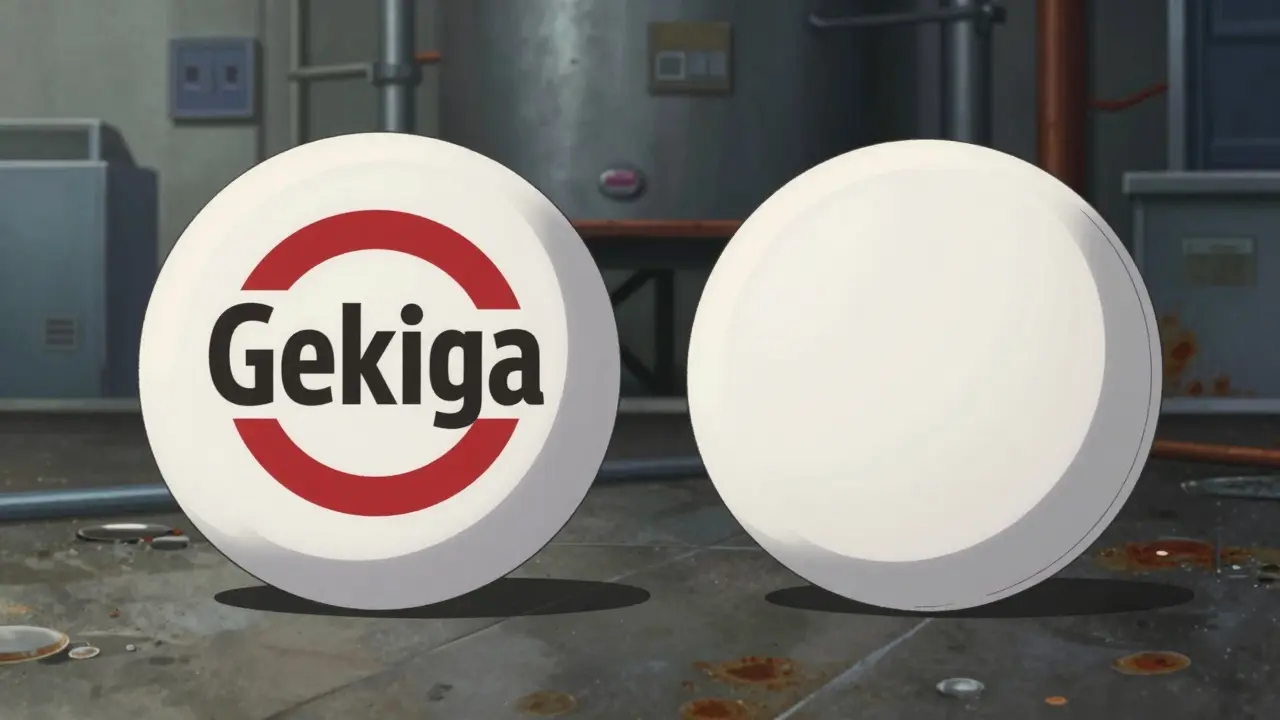
When you pick up a prescription, you might see two pills that look almost identical-one with a familiar brand name, another with no name at all. That’s an authorized generic. And here’s the truth: it’s not a cheaper version of the brand drug. It’s the exact same drug, made in the same factory, with the same ingredients, down to the last inactive filler. The only difference? No brand name on the label.
What Exactly Is an Authorized Generic?
An authorized generic is not a traditional generic. It’s not a copycat. It’s the original brand drug, produced under the same approval, in the same facility, and with the same formula-but sold without the brand name. The U.S. Food and Drug Administration (FDA) defines it clearly: "an approved brand name drug that is marketed without the brand name on its label." That means every active ingredient, every coating, every dye, and every binding agent is identical to what you’d get in the branded version.
How is that possible? Because authorized generics are made under the brand company’s original New Drug Application (NDA). Traditional generics, on the other hand, go through a separate process called an Abbreviated New Drug Application (ANDA). That process requires them to prove they’re bioequivalent-meaning they work the same way in your body-but allows for differences in inactive ingredients like fillers, dyes, or preservatives.
Authorized generics skip that step entirely. They don’t need their own FDA approval. They’re already approved-because they’re the brand drug, just unlabeled.
Why Does This Matter?
For most people, switching from brand to generic doesn’t cause any issues. But for some, even tiny changes in inactive ingredients can trigger reactions. People with allergies, sensitivities, or chronic conditions like epilepsy, thyroid disease, or severe asthma often notice differences when switching to traditional generics. One person might get a rash from a dye in a generic. Another might feel their medication isn’t working as well because the filler affects how fast the drug dissolves.
Authorized generics solve that problem. Since they use the exact same inactive ingredients as the brand, there’s no risk of a formulation change. A 2018 study analyzing over 5,000 patients found no significant difference in hospital visits, ER trips, or medication discontinuation between those using authorized generics versus brand drugs. The only small outlier? A slightly higher rate of ER visits with authorized generics-but researchers couldn’t pin it on the drug itself. It might have been random variation or other health factors.
Dr. Choudhry from Harvard Health put it simply: "Traditional generics can vary by up to 20% in active ingredient concentration. In reality, most stay within 4%. But authorized generics? Zero variation. They’re the same pill. Same batch. Same everything."
How Are They Different From Traditional Generics?
Let’s break it down with a clear comparison:
| Feature | Brand Drug | Authorized Generic | Traditional Generic |
|---|---|---|---|
| Active Ingredient | Identical | Identical | Identical |
| Inactive Ingredients | Original formula | Identical to brand | May differ |
| Manufacturer | Brand company | Brand company or licensee | Third-party generic maker |
| Regulatory Pathway | New Drug Application (NDA) | Uses brand’s NDA | Abbreviated NDA (ANDA) |
| Appears in FDA Orange Book? | Yes | No | Yes |
| Typical Price Discount vs Brand | $0 | 15-30% | 80-85% |
Notice the price difference? That’s the tricky part. Traditional generics are cheap because multiple companies compete to make them. Authorized generics? Often, they’re made by the same company that sells the brand drug. So while they’re identical, they’re not always cheaper. In fact, many are priced just 15-30% below the brand-far from the 80-85% discount you’d expect from a traditional generic.
Why Do Brand Companies Sell Authorized Generics?
It sounds odd, right? Why would a drug company that just spent $2 billion developing a drug turn around and sell a cheaper version of it? The answer is competition.
When a brand drug’s patent expires, other companies can file to make traditional generics. But the brand company can also launch its own authorized generic-right before the first generic hits the market. This strategy, called a "authorized generic launch," lets them keep market share. Instead of losing 80% of sales to a competitor, they capture part of the generic market themselves.
It’s not illegal. It’s allowed under the Hatch-Waxman Act of 1984. But it’s controversial. Critics say it delays true generic competition. Patients might see an authorized generic on the shelf, assume it’s the cheapest option, and not realize a traditional generic is available for even less.
According to a 2022 Health Affairs study, 55 unique drugs had authorized generics on the market. The FDA tracked 152 separate authorized generic products as of 2021. And in 2023, the agency noted that authorized generics now make up about 5-7% of the total generic drug market.
What Should You Do at the Pharmacy?
Here’s what happens when you walk into the pharmacy with a prescription for a brand drug:
- If your doctor wrote "DAW" (dispense as written), the pharmacist must give you the brand.
- If they didn’t, and your insurance prefers generics, you’ll likely get a generic-either traditional or authorized.
- You might not even know which one you got. The label won’t say "authorized generic." It’ll just show the drug name and manufacturer.
That’s why it’s smart to ask. Say: "Is this an authorized generic?" or "Is this the same as the brand?" Pharmacists are trained to answer this. Many report that 30% of patients ask about the difference-especially those who’ve had bad reactions to generics in the past.
If you’re someone who’s sensitive to fillers or dyes, ask your doctor to specify "dispense as written" on the prescription. Then, if you’re offered an authorized generic, you can say yes. You’re getting the brand, just at a lower price.
Insurance and Costs: What You’ll Pay
Insurance companies don’t always treat authorized generics like traditional generics. Some put them on the same tier as brand drugs. Others put them on the generic tier. It depends on the insurer and the drug.
GoodRx data from 2023 shows that brand drugs cost, on average, 80-85% more than traditional generics. But authorized generics? They’re usually only 15-30% cheaper than the brand. So if you’re looking for the lowest price, you might want to compare all three options.
For example: If a brand drug costs $150/month, a traditional generic might be $25. An authorized generic might be $120. That’s still a savings-but not as much as you’d hope.
Check your insurance formulary. Look up the drug name on your plan’s website. See what’s covered and at what tier. If you’re paying out of pocket, use a price comparison app like GoodRx or SingleCare. You might find a traditional generic for less than the authorized version.
Are There Any Downsides?
Yes. The biggest one? Confusion.
Patients often think "generic" means "lower quality." Some avoid generics entirely. Others assume authorized generics are "better" because they’re made by the brand company. Neither is always true.
Traditional generics are safe and effective for 95% of people. The FDA requires them to meet strict standards. But for the 5% who react to fillers, authorized generics are a game-changer.
Another issue? Availability. Not every brand drug has an authorized generic. Only about 10-15% of brand drugs have one. If your drug doesn’t have one, you’ll have to rely on traditional generics or stick with the brand.
And pricing isn’t always transparent. Sometimes, the authorized generic costs more than the brand because of how the manufacturer sets the price. That’s why checking prices is crucial.
What’s Next?
The FDA is watching. In 2022, they started looking into whether authorized generics should be listed in the Orange Book-with price information. That would make it easier for patients and doctors to compare options.
Some lawmakers are pushing bills to stop brand companies from using authorized generics to delay competition. The Affordable Prescriptions for Patients Act of 2023 included provisions to limit this practice.
But for now, the choice is yours. If you’ve had trouble with traditional generics, ask for the authorized version. If you’re cost-sensitive, check the price of the traditional generic. And if you’re unsure? Talk to your pharmacist. They know what’s in the bottle-even if the label doesn’t say so.
Are authorized generics as safe as brand drugs?
Yes. Authorized generics are made under the same approval, in the same facility, with the same ingredients as the brand drug. The FDA confirms they are therapeutically equivalent. The only difference is the label.
Why are authorized generics sometimes more expensive than traditional generics?
Because they’re often made by the same company that makes the brand drug. They don’t face the same price competition as traditional generics, which are made by multiple companies. So while they’re cheaper than the brand, they’re not always the cheapest option.
Can I ask my pharmacist for an authorized generic?
Yes. You can ask if an authorized generic is available for your medication. If you’ve had reactions to traditional generics or want the exact same formula, this is a valid request. Your pharmacist can check availability and contact your doctor if needed.
Do authorized generics appear on insurance formularies?
Sometimes. Some insurers treat them like traditional generics and put them on the lowest tier. Others treat them like brand drugs because they’re made by the same company. Check your plan’s drug list or call customer service to find out.
How do I tell if my pill is an authorized generic?
Look at the manufacturer name on the label. If it’s the same company that makes the brand drug (e.g., Pfizer, AbbVie, Merck), it’s likely an authorized generic. You can also ask your pharmacist. They’ll know the difference.




Jessica Klaar
8 February 2026 - 15:16 PM
I’ve been on the same medication for years-brand name, then switched to a generic, and my anxiety went through the roof. Not psychosomatic. I swear. Then my pharmacist slipped me an authorized generic, and it was like my old self came back. No weird side effects, no brain fog. Just steady. I didn’t even know these existed until last year. Game changer for people like me who can’t afford to mess with fillers or dyes.
Tori Thenazi
10 February 2026 - 01:52 AM
Wait… so you’re telling me Big Pharma is SELLING their OWN drugs under a different label… to trick people into thinking they’re getting a deal?? I’m not surprised… but this is wild. They’re not even hiding it! They’re just putting it on the shelf next to the real generic and hoping you don’t read the fine print. I bet they even use the same barcode. It’s like they’re running a scam… and we’re all just… okay with it??
Jonah Mann
11 February 2026 - 03:47 AM
So i just found out my doc wrote 'DAW' on my scrip and i was gettin the brand… but my insurance said 'generic only' so they gave me the authorized one?? I didn't even know. The pill looks identical. I just thought my meds were 'off' last week. Turns out i just had the real thing all along. Also… why is this not on the label??
Tricia O'Sullivan
12 February 2026 - 10:46 AM
Thank you for this exceptionally clear and well-researched exposition. It is rare to encounter such a balanced and informative treatment of a topic that is often mired in misinformation and commercial obfuscation. The distinction between authorized generics and traditional generics is not merely pharmacological-it is, in fact, a matter of patient autonomy and informed consent. I shall be sharing this with my colleagues in the Irish pharmaceutical sector.
Scott Conner
13 February 2026 - 03:12 AM
So if the authorized generic is made by the same company, why is it cheaper? Like… how does that even work? Are they just selling it at a loss to keep people from going to the real generic? Or is it a tax thing? I’m confused. And why don’t they just call it the brand then??
Brandon Osborne
13 February 2026 - 10:14 AM
THIS IS A SCAM. A FULL-ON, CORPORATE, PHARMA-DRIVEN SCAM. They don’t want you to know this. They don’t want you to ask questions. They want you to think you’re saving money when you’re actually being manipulated into paying MORE than you need to. I’ve been there. I’ve been fooled. And now I’m mad. If you’re on a chronic med, check your bottle. If the manufacturer is the same as the brand? You’re being played. Demand the real generic. Fight for your right to the cheapest option. This isn’t medicine-it’s market manipulation.
Susan Kwan
13 February 2026 - 22:40 PM
So let me get this straight: you’re telling me I can get the exact same pill for 30% less… but the pharmacy won’t tell me which one I’m getting unless I ask? And the label won’t say? And insurance treats it like a brand? Wow. Just… wow. This is what happens when you let corporations write healthcare policy. I’m not impressed.
Random Guy
14 February 2026 - 04:13 AM
lol so the brand company makes a cheaper version of their own drug to stop other companies from making it? That’s like McDonald’s selling a $3 burger that’s exactly the same as their Big Mac… just without the name on the wrapper. Genius. Or evil. Depends if you’re the CEO or the customer.
Tasha Lake
15 February 2026 - 10:19 AM
From a pharmacoeconomic standpoint, the authorized generic model represents a strategic bridge between patent exclusivity and market fragmentation. The brand manufacturer leverages NDA-based regulatory immunity to preempt ANDA-driven price erosion. This preserves margin while maintaining therapeutic continuity for vulnerable subpopulations-particularly those with hypersensitivity phenotypes or narrow therapeutic indices. The FDA’s non-inclusion in the Orange Book remains a critical transparency gap, as it impedes formulary decision-making and creates informational asymmetry between prescribers and patients. We need standardized labeling protocols.
Brett Pouser
15 February 2026 - 11:10 AM
My grandma takes meds for her heart. She’s 82. She gets scared every time the pill changes color or size. Last time she got a generic, she thought she was getting fake medicine. Took me 3 hours to convince her it was fine. When she got the authorized one? She didn’t even ask. Just took it. Said it felt the same. That’s all she cares about. Real talk: if it works, and it’s safe, and it doesn’t scare people… why not use it?
Karianne Jackson
16 February 2026 - 00:00 AM
I just took my pill and it looked different. I panicked. I thought I got a fake. Then I checked the name on the bottle. It was the same as my brand. I cried. Not because I was happy. Because I didn’t know this was a thing. Why didn’t anyone tell me??
Chelsea Cook
16 February 2026 - 05:24 AM
Oh sweetie, you’re not alone. I used to work in a pharmacy. People would come in crying because their 'meds stopped working.' Half the time, it was just a different filler. We had to explain that the 'generic' they got had cornstarch instead of lactose. No wonder they felt weird. Authorized generics? They’re the quiet heroes. Nobody talks about them. But they’re saving lives. Literally.
Andy Cortez
17 February 2026 - 04:22 AM
Okay but wait… if the authorized generic is made by the same company, why does it cost more than the real generic? That makes no sense. You’d think they’d want to undercut themselves. Or is this just another way to keep people from switching? I’m not buying it. This smells like a monopoly move. And I’m not letting them fool me again.
Jacob den Hollander
18 February 2026 - 21:17 PM
My son has epilepsy. We’ve been through three different generics. Two of them triggered seizures. We switched to the authorized version-same manufacturer, same pill-and he’s been seizure-free for 14 months. I didn’t even know what I was asking for. My neurologist had to explain it. Now I ask every time. If you have a kid with a condition like this… don’t settle. Ask for the authorized one. It’s not marketing. It’s survival.