Medication Risk Factor Estimator
Use this tool to visualize how different medical history factors may increase your risk of adverse drug reactions (ADRs). Note: This is for educational purposes and not a medical diagnosis.
Low Risk Profile
BaselineYou might think a prescription drug works the same way for everyone, but your body isn't a blank slate. Every health struggle you've had, every pill you've taken, and even the genes you were born with act like a filter that changes how a drug behaves. When a doctor prescribes a medication, they aren't just looking at your current symptoms; they are gambling on how your medication side effects risk profile interacts with the chemistry of that drug. If your medical history isn't fully accounted for, a standard dose can suddenly become toxic or completely ineffective.
Key Takeaways: How Your Past Affects Your Prescriptions
- Polypharmacy: Taking 10+ medications can increase your risk of an adverse reaction by over 300%.
- Organ Function: Chronic kidney or liver issues can slow down drug clearance, leading to dangerous buildup in the blood.
- Genetics: Certain enzyme variations can cause medication levels to spike by up to 500%.
- Age and Gender: Women and seniors face significantly higher risks due to physiological changes and historical gaps in clinical research.
The Polypharmacy Trap: When More Meds Mean More Risk
There is a tipping point where adding one more pill to your regimen doesn't just add a new effect-it multiplies the risk of something going wrong. This is known as polypharmacy, which is the simultaneous use of multiple medications by a single patient. It is often the strongest predictor of a bad reaction.
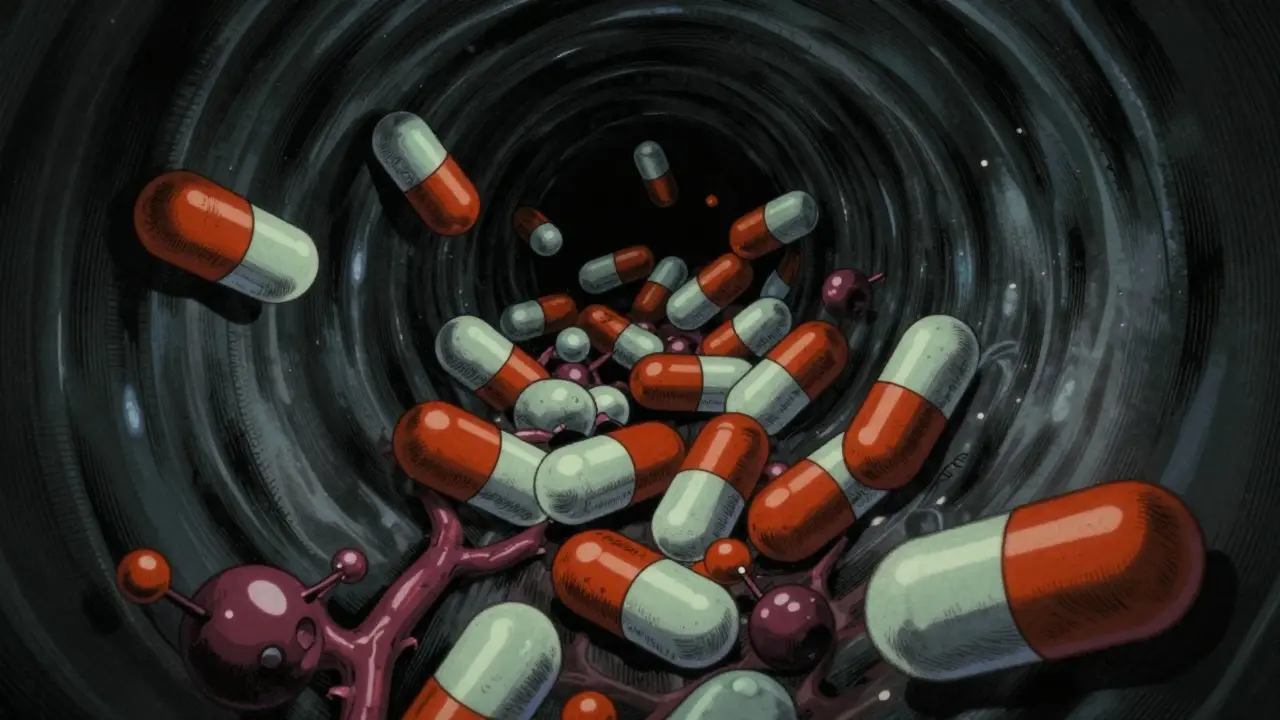
The numbers are eye-opening. Data from the British Heart Foundation shows that people taking five to nine medications are twice as likely to suffer an adverse reaction compared to those taking fewer than five. Once you hit 10 or more medications, that risk jumps to over three times. Every single additional drug can increase your risk of an adverse drug event by roughly 7% to 10%. This happens because drugs don't exist in isolation; they compete for the same metabolic pathways in your liver and kidneys, creating a chemical traffic jam that can lead to toxicity.
How Your Organs Dictate Drug Safety
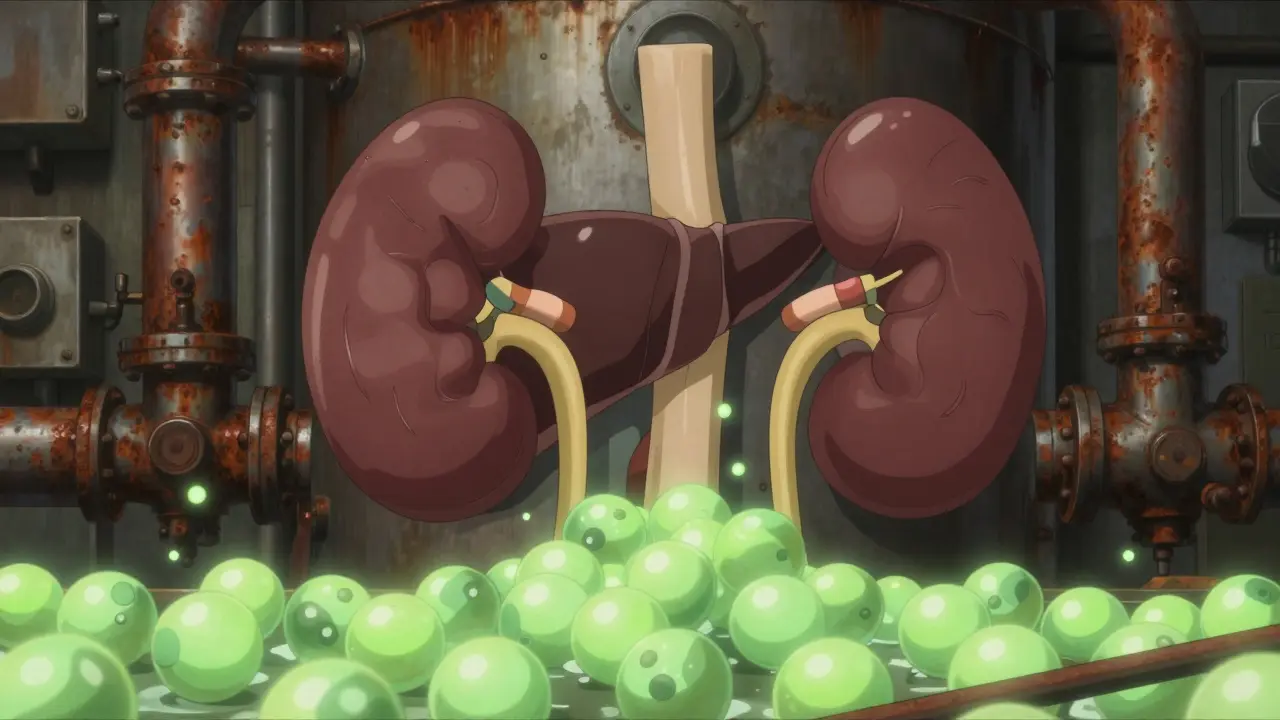
Your liver and kidneys are the body's primary cleanup crew. When these organs are compromised by a historical medical condition, the "cleaning" process slows down. For example, Chronic Kidney Disease is a long-term condition where the kidneys do not filter blood as well as they should. This can slash your renal clearance by 50% to 75%, meaning a drug stays in your system far longer than intended.
The American Medical Association notes that patients with kidney disease need dosage adjustments for about 40% of common medications. Similarly, those with hepatic impairment-liver damage-require modifications for 25% of drugs. If a doctor prescribes a standard dose without checking your latest eGFR (estimated glomerular filtration rate), you are essentially receiving a dose that your body cannot handle. Unfortunately, audits have shown that nearly half of these necessary dose adjustments are overlooked during the prescribing process.
| Condition | Impact on Drug Processing | Estimated Dose Adjustment Need |
|---|---|---|
| Chronic Kidney Disease | Reduces renal clearance by 50-75% | ~40% of common drugs |
| Hepatic Impairment | Slows liver metabolism/detoxification | ~25% of common drugs |
| Advanced Age (65+) | General physiological decline in clearance | 3-5x higher ADR risk |
The Genetic Lottery and Metabolic Speed
Ever wonder why a drug works perfectly for your neighbor but makes you feel sick? The answer is often in your DNA. Pharmacogenomics is the study of how genes affect a person's response to drugs. A primary player here is the CYP450 enzyme family in the liver.
These enzymes are responsible for breaking down most medications. However, genetic variations can make you a "poor metabolizer" or an "ultrarapid metabolizer." If your body doesn't produce enough of a specific enzyme, the drug builds up in your bloodstream. In some cases, these genetic variations can increase medication levels by a staggering 30% to 500%, turning a therapeutic dose into a toxic one. While tools like the YouScript platform are starting to analyze these gene-drug interactions, they are still only used in a small fraction of US healthcare systems.
Age, Gender, and the Clinical Trial Gap
Age and gender aren't just demographics; they are biological variables. Patients over 65 experience three to five times more adverse drug reactions than younger adults. This isn't just because they are older, but because they are more likely to have comorbid conditions-multiple diseases happening at once-which increases the risk of a reaction by 2.6 times.
There is also a glaring gender gap. Older women experience adverse reactions at least 50% more frequently than men. Why? Because for decades, women were underrepresented in clinical trials. Between 2010 and 2020, women made up only 22% of participants in cardiovascular drug trials. This means many dosing protocols were built for the male body, ignoring sex-specific pharmacokinetics (how the body absorbs and processes drugs), which leaves women more vulnerable to side effects.
Past Reactions: The Blueprint for Future Risks
Your history with a specific drug class is a massive red flag for future prescriptions. This is called cross-reactivity. If you've had a bad reaction to one drug, you're 30% to 40% more likely to react poorly to a similar drug in the same family.
A classic example is the link between penicillin and cephalosporins. If you have a documented penicillin allergy, you face an eight-fold higher risk of reacting to cephalosporins. Beyond allergies, historical drug-drug interactions are a silent killer. The combination of warfarin (a blood thinner) and NSAIDs (like ibuprofen) is a common mistake for people with a history of arthritis, resulting in roughly 34,000 emergency room visits annually in the US due to severe bleeding.

The Danger of Intermittent Use and Cost Gaps
Medical history isn't just about diseases; it's about patterns of behavior. Cost-related nonadherence-when patients stop taking meds because they are too expensive-creates a dangerous cycle. About 25% of patients struggle with this. When a patient restarts a medication after a gap without properly titrating the dose (starting low and slowing increasing), the risk of an adverse reaction increases by 28%.
Furthermore, some medications can mask your history. Beta-blockers can hide a fast heart rate during a hemorrhage, and corticosteroids can suppress the pain of a perforated ulcer. This means your medication history can actually hide the symptoms of a new, critical problem, making a differential diagnosis much harder for your doctor.
How to Lower Your Risk
The most effective way to stop these reactions is a structured medication review combined with deprescribing, which is the process of identifying and discontinuing medications that are no longer beneficial or are potentially harmful. This process can reduce adverse reactions by 22%.
To protect yourself, don't rely solely on the electronic health record. Only about 35% of these records properly flag historical risk factors during e-prescribing. You are your own best advocate. Keep a detailed list of every reaction you've ever had, every supplement you take, and your most recent kidney and liver function tests. When a new drug is suggested, ask: "Based on my kidney function and current list of meds, is this dose safe for me?"
Why does my age increase the risk of side effects?
As you age, your organs-specifically the kidneys and liver-become less efficient at filtering and clearing drugs from your system. This means medications stay in your blood longer and can reach toxic levels. Additionally, older adults are more likely to have multiple chronic conditions (comorbidities) and take more medications, which increases the likelihood of dangerous drug-drug interactions.
What is polypharmacy and why is it dangerous?
Polypharmacy is the use of multiple medications simultaneously. It is dangerous because each additional drug increases the chance of an adverse drug reaction (ADR). For those taking 10 or more medications, the risk of a reaction is over 300% higher than for those taking fewer than five. This happens because drugs can interfere with each other's absorption or metabolism.
Can my DNA affect how a medication works?
Yes, through pharmacogenomics. Variations in the CYP450 enzymes in your liver determine how fast or slow you metabolize certain drugs. If you are a "poor metabolizer," the drug can build up in your system, potentially increasing medication levels by 30% to 500%, which drastically increases the risk of side effects.
Do women have a higher risk of medication side effects?
Statistically, yes. Older women experience adverse drug reactions at least 50% more frequently than men. This is partly due to biological differences in pharmacokinetics and partly because women have been historically underrepresented in clinical trials, meaning dosing guidelines were often based on male physiology.
What should I do if I have a history of drug allergies?
Always inform your provider of the specific drug and the nature of the reaction. Be aware of cross-reactivity; if you are allergic to one drug class (like penicillin), you may be at a much higher risk for reactions to similar classes (like cephalosporins). This history should be a primary factor in choosing your next medication.