Hemolytic Anemia Symptoms: What to Watch For and When to Act
When your red blood cells, the oxygen-carrying cells in your blood that typically live for about 120 days break down too fast—before they’ve done their job—you get hemolytic anemia, a condition where red blood cells are destroyed faster than your body can replace them. This isn’t just about feeling tired. It’s your body screaming that something’s off inside. The hemolytic anemia symptoms start quietly: a faint dizziness when you stand up, a pale face that doesn’t go away, or unexplained dark urine. But left unchecked, it can lead to heart strain, jaundice, or even organ damage.
What causes this? It could be your own immune system attacking your red blood cells—that’s autoimmune hemolytic anemia, a condition where the body mistakenly targets its own blood cells. Or it might be a reaction to a drug, like certain antibiotics or anti-inflammatories. Infections, inherited disorders like sickle cell or thalassemia, or even a bad blood transfusion can trigger it. You might not realize it’s happening until you notice yellowing in your eyes or skin, a sign your liver is struggling with the overload of broken-down cells. Some people feel a sharp pain in their back or abdomen, or get short of breath climbing just one flight of stairs. These aren’t random side effects—they’re clues.
And here’s the thing: hemolytic anemia doesn’t always show up in routine blood tests right away. That’s why knowing the full picture matters. If you’ve been feeling off for weeks, especially after starting a new medication or recovering from an infection, don’t brush it off. The symptoms often overlap with other conditions—fatigue, weakness, headaches—but when they show up together with jaundice or dark urine, it’s a red flag. Your doctor can run specific tests to check for signs of red blood cell destruction, like elevated bilirubin or low haptoglobin levels. Catching it early means treatment can be simpler, faster, and more effective.
Below, you’ll find real-world posts that dig into the causes, connections, and consequences of this condition—from how certain drugs can trigger it, to how it shows up in older adults, and what to do when symptoms don’t match the usual story. These aren’t theoretical overviews. They’re practical, tested insights from people who’ve seen it happen—and how to respond before it gets worse.
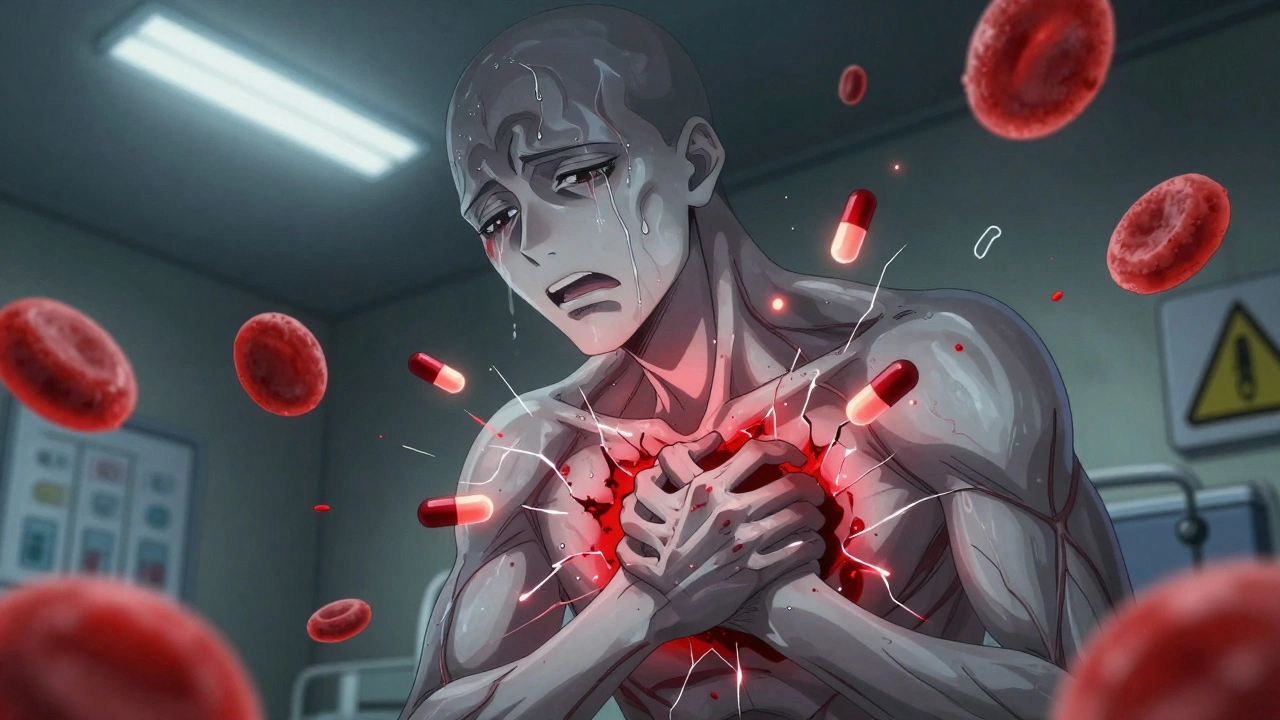
Hemolytic Anemia from Medications: How Drugs Destroy Red Blood Cells and What to Do
Drug-induced hemolytic anemia is a rare but dangerous reaction where medications trigger the immune system or chemicals to destroy red blood cells. Learn the signs, top culprit drugs, and what to do if you suspect it.
Read More