G6PD Deficiency Drugs: Safe Medications and Dangerous Risks
When you have G6PD deficiency, a genetic condition where red blood cells lack enough of the enzyme glucose-6-phosphate dehydrogenase to handle oxidative stress. Also known as favism, it means certain drugs, foods, or infections can suddenly destroy your red blood cells, leading to hemolytic anemia, a condition where red blood cells break down faster than your body can replace them. This isn’t theoretical—people with G6PD deficiency have ended up in the hospital after taking common painkillers or antibiotics they thought were harmless.
Not all drugs are risky, but the dangerous ones are everywhere: sulfonamides, a class of antibiotics including sulfamethoxazole, often found in UTI and ear infection treatments. primaquine, a malaria drug used to prevent relapses. Even aspirin, a common over-the-counter pain reliever. can trigger a crisis in high doses. These drugs create oxidative stress your red blood cells can’t handle. The result? Fatigue, dark urine, yellow skin, and in severe cases, kidney failure or shock. It’s not about being allergic—it’s about your body’s inability to protect its own cells.
What makes this worse is that many doctors don’t test for G6PD deficiency unless someone has a clear reaction. If you’re of African, Mediterranean, or Southeast Asian descent, your risk is higher. Yet, you might never know you have it until you take a risky drug. The good news? Many common meds are perfectly safe: acetaminophen for pain, most antibiotics like penicillin or cephalosporins, and statins for cholesterol. But you can’t guess—you need to know what’s on the danger list. And that list changes. New studies show even some herbal supplements and mothballs can be dangerous. That’s why this collection of posts matters. You’ll find real-world examples of drug reactions, how to report adverse events to the FDA, and how to spot hidden risks in everyday prescriptions. No fluff. No jargon. Just what you need to stay safe.
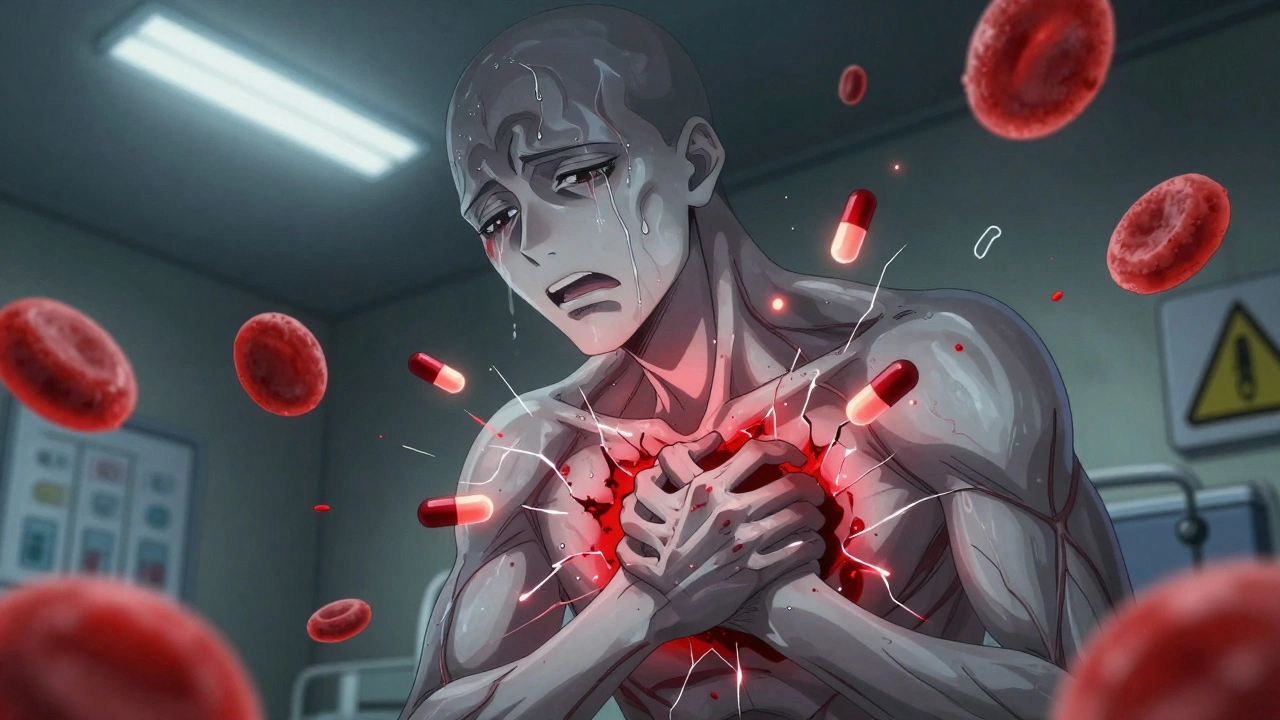
Hemolytic Anemia from Medications: How Drugs Destroy Red Blood Cells and What to Do
Drug-induced hemolytic anemia is a rare but dangerous reaction where medications trigger the immune system or chemicals to destroy red blood cells. Learn the signs, top culprit drugs, and what to do if you suspect it.
Read More