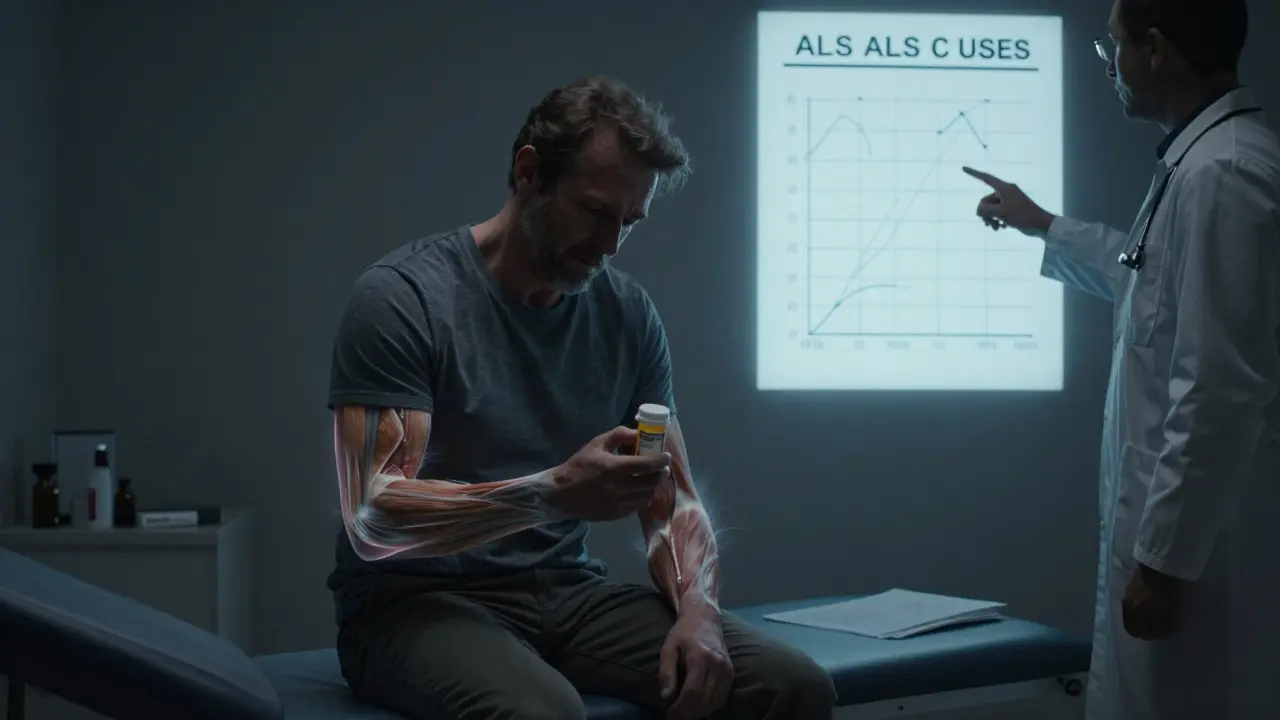
Statins & ALS Risk Calculator
This tool helps you understand your relative risk of developing heart disease versus ALS while taking statins. Based on current evidence, cardiovascular disease is far more common than ALS, and statins provide significant protection against heart problems.
When you're taking statins to lower your cholesterol, the last thing you want to hear is that they might be linked to ALS - a devastating neurological disease. But over the past decade, rumors, news reports, and scattered studies have fueled real anxiety among patients. If you're on a statin and worried about ALS, you're not alone. So what does the science actually say today?
Where Did This Fear Come From?
The concern started in 2007 when the FDA noticed a spike in spontaneous reports linking statins to ALS. These weren’t controlled studies - just individual cases doctors or patients reported. That’s like noticing a few people got sick after eating at a new restaurant and assuming the food caused it. But correlation isn’t causation.
In 2008, the FDA dug into 41 major clinical trials involving thousands of people. They compared those taking statins with those on placebo. Result? No increase in ALS cases. The agency said clearly: don’t stop your statin. That should’ve been the end of it. But science doesn’t always work that way.
What Do the Big Studies Say Now?
Fast forward to 2024, and we’ve got more data than ever - and it’s messy.
A study in Neurology found something surprising: people who started statins within the year before their ALS diagnosis were more likely to be diagnosed. At first glance, that looks bad. But here’s the twist - early ALS symptoms like muscle weakness, fatigue, and cramps often show up years before a clear diagnosis. Many people see their doctor for these symptoms, get tested, and sometimes start statins because they have high cholesterol. So the statin didn’t cause ALS - the ALS was already brewing. This is called reverse causality.
On the flip side, the same study found that people who took statins for more than three years had a lower risk of developing ALS - especially men. That’s not a fluke. It suggests long-term use might actually be protective.
Then there’s the Norwegian study, one of the most thorough ever done. Researchers looked at over 500 ALS patients using national health records going back to 1972. They adjusted for age, sex, smoking, cholesterol levels - everything. What did they find? Statin users lived just as long as non-users. The difference in survival? Less than a month. Statins didn’t make ALS worse. Not even close.
What About Those Wild Genetic Studies?
In early 2024, a Mendelian Randomization (MR) study hit the headlines claiming statins like atorvastatin and rosuvastatin dramatically increased ALS risk. One number stood out: rosuvastatin had an odds ratio of 693,000. That’s not just high - it’s biologically impossible. If that were true, nearly everyone on rosuvastatin would have ALS. Experts quickly pointed out the flaw: MR studies rely on genetic proxies, and if those genes affect multiple biological pathways (a problem called pleiotropy), the results can be wildly misleading. This study has been widely criticized. It doesn’t override real-world data from millions of patients.
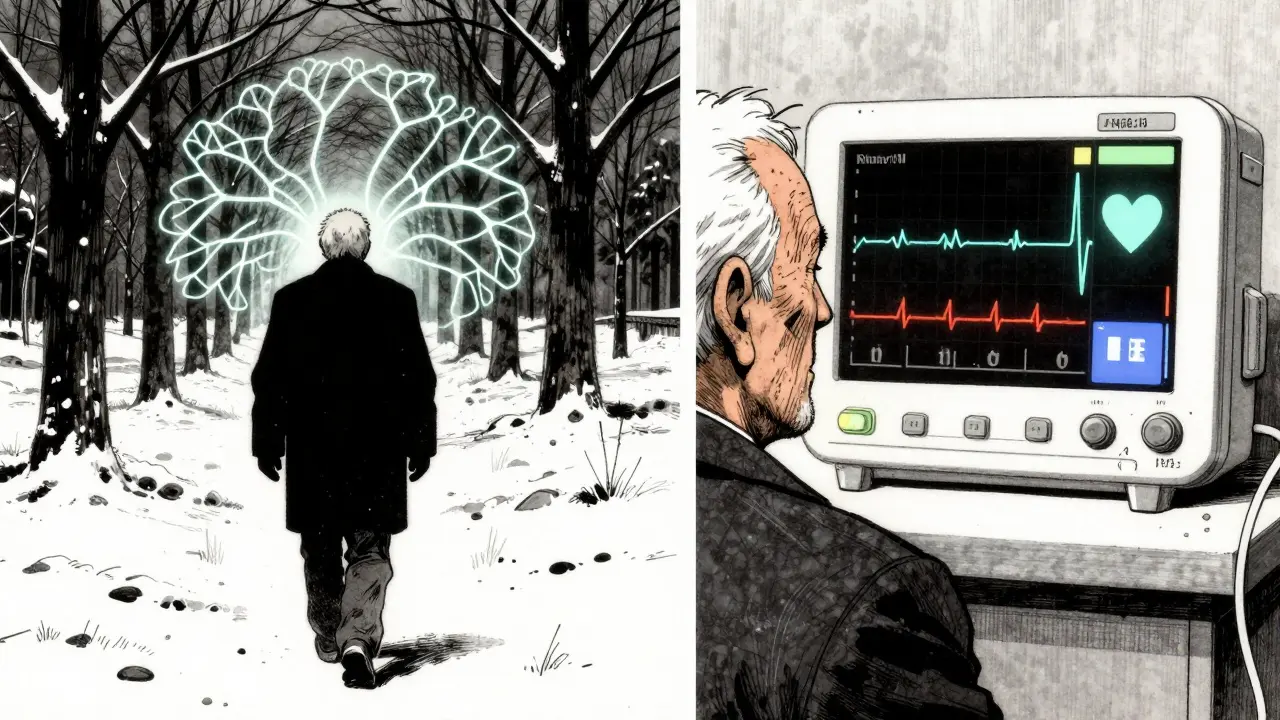
What About Animal Studies?
Here’s where it gets even more interesting. In lab mice with ALS-like symptoms, lovastatin reduced disease progression by 28%. Atorvastatin cut motor neuron loss by 30%. Why? Statins reduce inflammation and stabilize lipid levels in the brain - both of which are thought to play a role in ALS. These aren’t lab curiosities. They suggest statins might actually help slow neurodegeneration.
Why Do So Many ALS Patients Stop Taking Statins?
One of the most troubling findings from the Norwegian study? About 21% of ALS patients stopped taking statins in the year before diagnosis. Why? Because their early symptoms - muscle pain, weakness, cramps - felt exactly like statin side effects. So they stopped the drug… thinking it might help. But stopping statins didn’t improve their ALS. In fact, those who stopped had worse outcomes - not because statins were harmful, but because they lost the cardiovascular protection statins provide.
Neurologists report that 35% of ALS patients ask about stopping statins after diagnosis. About 12% actually do. And that’s dangerous. If you have heart disease, high cholesterol, or a family history of heart attacks, stopping statins puts you at risk for stroke or heart failure - problems that are far more common - and far more preventable - than ALS.

What Do Experts Really Think?
The FDA, Mayo Clinic, European Medicines Agency, and American Heart Association all agree: there’s no proof statins cause ALS. The Mayo Clinic’s official stance, updated in January 2024, says it plainly: “There’s no good evidence that statins cause or trigger ALS.”
Dr. Marc Weisskopf from Harvard, who led a 2022 study, found long-term statin use reduces ALS risk. Dr. Shafeeq Ladha, lead author of the Norwegian study, said: “Statin use should not routinely be discontinued upon diagnosis.”
Even Dr. Merit Cudkowicz, a leading ALS researcher at Massachusetts General Hospital, warns: “Many patients stop statins unnecessarily after an ALS diagnosis, which may put them at risk for preventable cardiovascular events.”
Should You Stop Your Statin If You Have ALS?
No - unless you’re having clear, severe muscle side effects that your doctor confirms are from the statin.
The American Academy of Neurology’s 2023 guidelines say statins should be continued in ALS patients with established heart disease or high cardiovascular risk. Discontinuation should only be considered if muscle symptoms are severe and can’t be explained by ALS progression alone.
Here’s the bottom line: ALS is rare. About 5,000-6,000 new cases a year in the U.S. Statins are taken by 39 million Americans. If statins were causing ALS, we’d see millions of cases - not thousands. We don’t.
What’s Next?
The CDC’s National ALS Registry is funding five new studies in 2025, including one tracking 10,000 statin users over five years. The FDA expects more data by late 2025. But based on everything we know now, the answer is clear: statins are safe for people with or at risk for ALS.
Don’t stop your statin because of fear. Talk to your doctor. If you’re worried, ask: “What’s my real risk of heart disease vs. ALS?” For most people, the answer is obvious: your heart is far more at risk than your nerves.
Do statins cause ALS?
No, there is no credible evidence that statins cause ALS. Major health agencies including the FDA, Mayo Clinic, and European Medicines Agency have reviewed the data and found no causal link. Some early reports were due to reverse causality - where ALS symptoms led people to see doctors and start statins, not the other way around.
Can statins help protect against ALS?
Emerging evidence suggests long-term statin use (over 3 years) may reduce ALS risk, especially in men. Animal studies show statins reduce inflammation and motor neuron loss. While not proven as a treatment, they may have protective effects through mechanisms like lowering cholesterol and calming brain inflammation.
Should I stop taking statins if I’m diagnosed with ALS?
No, unless you’re experiencing severe, confirmed statin-related muscle side effects. Stopping statins increases your risk of heart attack and stroke. Studies show ALS patients who stop statins have worse outcomes - not because statins harm ALS, but because they lose cardiovascular protection. Always consult your neurologist and cardiologist before making changes.
Why do some studies say statins increase ALS risk?
Some studies, like a 2024 Mendelian Randomization analysis, reported high risk increases, but these methods have major flaws. They rely on genetic proxies that can mislead if genes affect multiple biological pathways. The most reliable data - from large, real-world population studies - show no increased risk. Always prioritize large, long-term human studies over genetic models with implausible results.
Are some statins riskier than others?
No. The claim that atorvastatin, simvastatin, or rosuvastatin are uniquely risky comes from a single flawed genetic study. Real-world data from millions of users show no difference in ALS risk between statin types. The FDA and other regulators have not singled out any statin as dangerous. All statins have similar safety profiles regarding neurological effects.


Allison Priole
22 March 2026 - 22:04 PM
so i’ve been on lipitor for 8 years now and honestly i didnt even know there was this whole debate about als. my mom had alzheimers so i was already scared of brain stuff but then i read this whole thing and like… wow. the science makes sense. statins probably saved my heart and maybe even my brain. im not stopping. if anything im gonna tell my neurologist to keep me on it. also i just realized my cramps are probably als stuff not statin stuff lol whoops.
Casey Tenney
23 March 2026 - 20:23 PM
STOP TAKING STATINS. NOW. THIS ISN’T A DRILL.
Bryan Woody
23 March 2026 - 22:45 PM
let me guess you read one reddit post and now you think you’re a neurologist. the norwegian study had 500+ patients tracked since 1972. the mendelian randomization study had a 693000 odds ratio which means if it were real every person on rosuvastatin would be in a wheelchair by age 30. we have 39 million statin users in the us. if this were true we’d have 39 million als cases. instead we have 6000. that’s not a correlation that’s math. also your muscle pain? probably als. not the pill. stop blaming the medicine for your body’s betrayal.
Chris Dwyer
24 March 2026 - 05:31 AM
hey if you’re on statins and scared you’re not alone. but here’s the thing: your heart is gonna kill you before als even says hi. i had a cousin who stopped his statin after his als diagnosis and two years later he had a stroke. he was 52. statins don’t cause als. fear does. talk to your doc. keep taking it. your future self will high five you.
Timothy Olcott
26 March 2026 - 02:15 AM
THE GOVT IS LYING TO US 🚨💊🔥 THEY WANT YOU WEAK AND DEPENDENT! THEY PAID THE DOCTORS! I SAW A VIDEO ON TRUTH SOCIAL THAT SAID STATINS BLOCK YOUR DNA REPAIR! 🤯🇺🇸
Nicole James
27 March 2026 - 23:59 PM
…but what if… the FDA… is part of the pharmaceutical cabal? and what if… the ‘clinical trials’… were funded by big pharma? and what if… the real cause of als… is not statins… but the electromagnetic fields from 5G… that also cause… cholesterol imbalances? and what if… the ‘long-term protective effect’… is just a placebo effect… masked by… vitamin d deficiency… from… indoor living? i mean… think about it…
Paul Cuccurullo
29 March 2026 - 01:12 AM
While I appreciate the depth of analysis presented here, I must respectfully emphasize the importance of evidence-based medicine. The conflation of anecdotal reports with population-level data is a well-documented fallacy. The longitudinal studies referenced-particularly the Norwegian cohort-provide robust, confounder-adjusted evidence that statin use does not accelerate ALS progression. In fact, the data suggest a potential neuroprotective role. Discontinuation of statins in patients with ALS may represent a tragic misinterpretation of symptom attribution, leading to avoidable cardiovascular morbidity. I urge patients to consult with their multidisciplinary care team before altering therapy.
Solomon Kindie
29 March 2026 - 19:57 PM
statins dont cause als but they dont help either. its all noise. the real issue is that we treat symptoms not causes. why are we even talking about cholesterol in a neurodegenerative disease? we’re putting bandaids on a nuclear reactor. the system is broken. the studies are funded by the same people who sell the pills. you think they want a cure? no they want customers. you think you’re safe? you’re just a data point in a spreadsheet
Natali Shevchenko
31 March 2026 - 16:38 PM
what fascinates me is how deeply we project our fears onto medical interventions. we want simple answers to complex problems. if i get sick after taking a pill, the pill must be the villain. but what if the illness was already there, whispering, and the pill just happened to be the thing i started around the same time? the mind doesn’t like ambiguity. it craves causality. and statins became the scapegoat because they’re everywhere. they’re the mirror we don’t want to look into. maybe the real question isn’t whether statins cause als… but why we’re so afraid of death that we turn medicine into a battleground. and why we’d rather blame a pill than accept that some things just… happen.