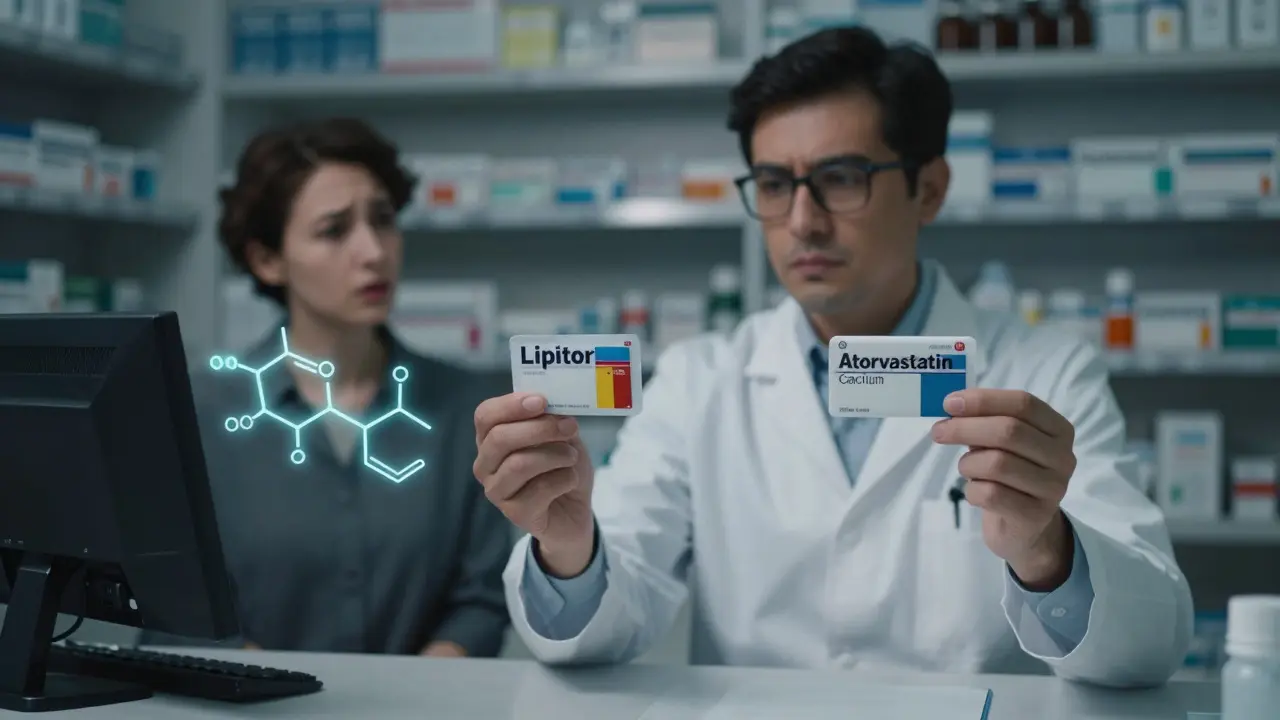
When a patient walks into the pharmacy with a prescription for a brand-name drug, the pharmacist has more options than just reaching for the first generic they see. One of the most overlooked-but often most effective-choices is the authorized generic. It’s not just another generic. It’s the exact same pill, made by the same company that made the brand, just without the brand name on the label. And in many cases, it’s the best choice for the patient.
What Exactly Is an Authorized Generic?
An authorized generic is legally defined by the FDA as a drug that’s manufactured by the original brand-name company-or under its direct authorization-and sold under a different label. Unlike regular generics, which are made by separate companies and must prove they work the same way through clinical testing, authorized generics are identical in every way: same active ingredient, same inactive ingredients, same dosage form, same manufacturing process. The only difference? The packaging and the name on the bottle.
For example, if a patient is prescribed Lipitor (atorvastatin), the authorized generic is made by Pfizer, the same company that makes Lipitor. It’s the same tablet, same color, same size, same fillers, same everything-just sold under a different name like "Atorvastatin Calcium" with a different pill imprint. This matters because even small changes in inactive ingredients-like gluten, dyes, or lactose-can trigger reactions in sensitive patients.
When Should Pharmacists Recommend Authorized Generics?
Not every generic is created equal. And that’s why pharmacists need to know when to step in and suggest an authorized generic over a regular one. Here are the three most important situations:
- Patients with allergies or sensitivities to inactive ingredients. Many people don’t realize that generics can contain different fillers, coatings, or binders than the brand. A patient with celiac disease might react to gluten in a regular generic. Someone avoiding animal products might be surprised to find gelatin in a capsule. An authorized generic avoids this entirely because it uses the same inactive ingredients as the brand. If the patient tolerated the brand, they’ll tolerate the authorized generic.
- Narrow therapeutic index (NTI) drugs. These are medications where even tiny changes in blood levels can cause serious problems. Think warfarin (blood thinner), levothyroxine (thyroid hormone), or phenytoin (seizure control). Studies show that switching from brand to regular generic in these cases leads to therapeutic issues in 3-5% of patients. Authorized generics eliminate this risk because they’re chemically identical. The FDA recognizes this and doesn’t require separate bioequivalence testing for them-they’re automatically considered equivalent.
- Modified-release formulations. Drugs designed to release slowly over time-like extended-release metformin or nifedipine-can behave differently between brand and generic versions. Bioequivalence tests don’t always catch subtle differences in how the drug dissolves in the body. Authorized generics avoid this uncertainty because they’re made on the same production line as the brand.
There’s also a fourth scenario: when a patient reports that their generic isn’t working like it used to. A 2021 survey of over 1,200 community pharmacists found that 12% of patients experienced unexpected side effects or reduced effectiveness after switching to a regular generic. Often, switching back to the authorized generic resolves the issue.
How to Spot an Authorized Generic
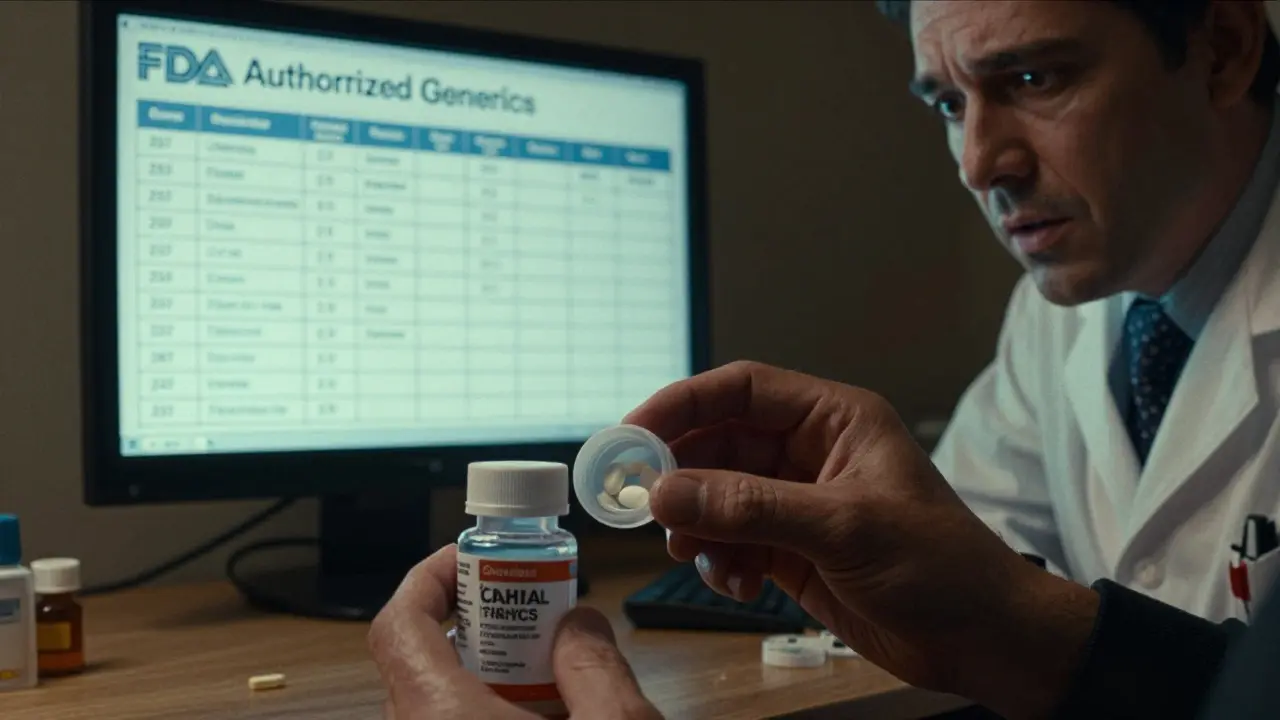
It’s not always easy to tell. Authorized generics look different from the brand-different color, different shape, different imprint. But they’re not listed in the FDA’s Orange Book like regular generics. Instead, pharmacists need to check the FDA’s official list of authorized generics, updated quarterly. As of September 2023, there were 257 authorized generics on that list, covering about 5% of all brand-name drugs with generic alternatives.
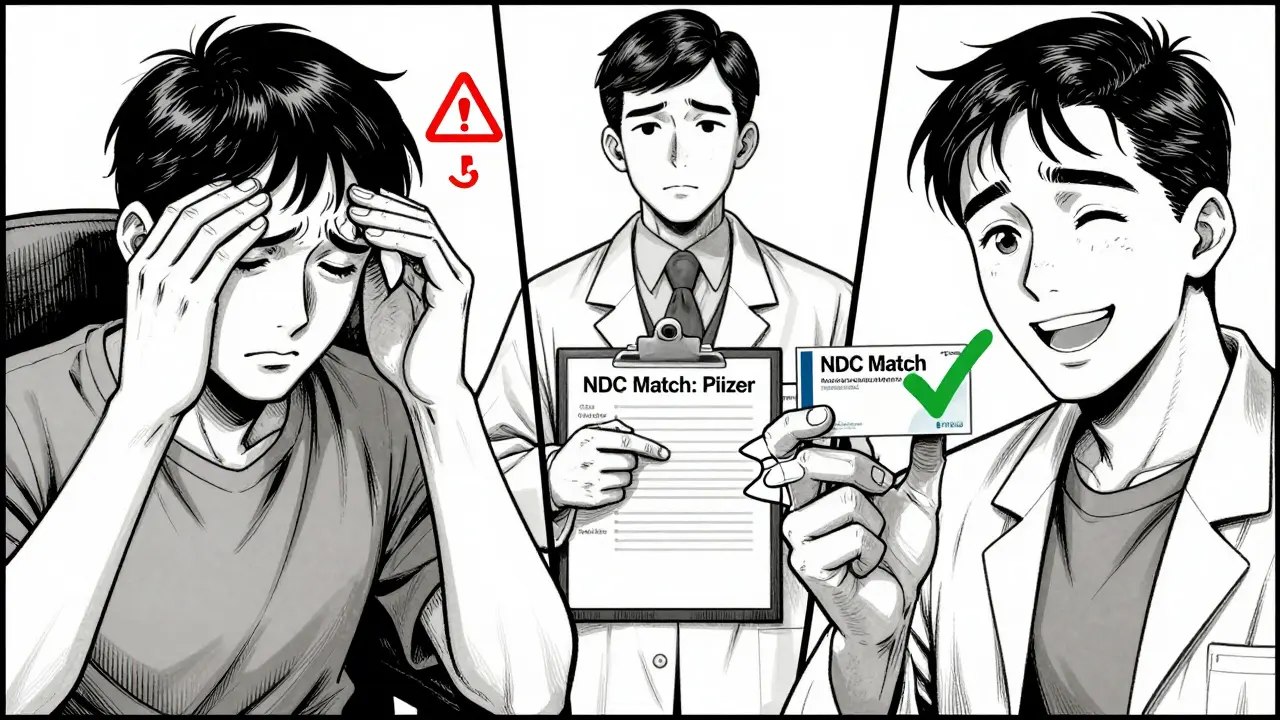
Another way to identify them is through the National Drug Code (NDC). The NDC for an authorized generic will have the same active ingredient and strength as the brand, but the labeler code will match the brand manufacturer (like Pfizer or Merck) or an authorized partner (like Prasco or Greenstone), not a typical generic maker.
Pharmacists should also know that authorized generics usually appear on the market after the first regular generic enters-about 75% of the time. That means they’re often available right when the patient is considering a switch.
Cost and Insurance: Don’t Assume It’s Cheaper
Yes, authorized generics are cheaper than the brand-often by 20% to 80%. But here’s the catch: insurance plans don’t always treat them like generics.
A 2022 study found that 63% of pharmacy benefit managers (PBMs) put authorized generics into the brand-name tier of their formularies. That means a patient might pay $50 for an authorized generic when the regular generic costs $10-even though they’re the same pill. This happens because PBMs sometimes negotiate rebates with brand manufacturers that don’t extend to authorized generics.
Pharmacists need to check the patient’s insurance before recommending one. If the authorized generic costs more than the regular generic, it’s not worth suggesting. But if it’s cheaper than the brand and the patient has special needs, it’s a win.
What to Tell Patients
Patients get confused when their pill looks different. A 2022 study found that 27% of patients stopped taking their medication after a change in appearance-until they were properly educated. That’s why counseling matters.
When handing over an authorized generic, say something like: "This is the same medication as your brand, made by the same company. The only difference is the name on the bottle. It’s just packaged differently to save you money. The ingredients inside are identical. If you’ve been tolerating the brand, you’ll tolerate this exactly the same way."
For patients with dietary restrictions, be specific: "This version has no gluten, no lactose, and no gelatin-just like your old prescription."
Legal and Regulatory Considerations
In 42 states, pharmacists can substitute a brand-name drug for its authorized generic without asking the prescriber-unless the prescription says "Do Not Substitute." Federal law allows it. But 18 states require the prescriber to be notified, even for authorized generics. Always check your state’s rules.
When you make the substitution, document it properly. Use the correct modifier code (like "DA" for drug substitution) in billing systems. Keep records showing the therapeutic equivalence. It’s not just good practice-it’s protection.
Limitations and What to Watch For
Not every brand has an authorized generic. Only about 5% of brand-name drugs do. And while they’re generally identical, there have been rare cases where manufacturers made minor changes when launching them. Always verify with the FDA list or manufacturer documentation.
Packaging changes can also affect adherence. A 2021 study found that 15% of non-adherence cases were tied to unexpected packaging. If the bottle looks totally different, patients might think it’s a mistake. Clear communication prevents that.
The Future of Authorized Generics
Authorized generics are growing. From 2010 to 2019, their numbers increased by 18% each year. Consumer interest is rising too-GoodRx reported a 47% jump in searches for "authorized generics" between 2021 and 2022.
Legislation like the Affordable Insulin Now Act of 2023 may expand their use for high-cost drugs. Professional groups like the American Pharmacists Association are preparing new guidelines for 2024, which will likely formalize their role in medication safety.
As healthcare shifts toward value-based care, pharmacists who understand authorized generics will be key to improving outcomes and reducing costs. They’re not just a cheaper option-they’re a smarter one, especially for patients who need consistency, safety, and reliability.
Are authorized generics the same as brand-name drugs?
Yes, authorized generics are chemically and therapeutically identical to the brand-name drug. They are made by the same manufacturer, using the same formula, active ingredients, and inactive ingredients. The only differences are the packaging, label, and name. This makes them a safer alternative than regular generics for patients with sensitivities or those taking narrow therapeutic index drugs.
Why are authorized generics cheaper than the brand but sometimes more expensive than regular generics?
Authorized generics cost less than the brand because they don’t carry the marketing and branding costs. But they can cost more than regular generics because pharmacy benefit managers (PBMs) often classify them under the brand-name tier in insurance plans. This means patients may pay higher copays-even though the medication inside is identical to the brand. Regular generics, on the other hand, are usually placed in the lowest-cost tier.
Can I substitute an authorized generic without the prescriber’s permission?
In most states (42 out of 50), yes-you can substitute an authorized generic without prescriber approval, as long as the prescription doesn’t say "Do Not Substitute." Federal law permits it. However, 18 states require you to notify the prescriber. Always check your state’s pharmacy board rules before making a substitution.
How do I know if a generic is authorized?
Check the FDA’s quarterly list of authorized generics, which is updated and publicly available. You can also verify by looking at the National Drug Code (NDC). If the labeler code matches the brand manufacturer (like Pfizer or Merck) or an authorized partner (like Prasco), it’s an authorized generic. Regular generics will have labeler codes from independent manufacturers.
Why do some patients stop taking their medication after switching to an authorized generic?
Patients often stop because the pill looks different-different color, shape, or imprint. A 2022 study found that 27% of patients discontinued therapy after an unexpected change in appearance. This is preventable with proper counseling. Explain clearly: "This is the same medicine, just packaged differently. The ingredients are identical. You’ve taken this exact formula before."





Bridget Verwey
6 March 2026 - 05:33 AM
Okay but let’s be real - if your insurance makes you pay $50 for an authorized generic while the regular generic is $10, you’re not saving anything. You’re just getting the same pill in a different box and paying brand prices. That’s not pharmacy wisdom, that’s corporate bait-and-switch. 🤦♀️
Andrew Poulin
7 March 2026 - 13:29 PM
Authorized generics are the only generics worth recommending. Regular ones? Sometimes they’re garbage. I’ve seen patients crash on generic levothyroxine then stabilize in 3 days on the authorized version. Same drug. Same factory. Just cheaper branding. End of story.
Weston Potgieter
8 March 2026 - 01:59 AM
So we’re supposed to trust the same company that charges $500 for a pill to suddenly care about affordability? Lol. They’re just milking the patent cliff. Authorized generics are a marketing trick wrapped in a white coat. Also I’m pretty sure they still use the same fillers. Don’t believe the hype.
Vikas Verma
8 March 2026 - 05:20 AM
From a clinical pharmacology standpoint, authorized generics represent a paradigm shift in therapeutic equivalence. The bioequivalence profile is not merely comparable - it is identical due to manufacturing continuity. This is critical for NTI drugs where CV is < 5%. We must prioritize patient safety over cost optimization.
Sean Callahan
9 March 2026 - 20:06 PM
wait so if the pill looks different but its the same why do people freak out? i mean i get it but like… its the same stuff?? why is this even a thing??
Jeff Mirisola
10 March 2026 - 15:52 PM
I’ve been recommending authorized generics for years and honestly? The patients who stick with them are the ones who actually feel better. Not because of placebo - because their bodies didn’t have to re-adapt to a new filler or coating. If your grandma’s on warfarin? Don’t gamble. Go authorized. It’s not just smart - it’s compassionate.
amber carrillo
11 March 2026 - 04:41 AM
As a pharmacist in rural Maine, I’ve seen patients stop meds because the pill changed color. One woman thought her new pill was ‘fake’ and stopped her insulin. We lost 3 weeks of glycemic control. Counseling isn’t optional. It’s lifesaving. Always explain the packaging difference. Always.
Aaron Pace
11 March 2026 - 18:36 PM
authorized generics = same pill 😎💊
regular generics = maybe not 😬
insurance = still charging brand prices 💸
pharmacists = doing the work 🙌
patients = confused as hell 🤯
Ferdinand Aton
11 March 2026 - 20:58 PM
Wait so you’re saying the FDA says these are identical but we still have to check the NDC? That’s like saying ‘this apple is organic’ but you gotta peel it first to be sure. Sounds like a bureaucratic loophole dressed up as patient care.
William Minks
13 March 2026 - 15:19 PM
Love this thread. I’m from the UK and we’ve got something similar called ‘generic equivalents’ but the system here is way more fragmented. The US is ahead on transparency - even if the insurance system is still broken. Keep pushing for better info. Pharmacists are the real MVPs here.
Susan Purney Mark
14 March 2026 - 19:45 PM
My mom switched to an authorized generic for her blood pressure med and said she ‘felt more stable.’ I didn’t believe her until I checked her logs - her BP was way more consistent. Turns out the regular generic had a different binder that slowed absorption. This isn’t hype. It’s science with heart.
Ian Kiplagat
16 March 2026 - 15:32 PM
Same pill. Different label. Still costs more than it should. 🤷♂️