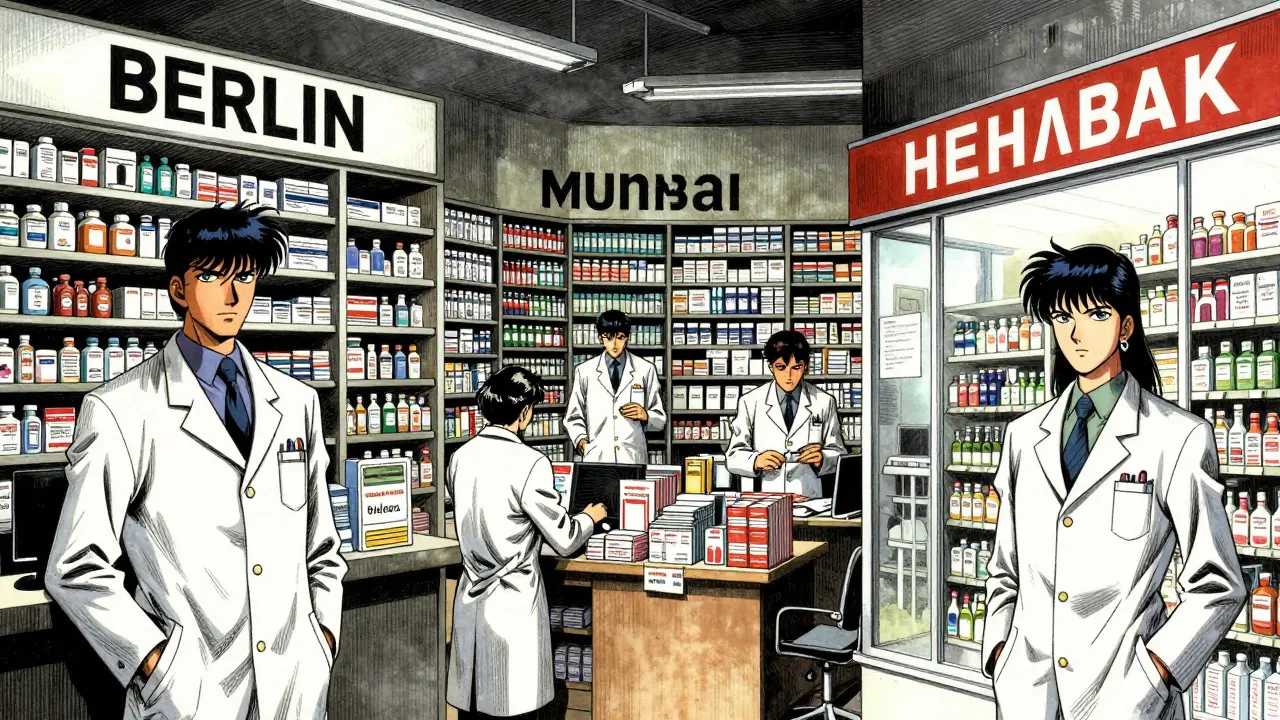
Imagine walking into a pharmacy in Berlin, Mumbai, or New York. While the medicine in the bottle might have the same active ingredients, the way the doctor feels about prescribing it-and the way the pharmacist handles it-varies wildly. For some providers, generic medications is a pharmaceutical product containing the same active ingredients as brand-name drugs but marketed without patent protection. But in practice, generics are viewed as everything from a "budget version" to the very foundation of a national health system.
Depending on where you are, a provider might see a generic as a strategic tool to save a government's budget or a critical necessity for a patient who otherwise couldn't afford treatment. With the global pharmaceutical industry projected to hit $1.6 trillion by 2025, the shift toward generics isn't just about saving a few dollars; it's a fundamental change in how healthcare is delivered globally.
The European Approach: Policy-Driven Substitution
In Europe, providers generally view generics through the lens of cost containment and systematic efficiency. It isn't just a suggestion from a doctor; it's often a matter of government policy. Countries like Germany and France lead the way, with Germany holding a significant 15.58% share of the European generic market.
For a European healthcare provider, the perspective is often "generic by default." Many EU member states have implemented policies that encourage or even mandate substitution at the pharmacy level. This means the pharmacist often switches a branded drug to a generic one automatically unless the doctor specifically notes that no substitution is allowed. Because these markets are mature, growth is slower-around 2-5%-but the reliance on generics is deeply embedded in the clinical workflow.
Asia-Pacific: Generics as Essential Infrastructure
While Europe sees generics as a way to manage costs, providers in the Asia-Pacific region often view them as essential healthcare infrastructure. In countries like India and China, the focus isn't just on substituting a brand; it's about creating access to medicine for millions of people with lower incomes.
Indian providers, in particular, operate in a powerhouse hub. India accounts for roughly 20% of the global generic drug volume. Here, the provider perspective is shifted toward production and accessibility. With a rising tide of chronic diseases like diabetes and cardiovascular conditions, generics are the primary tool for keeping the population healthy. This region is seeing the fastest growth, with some projections suggesting a CAGR of up to 6.55% through 2034, driven by an aging population and aggressive government support for low-cost treatments.
| Region | Primary Provider View | Market Driver | Estimated Growth/Share |
|---|---|---|---|
| Europe | Cost Management Tool | Government Substitution Policies | 2-5% CAGR |
| Asia-Pacific | Essential Infrastructure | Affordability & Chronic Disease | 5.04% - 6.55% CAGR |
| North America | Affordability Necessity | High Brand-Name Costs | ~90% Prescription Volume |
North America: The Affordability Paradox
In the United States, the relationship between providers and generics is complex. On one hand, the numbers are staggering: generics make up about 90% of prescription volume. American providers increasingly view generic drugs as the only way to keep healthcare affordable for the average patient given the skyrocketing cost of brand-name medications.
However, this reliance creates a specific type of anxiety for U.S. providers: supply chain vulnerability. Because the U.S. relies on India for about 40% of its generic demand, any disruption in international shipping or manufacturing leads to immediate drug shortages. This creates a dual perspective where providers value the cost savings of generics but worry about the reliability of the supply chain and occasional quality concerns.
The Rise of Specialty Generics and Biosimilars
The conversation is shifting from simple pills to complex treatments. We are entering an era of Specialty Generics, which include injectables and inhalers. This market is growing rapidly, projected to reach over $185 billion by 2033.
Providers in hospital settings are noticing this shift most. When a patient is in a hospital bed, they aren't taking a simple tablet; they are often on complex injectables. The growing acceptance of these advanced generics indicates that providers now trust the clinical applicability of generics for high-stakes treatments, not just basic maintenance meds.
Furthermore, we are seeing the "patent cliff." Between 2025 and 2030, branded drugs generating over $200 billion in annual sales will lose their exclusivity. This is especially true for Biosimilars-generic versions of biologic drugs used for oncology and immunology. Providers are preparing for a massive wave of new, cheaper options for conditions like cancer, which will likely move biosimilars from "alternative" to "first-line" therapy.
Pharmerging Markets: The New Default
In what analysts call "pharmerging" markets-including Brazil, Russia, Turkey, and China-the provider perspective has undergone a fundamental shift. In these regions, generics are no longer the second choice; they are the default treatment option.
In these economies, healthcare infrastructure is being built with cost-effectiveness as the primary goal. Providers aren't weighing the pros and cons of a brand versus a generic; they are prescribing the most effective generic available. This trend is expected to contribute around $140 billion in increased spending by 2025, as these countries expand their healthcare reach to larger portions of their populations.
Common Pitfalls in Global Generic Adoption
Despite the general positivity, providers across the globe face similar hurdles when moving toward generics:
- The Trust Gap: Some patients still believe "cheaper means lower quality," forcing providers to spend extra time educating patients.
- Regulatory Lag: In some regions, the approval process for new generics is slow, leaving providers stuck with expensive brands longer than necessary.
- Bioequivalence Doubts: While most generics are identical in effect, providers dealing with "narrow therapeutic index" drugs (where a small dose change matters) remain cautious.
Do providers in other countries trust generics as much as those in the US?
Trust levels vary by region. In Europe, high trust is built into the system through government-mandated substitution. In Asia-Pacific, generics are seen as a necessity for survival and access. In the US, while trust is high for volume, there is more concern regarding supply chain stability and drug shortages.
What are biosimilars and how do they differ from standard generics?
Standard generics are chemical copies of a drug. Biosimilars are highly similar versions of complex biological medicines (made from living cells). Because biologics are more complex, biosimilars aren't identical copies but are "highly similar" with no clinically meaningful differences in safety or effectiveness.
Which region has the highest adoption of generic drugs?
In terms of prescription volume, North America is extremely high (around 90%). However, the Asia-Pacific region is the most dynamic and fastest-growing market due to a massive population increase and strong government policies prioritizing affordable care.
Why are some providers still hesitant to prescribe generics?
Hesitation usually stems from concerns over bioequivalence in very sensitive medications, patient preference for brand names, or fear of supply chain interruptions that could leave a patient without their medication.
How does the "patent cliff" affect healthcare providers?
The patent cliff occurs when the legal protection for a brand-name drug expires. For providers, this means a sudden influx of cheaper, generic alternatives for previously expensive treatments, allowing them to treat more patients with the same budget.
Moving Forward: What to Watch
If you're a provider or a patient, the next few years will be defined by the transition to complex generics. We're moving past the era of simple pills and into the era of affordable biologics. As more high-revenue drugs lose exclusivity, expect to see a shift where the "generic" version of an oncology or immunology drug becomes the standard of care worldwide.
Whether it's through the rigid policies of Europe or the rapid growth of Asia, the global consensus is clear: generics are no longer just an alternative-they are the backbone of sustainable healthcare.





dwight koyner
8 April 2026 - 21:20 PM
The distinction between standard generics and biosimilars is a critical point for patients to understand. While the therapeutic equivalence is clinically validated, the manufacturing process for biologics is far more complex, which explains why they are labeled as "similar" rather than "identical." It is essential for providers to maintain transparent communication with patients during this transition to ensure adherence and confidence in the treatment plan.
Ethan Davis
9 April 2026 - 10:14 AM
Supply chain vulnerability is just a cover for something bigger. They want us dependent on overseas labs so they can control the flow of meds and hike prices whenever they feel like it. It is a total power grab by the globalist pharma cartels to see who survives when the taps get turned off. Trust me, the "patent cliff" is just a way to cycle the money into new, more expensive biologics while we get the leftovers.
Jamar Taylor
10 April 2026 - 01:32 AM
It is so inspiring to see how these medications are becoming accessible to millions more people globally! This shift is going to save countless lives and give so many families a second chance. Keep pushing for these affordable options!