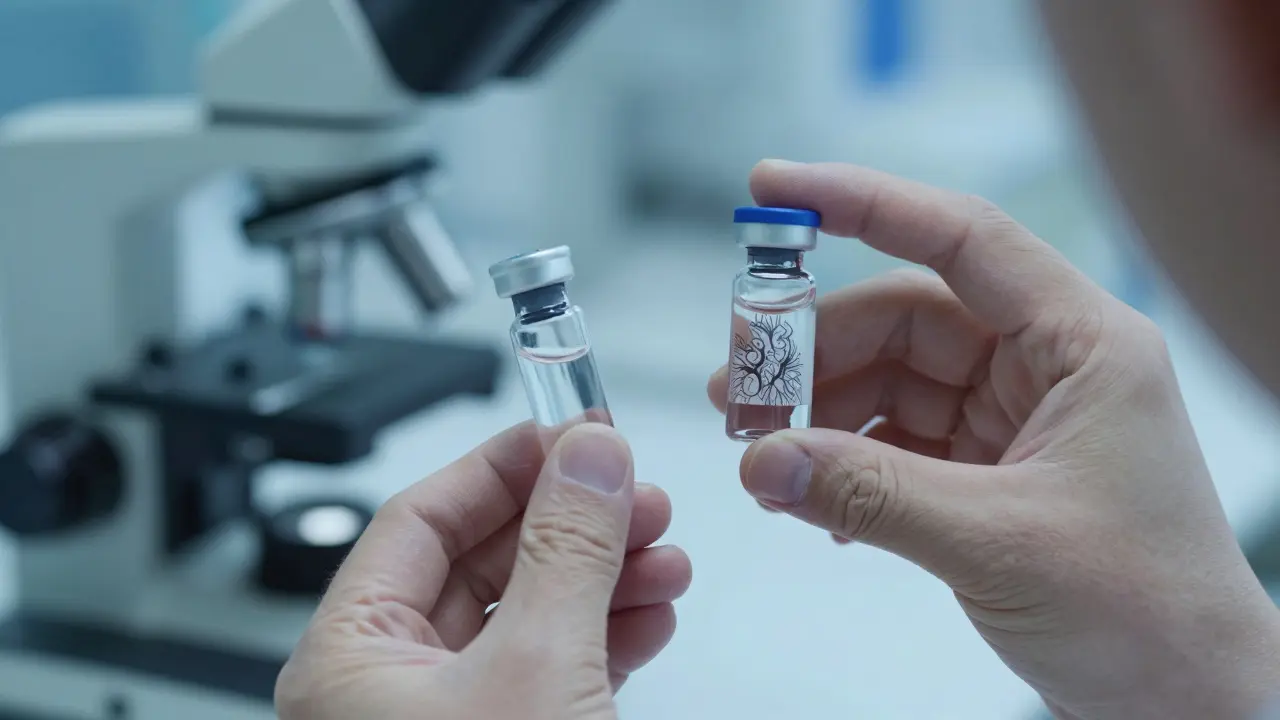
What Biosimilars Really Are (And Why They're Not Generics)
biosimilarsFDA-approved medications derived from living organisms that demonstrate high similarity to reference biologic products in terms of safety, purity, and potency. The first biosimilar, Zarxio, got FDA approval in March 2015. Today, over 70 biosimilars have been approved, though only about 40 are actually available on the market. Unlike generic drugs, which are exact copies of small-molecule medicines, biosimilars are complex biological products made from living cells. They can't be identical to the original biologic, but they're close enough to work the same way. This matters because biologic drugs like Humira cost $4,000-$5,000 per dose, and biosimilars usually cost 10-33% less. But insurance rules often prevent you from saving money.
How Insurance Tiers Work for Biologics and Biosimilars
Most insurance plans use a tiered system for specialty drugs. Biologics usually sit on Tier 4 or 5-the highest-cost tiers. This means patients pay a percentage of the drug's total cost (coinsurance) instead of a fixed copay. For example, a 33% coinsurance on a $5,000 dose means you pay $1,650 out-of-pocket each month.
Here's the problem: biosimilars often end up on the same tier as the original biologic. According to the Association for Accessible Medicines' 2023 report, Medicare Part D plans cover branded Lantus insulin in 80% of cases, but less than 10% cover insulin biosimilars. JAMA Network research from June 2024 showed only 1.5% of plans place biosimilars on lower tiers than the reference product. That's a huge missed opportunity-biosimilars could save patients hundreds per month, but insurance rules keep costs high.

Prior Authorization: The Hidden Hurdle
Prior authorization is a process where doctors must get approval from insurers before prescribing certain drugs. For biologics and biosimilars, this is almost always required. A 2024 American Medical Association survey found 98.5% of plans covering Humira and its biosimilars require prior authorization for both. The catch? Insurers don't make it easier for biosimilars. The process is the same for both, so patients don't get any advantage for choosing the cheaper option.
This creates major delays. A survey by the Alliance for Patient Access found 78% of rheumatologists spend 3-5 hours weekly just handling prior authorization requests. One case study in Rheumatology Advisor documented a patient with severe rheumatoid arthritis who faced a 28-day treatment delay because their insurer required a trial of a biosimilar before approving the reference product. That's not just inconvenient-it can worsen health outcomes.
Insurer Strategies Changing in 2025
Some insurers are finally changing their approach. Express Scripts, one of the largest Pharmacy Benefit Managers (PBMs), made a bold move for 2025. They excluded Humira from all their commercial formularies. Instead, they placed multiple biosimilars on Tier 3 with 25% coinsurance-better than the standard 33% for specialty drugs. By removing Humira entirely, Express Scripts forces patients to choose biosimilars.
CMS (Centers for Medicare & Medicaid Services) is also stepping up oversight. Following the Office of Inspector General's November 2024 report, CMS now monitors formulary data to ensure biosimilars aren't unfairly restricted. Preliminary findings show 78% of 2024 formularies included available biosimilars alongside reference products. But this is just the beginning. Industry analysts predict biosimilar adoption could hit 40% market share by 2027 if PBMs continue these strategies.

What Patients Can Do to Navigate Coverage
If you're taking a biologic or considering a biosimilar, here's what to do:
- Check your plan's formulary: Look up your drug on your insurer's website. See if biosimilars are covered and on what tier.
- Ask about patient assistance programs: Many drug manufacturers offer help with out-of-pocket costs. For example, Amgen's biosimilar Cyltezo has a savings program for eligible patients.
- Appeal coverage denials: If your insurer denies coverage for a biosimilar, you can appeal. The Medicare Rights Center reports that 70% of appeals for biosimilar coverage are successful when properly documented.
- Work with your doctor: Ask them to specify "do not substitute" if you need the reference product. This can help avoid forced switching.
Remember: even small savings matter. When biosimilars and reference products share the same tier, patients pay an average of $1,200 monthly for Humira versus $1,150 for biosimilars. That $50 difference adds up to $600 per year. For chronic conditions, that's money you can use for other health needs.
Frequently Asked Questions
Why don't insurers put biosimilars on lower tiers?
Historically, insurers have been slow to incentivize biosimilars because of complex relationships with drug manufacturers and PBMs. Many plans place biosimilars on the same tier as reference products, meaning patients pay nearly the same out-of-pocket costs. However, some PBMs like Express Scripts are changing this by excluding reference products and placing biosimilars on preferred tiers. The Inflation Reduction Act requires CMS to monitor these practices, which may lead to more fair tier placement in the future.
How long does prior authorization take for biosimilars?
The prior authorization process typically takes 3-14 business days, according to the American Medical Association's 2024 survey. However, this can vary by insurer and drug. If the initial request is denied, the appeal process may take an additional 15-30 days. Some insurers offer expedited reviews for urgent cases, but you'll need documentation from your doctor showing immediate medical need.
Are insulin biosimilars covered by insurance?
Coverage for insulin biosimilars remains very limited. The Association for Accessible Medicines reported in 2023 that less than 10% of Medicare Part D plans cover insulin biosimilars, despite 80% covering branded Lantus insulin. Major insurers like UnitedHealthcare, CVS, and Cigna currently don't cover any insulin biosimilars. This is particularly concerning because insulin costs are a major burden for people with diabetes.
What's the difference between biosimilars and generics?
Generics are exact copies of small-molecule drugs, like common painkillers or blood pressure medications. Biosimilars, on the other hand, are complex biological products made from living cells. They're highly similar to the original biologic drug but not identical. This is why biosimilars require more rigorous FDA testing than generics. For example, a biosimilar for Humira (adalimumab) must demonstrate similarity in structure, function, and safety, but it's not a perfect copy like a generic pill would be.
Can pharmacists substitute a biosimilar for a reference product?
Only if the biosimilar is designated as "interchangeable" by the FDA. Currently, only a few biosimilars have this designation. For example, Cyltezo (adalimumab-adbm) is interchangeable for certain Humira formulations, but this applies only to low-concentration versions. Most biosimilars aren't interchangeable, so pharmacists can't automatically substitute them without the doctor's permission. Always check with your pharmacist to confirm whether substitution is allowed.



Pamela Power
5 February 2026 - 07:47 AM
Insurance companies are deliberately sabotaging biosimilar adoption. They keep them on the same high-cost tier as the original biologics. Why? Because they're in bed with Big Pharma. The whole system is rigged. Patients get stuck paying thousands while corporations pocket the difference. It's a scam. We need to demand transparency. These companies don't care about people's health-only profits. This is why healthcare is broken. They're not just blocking cheaper options; they're actively making it harder for patients to get the treatments they need. It's a disgrace. How can anyone justify this? Every time a patient can't afford their meds, it's because of greed. The FDA approved these biosimilars for a reason-they're safe and effective. But insurers refuse to put them on lower tiers. This isn't about healthcare; it's about profit margins. Someone needs to hold them accountable. It's time to fight back.
Andre Shaw
5 February 2026 - 14:14 PM
Actually, the insurance companies have valid reasons for not moving biosimilars to lower tiers. Biosimilars aren't like generics-they're complex biologics with potential immunogenicity risks. The FDA requires extensive testing, but real-world data is still limited. Insurers need to manage risk for patients. Plus, the cost savings aren't always as significant as people claim. The manufacturing process is expensive, so the price difference isn't huge. You're oversimplifying the issue. It's not about greed; it's about evidence-based medicine. If the data shows biosimilars are equally safe and effective, then tiers could change. But until then, caution is warranted. Also, the current system incentivizes innovation. If biosimilars were on lower tiers too soon, it could discourage new biologic development. That's a bigger problem for future treatments. So it's not black and white like you think.
Lisa Scott
7 February 2026 - 02:30 AM
Insurers are in cahoots with Big Pharma. It's all a scheme. They want to keep prices high. Biosimilars are safe. The FDA says so. But they're blocking them. Why? Because of pharma lobbying. It's a conspiracy. The whole system is rigged. They don't care about patients. Just money. This is why healthcare is broken. They're using prior auth as a tool to delay access. It's intentional. The data shows biosimilars save money, but they're ignoring it. This is a clear case of corporate greed. The government should step in. This isn't healthcare-it's a profit-driven racket. Every time you hear 'prior auth', it's a red flag. They're making it hard on purpose. The system is designed to fail patients. It's a conspiracy.
Carol Woulfe
8 February 2026 - 22:55 PM
The conspiracy is deeper than you realize. It's not just Big Pharma; it's the entire pharmaceutical-industrial complex. They control the FDA, the insurers, and even Congress. The real issue is the lack of transparency in drug pricing. The 2024 OIG report shows systemic corruption. They're using biosimilars as a Trojan horse to maintain monopolies. It's all about maintaining control over the healthcare system. This isn't just about insurance tiers-it's about power. The public needs to wake up. The evidence is everywhere. This is a coordinated effort to keep costs high. They're using bureaucratic hurdles to prevent competition. It's a masterclass in corporate manipulation. We need to expose this. The system is designed to benefit only the elite. Every 'regulation' is a tool for control. They're not protecting patients-they're protecting profits. This is why we can't trust the 'system'. It's all rigged. We need radical change.
Jenna Elliott
9 February 2026 - 06:18 AM
American healthcare is the best. Stop whining.
Samantha Beye
9 February 2026 - 20:15 PM
It's frustrating when insurance rules make it hard to access affordable meds. But there are ways to navigate it. Checking your plan's formulary and working with your doctor can help. Patient assistance programs exist for a reason. Don't give up. There's hope, even if it's slow. Small steps matter. Keep advocating for yourself. You're not alone in this. Many people face similar challenges, and support is available. It's important to stay informed and persistent. Progress takes time, but every effort counts.
Gregory Rodriguez
9 February 2026 - 22:31 PM
Oh sure, let's blame the insurance companies. What's next, blaming the sun for shining? Biosimilars are a great idea, but let's be real-they're not magic. The system's flawed, but it's not all bad. Maybe we should focus on fixing the actual problems instead of pointing fingers. At least there's progress happening, like Express Scripts changing their policies. Let's celebrate the wins while working on the rest. Keep your chin up; things are getting better. Maybe not fast enough, but it's a step in the right direction. Let's not get bogged down in negativity. There's hope, people!
Kate Gile
10 February 2026 - 22:35 PM
It's great to see insurers like Express Scripts making changes for 2025. Moving biosimilars to lower tiers is a positive step. We need more of this kind of action. Collaboration between insurers, doctors, and patients can make a real difference. Small changes add up over time. Let's keep pushing for fairer coverage. Every step forward matters. I'm hopeful that with more awareness, we can improve access for everyone. Let's work together to make healthcare more affordable. Progress is possible, and it starts with each of us.
Joyce cuypers
11 February 2026 - 07:45 AM
I had to deal with prior auth for my biosimilar. It took forever. The paper work was a nightmare. I had to call my doctor's office like 3 times. They said it's common. But why does it have to be so hard? I'm so frustrated. But I found a patient assistance program that helped. It's not easy, but there are options. Don't give up. Keep fighting. You're not alone. It's tough, but we can make it through.
Kieran Griffiths
11 February 2026 - 18:19 PM
Insurance coverage for biosimilars is a complex issue, but there are steps patients can take. Checking your formulary, using patient assistance programs, and working with your doctor are all effective strategies. The key is staying informed and proactive. While the system isn't perfect, small changes can make a big difference. Let's focus on what we can control and advocate for better policies. Progress is possible, and every effort counts. Stay positive and keep pushing for change. It's important to remember that you're not alone in this journey. Many resources are available to help you navigate the system.
anjar maike
12 February 2026 - 20:23 PM
Biosimilars save money but insurance won't let us 😔 Prior auth is a pain But there's hope 🤞