Pill Storage Tips: Keep Your Medications Safe and Effective
When you store your pill storage, the way you keep your medications affects how well they work and how safe they are. Also known as medication storage, it’s not just about keeping pills in a bottle—you’re managing your health every day. A pill left in a hot bathroom or a damp drawer can lose strength, break down, or even grow mold. That’s not just wasteful—it’s dangerous. Many people don’t realize that the temperature and humidity in their bathroom or kitchen can ruin pills long before they expire.
Think about your anticoagulants, like warfarin, which need precise dosing to prevent clots or bleeding. If moisture gets in, the tablet can crumble or absorb water, changing how your body absorbs it. Same goes for SSRIs, like sertraline or escitalopram, which can degrade faster in heat and affect your mood. Even something as simple as carbamazepine, a seizure and nerve pain drug that’s sensitive to light and humidity, can become less effective if stored wrong. These aren’t edge cases—they’re common meds people rely on daily.
Where you store your pills matters more than you think. The bathroom is the worst place—steam from showers, humidity from sinks, and fluctuating temps all attack pills. The kitchen isn’t much better if you keep them near the stove or dishwasher. Instead, pick a cool, dry spot—like a bedroom drawer or a closet shelf away from direct sunlight. Use airtight containers if your original bottles aren’t sealed well. Keep them out of reach of kids and pets. And never mix pills in unlabeled containers—even if you think you’ll remember what’s what. One wrong pill can cause serious harm.
Check your meds regularly. If they smell odd, look discolored, or feel sticky or crumbly, toss them. Don’t wait for the expiration date. Many drugs lose potency months before they expire if stored poorly. Keep a list of what you’re taking and where you store it—this helps during emergencies or when you switch homes or doctors. If you travel, carry pills in your carry-on, not checked luggage. Airplane cargo holds can get freezing or scorching hot. And don’t leave pills in a hot car—especially in summer. A pillbox left on the dashboard can turn your medicine into a science experiment.
There’s no magic trick to pill storage—just common sense. But that common sense is what keeps your treatment working, your body safe, and your money from being wasted. You spend time picking the right meds—don’t waste it by storing them like an afterthought. Below, you’ll find real advice from people who’ve learned the hard way, backed by facts from doctors and pharmacists. These aren’t guesses. These are the rules that keep you healthy.
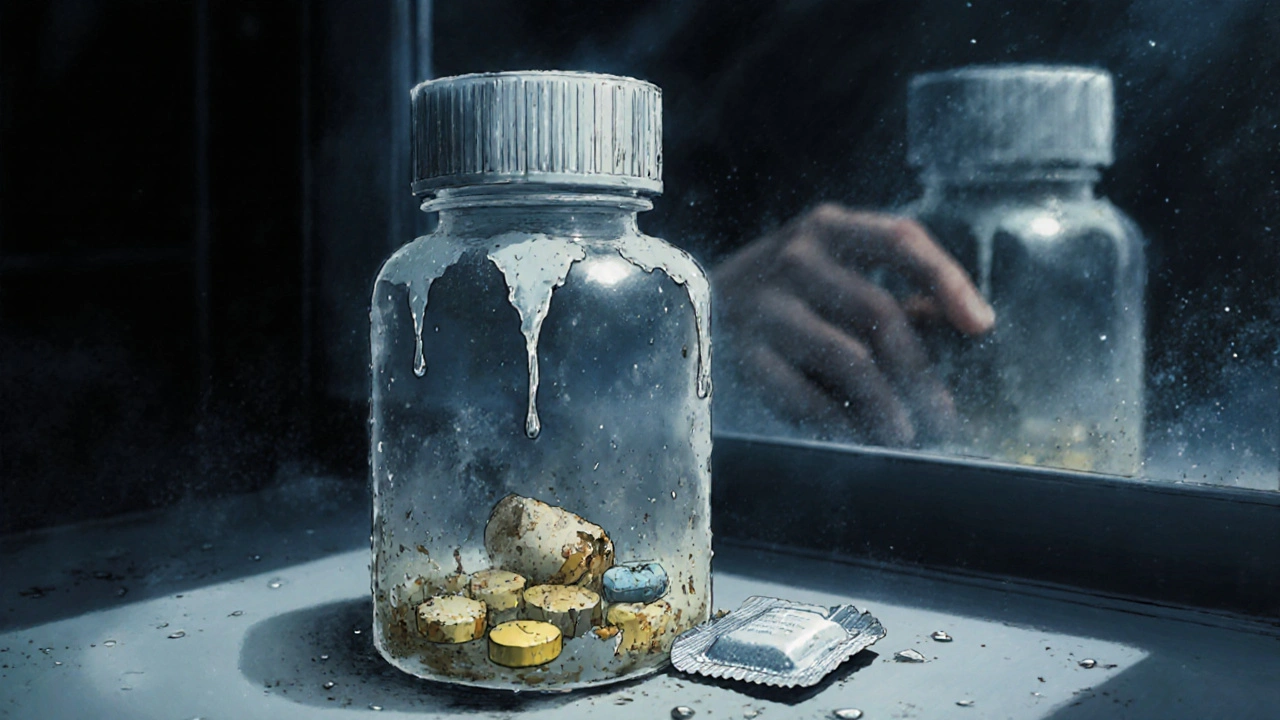
How to Prevent Moisture Damage to Pills and Capsules: A Practical Guide for Safe Storage
Learn how to prevent moisture damage to pills and capsules with practical storage tips, desiccant use, coating info, and where to keep meds safely. Protect your health and medication effectiveness.
Read More