Diabetic Retinopathy: Causes, Risks, and What You Can Do
When you have diabetes, your body struggles to manage blood sugar—and over time, that affects more than just your energy levels. Diabetic retinopathy, a leading cause of vision loss in adults with diabetes, occurs when high blood sugar damages the tiny blood vessels in the retina. It’s not just a side effect—it’s a direct result of uncontrolled glucose levels, and it often progresses silently until it’s too late. About one in three people with diabetes will develop some form of this eye damage, and many don’t notice symptoms until their vision is already affected.
This isn’t just about blurry vision. Retinal damage, the core problem in diabetic retinopathy, starts with weakened capillaries that leak fluid or bleed. As it worsens, new abnormal blood vessels grow on the retina’s surface. These vessels are fragile, prone to rupture, and can trigger scarring that pulls the retina away from the back of the eye—a condition called retinal detachment. Blood sugar control, the most powerful tool against this damage, isn’t just about avoiding spikes—it’s about steady, long-term management. Studies show that keeping HbA1c below 7% cuts the risk of retinopathy progression by up to 76%. Even if your diabetes is well-managed now, past highs still matter. The damage builds over years, which is why regular eye exams are non-negotiable.
Age, how long you’ve had diabetes, and whether you have high blood pressure or high cholesterol all increase your risk. But the biggest factor? Ignoring the warning signs. Early stages often have no symptoms. By the time you see floaters, blurred vision, or dark spots, the disease may already be advanced. That’s why people with diabetes need a dilated eye exam at least once a year—even if they feel fine. Some may need more frequent checks if early damage is found.
There’s no cure for diabetic retinopathy, but treatments like laser therapy, injections, and surgery can stop or slow vision loss—if caught early. And the best treatment of all? Preventing it from getting worse. That means sticking to your diabetes plan, watching your blood pressure, quitting smoking, and getting those eye exams. You don’t need to be perfect, but you do need to be consistent.
The posts below cover real-world stories, medical insights, and practical steps—from how medications affect eye health to what lifestyle changes actually make a difference. You’ll find advice on managing diabetes to protect your vision, what tests to ask for, and how to spot trouble before it’s too late. This isn’t about fear—it’s about taking back control before your eyes pay the price.
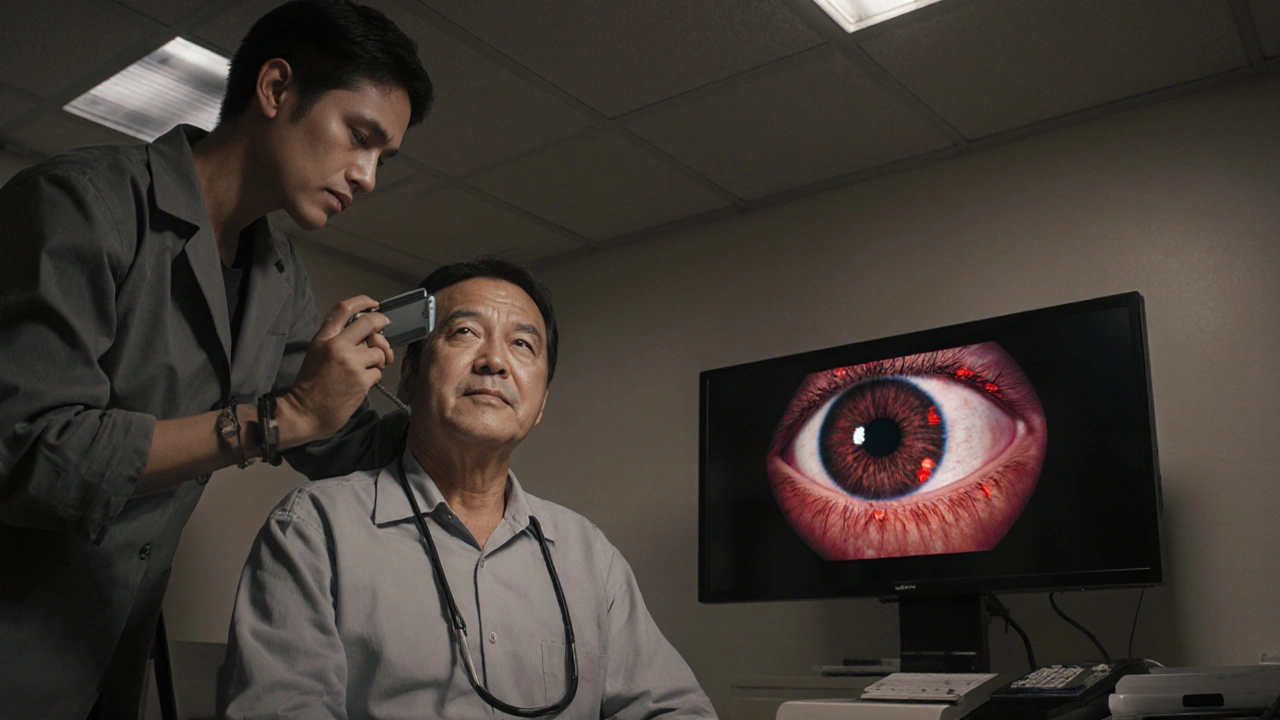
Diabetic Eye Screening: How Often You Need It and How Teleophthalmology Is Changing the Game
Diabetic eye screening saves vision. Learn when and how often to get screened, how teleophthalmology is making it easier, and why skipping exams puts your sight at risk.
Read More