
When a brand-name drug loses its patent, everything changes. The price of the medicine can drop by 80% overnight. Patients pay less. Insurers save millions. And the company that spent years and billions developing that drug? Its revenue plummets. This isn’t science fiction. It’s the reality of generic drugs in the U.S. healthcare system today.
What Exactly Is a Generic Drug?
A generic drug isn’t a copy. It’s not a knockoff. It’s the exact same medicine, with the same active ingredient, strength, dosage form, and route of administration as the brand-name version. The FDA requires generics to meet the same strict standards for safety, effectiveness, and quality. The only differences? The color, shape, or inactive ingredients-and the price. Generics cost 80 to 85% less than their brand-name counterparts. That’s not a marketing claim. That’s FDA data backed by real-world pricing from millions of prescriptions filled every year.The Hatch-Waxman Act: The Deal That Changed Everything
Before 1984, there was no clear path for generics to enter the market. Brand manufacturers held a monopoly until their patents expired, and even then, no one could easily make the same drug. The Hatch-Waxman Act of 1984 changed that. It created a legal shortcut: generic companies could file an Abbreviated New Drug Application (ANDA) without repeating costly clinical trials. All they had to prove was bioequivalence-meaning the drug works the same way in the body as the brand. In return, brand manufacturers got a limited extension on their patent to make up for time lost during FDA review. It was a compromise: innovation protected, competition enabled.The Numbers Don’t Lie: Generics Dominate, But Brands Still Control Spending
Here’s the paradox: generics make up about 90% of all prescriptions filled in the U.S. But they account for only about 20% of total drug spending. That means the other 80% of spending comes from the 10% of prescriptions that are still brand-name. Why? Because those brand drugs are expensive. A single month’s supply of a new cancer drug or GLP-1 weight-loss medication can cost over $1,000. Generics for common conditions like high blood pressure or cholesterol? Often under $10. The Congressional Budget Office estimated that in 2014 alone, generics saved the U.S. healthcare system $253 billion. By 2023, that number had climbed to an estimated $330 billion annually.The Patent Cliff: When Revenue Collapses
For brand manufacturers, patent expiration isn’t just a business risk-it’s a financial earthquake. When a top-selling drug loses exclusivity, revenue typically drops 80 to 90% within the first year. Take Humira, the top-selling drug in the world for over a decade. When its patent expired in 2023, multiple generic versions hit the market within months. AbbVie, the maker of Humira, saw its U.S. sales for the drug fall by more than 85% in the first quarter after generic entry. That’s not a small dip. That’s a collapse. Companies like Pfizer, Merck, and Novartis have all faced this. Their stock prices swing wildly around patent expiration dates. Investors know: when the patent expires, the money stream dries up.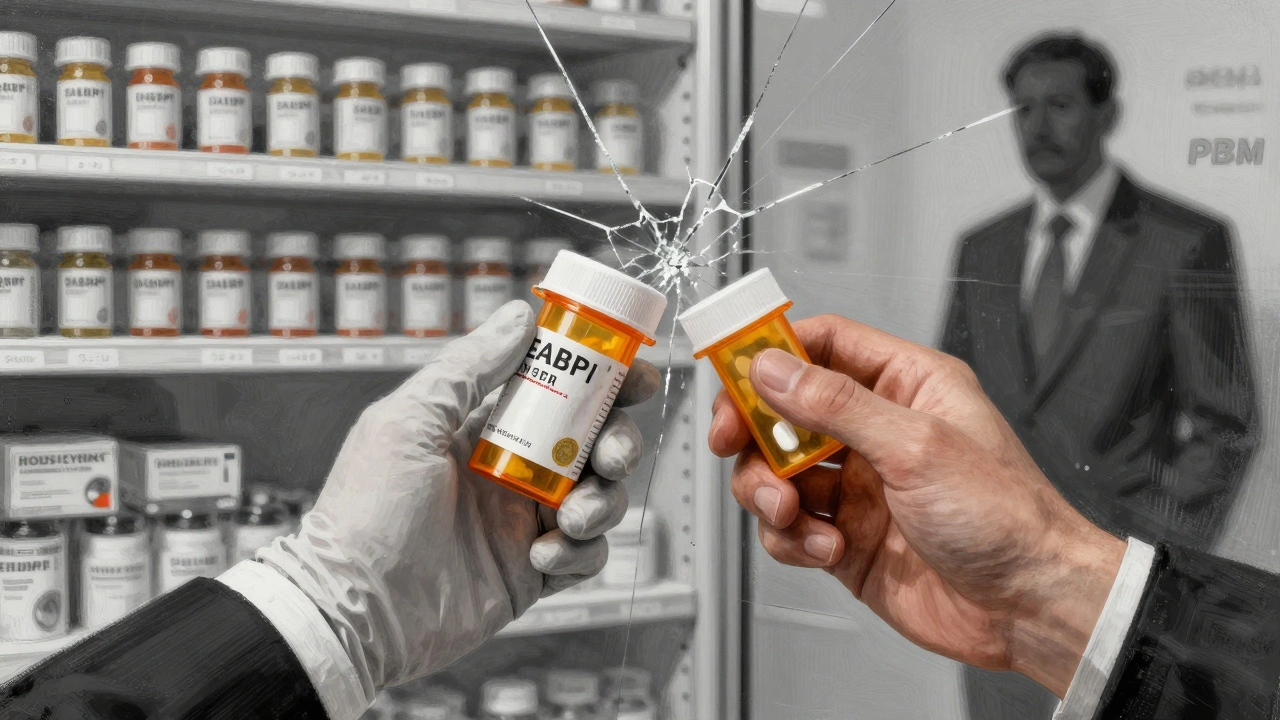
How Brands Fight Back
Brand manufacturers don’t just sit back and wait for the axe to fall. They’ve built entire strategies around delaying or minimizing the impact of generics.- Pay-for-delay settlements: Brand companies pay generic makers to hold off on launching their version. A 2023 study found these deals cost patients and insurers nearly $12 billion a year. The Federal Trade Commission has been trying to ban them for years.
- Product hopping: A brand company makes a minor tweak to its drug-a new pill form, a slightly different dosage-and markets it as “improved.” Then they push patients to switch. This resets the patent clock. The Congressional Budget Office estimates ending this practice would save $1.1 billion over ten years.
- Authorized generics: Some brand companies launch their own generic version right when the patent expires. This lets them capture a slice of the generic market instead of losing it all. Pfizer did this with Lipitor, and it worked-for a while.
The Generic Market Is Getting More Dangerous
It’s not just about brand companies fighting back. The generic market itself is becoming unstable. When a drug has only one or two generic makers, prices stay relatively high. But as more companies enter-sometimes 10, 20, or even 30-the price collapses. A 2022 ASPE report found that with just three generic competitors, prices drop by about 20% within three years. With more, they can fall below 10% of the original brand price. But here’s the catch: when prices get too low, manufacturers stop making the drug. Why? Because the profit margin vanishes. The FDA has warned that this is leading to shortages. In 2023, over 300 drugs were on shortage lists. Many were generics-like antibiotics, anesthetics, and critical heart medications. Companies simply can’t make money producing them anymore.Who’s Really Profiting? The Middlemen
You’d think lower drug prices mean lower costs for patients. But that’s not always true. Pharmacy Benefit Managers (PBMs)-the middlemen between insurers, pharmacies, and drug makers-have become the hidden winners. They negotiate rebates and discounts, but they don’t always pass those savings on. A 2022 study from the Schaeffer Center found patients were paying 13 to 20% more for generics than they should because of opaque PBM pricing. Pharmacists on Reddit complain they’re losing money on generic prescriptions because PBM reimbursement rates change weekly. Sometimes, a pharmacy pays $5 for a bottle of generic lisinopril and gets reimbursed $4. They lose a dollar on every script.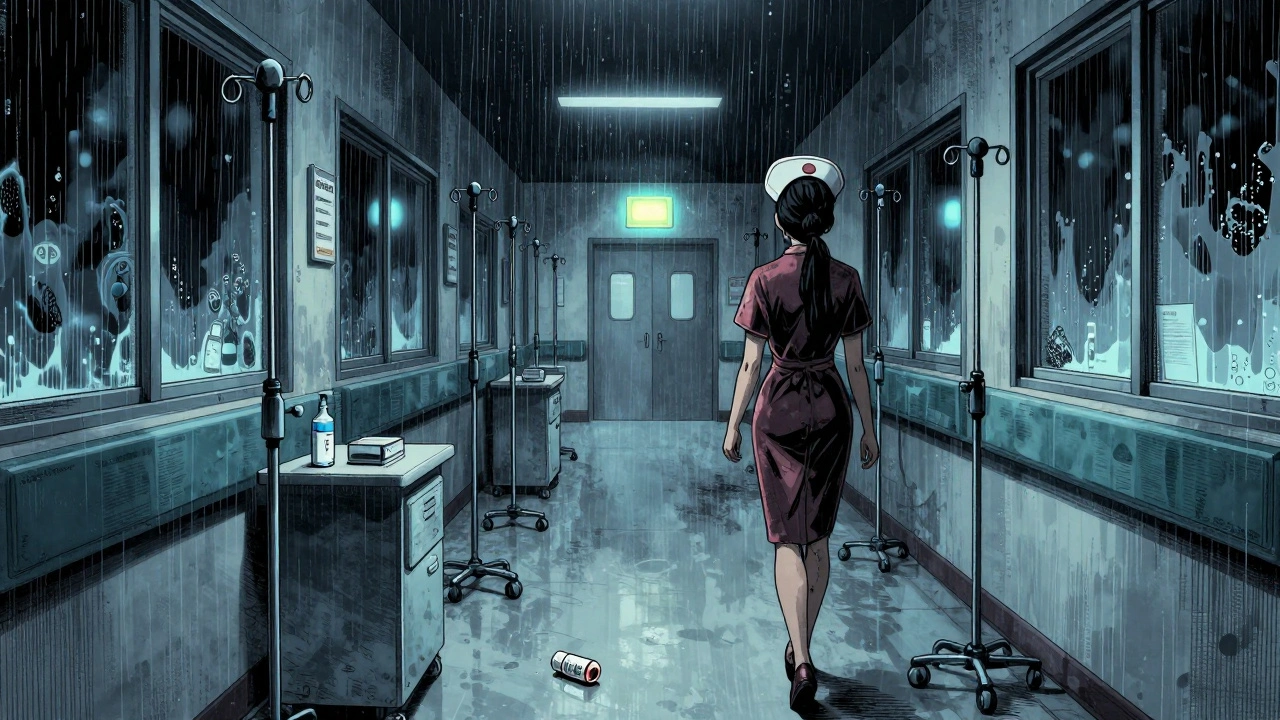
What’s Next? The 0 Billion Problem
By 2028, an estimated $400 billion in brand drug revenue will be at risk due to patent expirations. That’s more than the entire annual budget of the Department of Health and Human Services. Companies are scrambling. Some are spinning off their generics divisions-Novartis did this with Sandoz in 2022. Others are shifting focus to biologics and specialty drugs, which are harder and more expensive to copy. A few are investing in gene therapies and AI-driven drug discovery, betting that the future lies in truly novel treatments, not me-too pills.The Bigger Picture: Innovation vs. Access
This isn’t just about money. It’s about balance. Brand manufacturers need to make a return on their R&D investments-or they won’t develop new drugs. But patients and the system can’t keep paying $10,000 a year for a drug that could be made for $100. Generics are the most effective cost-control tool we have. They’re safe. They’re proven. They’re widely used. The problem isn’t generics. It’s the system around them. Patent abuse. Price manipulation. Supply chain fragility. Opaque middlemen. These are the real issues. Fix those, and generics can keep doing what they do best: saving lives and saving money.What This Means for You
If you’re a patient: Ask if a generic is available. It’s almost always the same drug at a fraction of the cost. If your pharmacy says it’s not covered, ask why. Sometimes it’s just a PBM policy, not a medical reason. If you’re an investor: Watch patent expiration dates like a hawk. A company’s next big drop in revenue is often visible years in advance. If you’re a policymaker: Ban pay-for-delay deals. Limit product hopping. Increase transparency in PBM contracts. Invest in manufacturing capacity for critical generics. These aren’t radical ideas-they’re necessary fixes.Final Thought
Generics didn’t break the pharmaceutical industry. They exposed it. The system was built to reward innovation-but it also became a playground for profit extraction. The solution isn’t to stop generics. It’s to fix the rules so that innovation is rewarded, and access isn’t held hostage by middlemen and legal loopholes.Are generic drugs really as safe as brand-name drugs?
Yes. The FDA requires generics to have the same active ingredient, strength, dosage form, and route of administration as the brand. They must also meet the same strict manufacturing standards. Bioequivalence testing ensures they work the same way in the body. Millions of people take generics every day without issue.
Why do some generics cost more than others?
Price differences between generics come from competition. If only one company makes a generic, it can charge more. When 10 companies make it, prices drop sharply. Supply chain issues, manufacturing costs, and PBM reimbursement deals also affect final prices. Sometimes, the same generic drug costs more at one pharmacy than another due to how the PBM negotiates with that store.
What is a pay-for-delay deal?
A pay-for-delay deal happens when a brand-name drug company pays a generic manufacturer to delay launching its cheaper version. This keeps the brand drug’s monopoly alive longer. These deals are controversial and often illegal under antitrust laws, but they’ve been used for decades. A 2023 study estimated they cost U.S. consumers $3 billion annually in higher out-of-pocket costs.
Why are there drug shortages with generics?
When generic drug prices drop too low, manufacturers can’t make a profit. Many produce generics in countries with lower labor and regulatory costs. If a factory shuts down or a supplier has quality issues, there’s no backup. With low margins, companies don’t invest in redundancy. The result? Critical drugs like insulin, antibiotics, or heart medications go missing from shelves.
Can I trust a generic drug from a foreign manufacturer?
Yes-if it’s sold in the U.S. All generic drugs sold here, no matter where they’re made, must be approved by the FDA. The FDA inspects foreign manufacturing facilities just like U.S. ones. In fact, more than half of all generic drugs sold in the U.S. are made overseas. The FDA has inspection teams in India, China, and other major manufacturing hubs.



amit kuamr
1 December 2025 - 15:59 PM
Generics are fine but why do pharmacies always charge more for them than the cash price? Something's fishy
Been there seen it. My lisinopril costs $3 cash but $12 with insurance. PBM got my money
elizabeth muzichuk
2 December 2025 - 19:30 PM
You people act like generics are some kind of moral victory. Meanwhile the same companies making generics are outsourcing to factories in India where workers get paid $2 a day and the EPA doesn't exist. You're not saving money you're exporting exploitation.
And don't even get me started on how the FDA inspects these places-half the time they get a heads up. It's a farce.
Debbie Naquin
4 December 2025 - 17:01 PM
The structural inefficiency lies in the misalignment of incentive gradients between R&D capitalization and marginal production economics. The Hatch-Waxman framework created a bifurcated market architecture where value extraction is concentrated in patent extension mechanisms rather than therapeutic innovation.
Consequently, the system incentivizes regulatory arbitrage over pharmacological advancement. The 90% prescription penetration of generics is statistically significant-but the 20% expenditure share reveals a pathological rent-seeking dynamic embedded in the PBM layer.
Karandeep Singh
5 December 2025 - 07:30 AM
generic drugs are just as good but why do they always run out? i got my blood pressure med last week and they were out. then next week same thing. its like they dont even care
Mary Ngo
6 December 2025 - 06:32 AM
Let me tell you something the mainstream media won't. The pharmaceutical industry is controlled by a global cabal that uses patent laws as a weapon. The FDA? Complicit. The Congress? Bought and paid for. Pay-for-delay? That's just the tip of the iceberg.
They're not just protecting profits-they're controlling population health. The drug shortages? Deliberate. To keep you dependent on the expensive brand names. Wake up.
James Allen
7 December 2025 - 15:58 PM
Look I get it. America invented the modern drug industry. We spent trillions on R&D. Now some guy in Bangalore is making a pill for $0.10 and selling it for $5 and we're supposed to cheer?
Our scientists risked their careers. Our investors took the risk. And now we're being told to feel guilty for wanting a return? That's not capitalism. That's self-sabotage.
Kenny Leow
8 December 2025 - 04:53 AM
As someone who's lived in both the US and Southeast Asia, I can say this: the system is broken but the solution isn't to blame the generics.
It's to fix the middlemen. My cousin in Vietnam gets the exact same generic lisinopril for $0.20-no PBM, no insurance maze. Just a local pharmacy and a transparent price.
Maybe we need to ask: why does America make this so complicated? 😊
Kelly Essenpreis
9 December 2025 - 10:36 AM
Generics are fine until you need one that's actually made in the US
Then you're out of luck. We used to make antibiotics here. Now we import them from China. That's not freedom that's suicide
Alexander Williams
10 December 2025 - 15:35 PM
The real issue is the lack of vertical integration in generic manufacturing. When the supply chain is fragmented across jurisdictions with divergent regulatory regimes, the elasticity of supply becomes highly nonlinear.
Price collapse triggers exit behavior among low-margin producers, creating discontinuities in availability. The FDA's inspection regime is reactive not predictive. This is not a market failure-it's a systemic governance failure.
Suzanne Mollaneda Padin
11 December 2025 - 01:23 AM
I'm a pharmacist and I see this every day. The PBM reimbursement rates change weekly-sometimes we lose money on a $4 generic because the reimbursement is $3.50.
Patients think we're overcharging, but we're just trying to keep the lights on. The fix isn't to stop generics-it's to force PBMs to disclose their rebates and pass savings directly to the patient. Simple.
Erin Nemo
11 December 2025 - 03:09 AM
My grandma takes 5 generics and she's fine. One of them saved her life. Why are we making this so hard? Just let people get the medicine they need at a price they can afford.
ariel nicholas
12 December 2025 - 12:54 PM
Wait-so we're supposed to be OK with foreign manufacturers making our life-saving drugs? And we trust the FDA to inspect them? Do you even know how many of these plants have been cited for falsifying data? The FDA doesn't even have enough inspectors to cover the ones in China and India. This isn't innovation-it's a public health time bomb.
Rachel Stanton
12 December 2025 - 22:28 PM
For anyone new to this topic: generics are safe, effective, and regulated. The real villains are the opaque rebate structures of PBMs and the legal loopholes that allow pay-for-delay and product hopping.
Fix those, and we can have both innovation and access. You don't have to choose. The system is designed to make you think you do-but you don't.